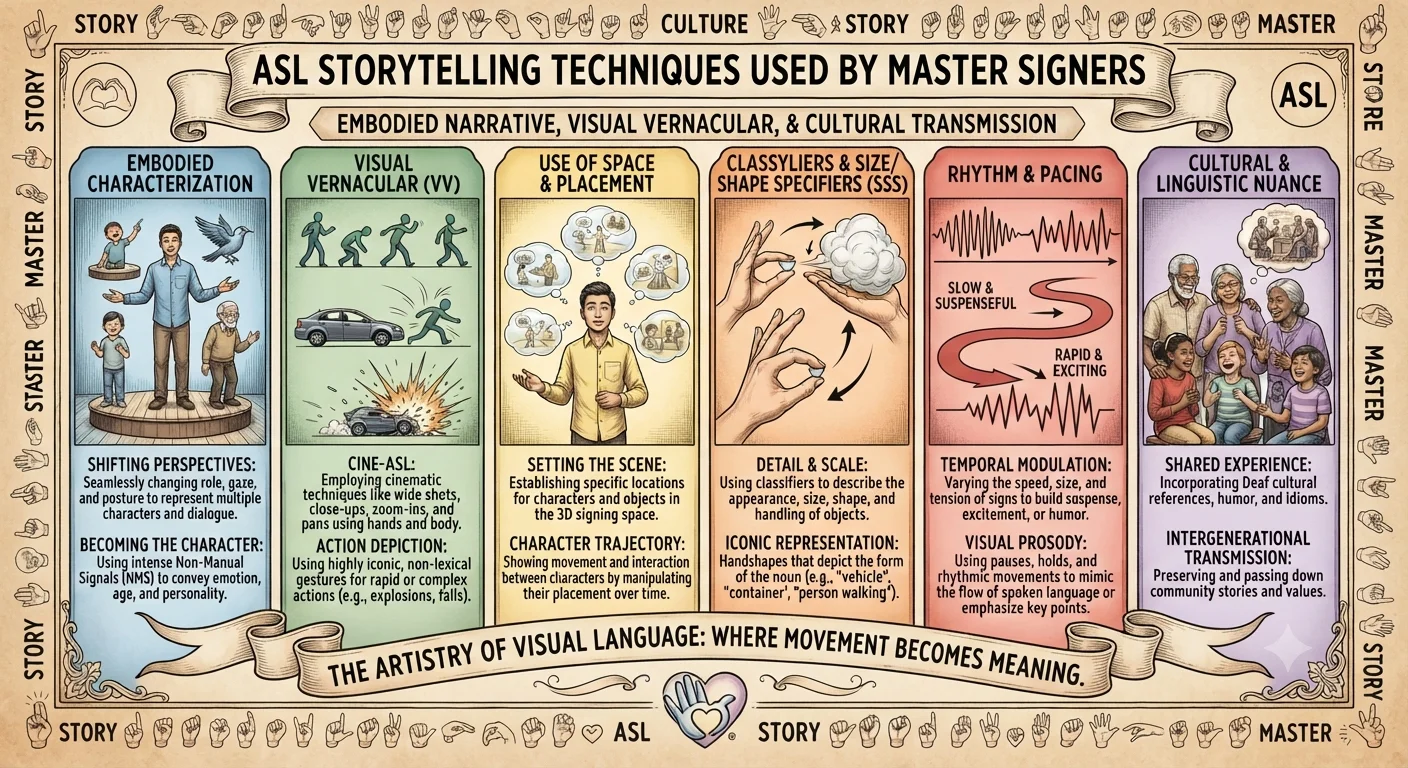
Learn the ASL storytelling techniques used by master signers covering perspective shifting classifiers spatial grammar and visual vernacular performance methods.
Master ASL storytellers create experiences that hearing observers often describe as simultaneously linguistic and cinematic theatrical and poetic producing narratives of extraordinary visual power and emotional resonance using techniques developed and refined within deaf artistic tradition over generations. Understanding these techniques provides insight into both ASL as a language and storytelling as a craft offering lessons that extend beyond sign language into broader thinking about visual narrative and the art of engaging an audience completely through physical and spatial performance.
Establishing and Using Narrative Space
One of the most fundamental techniques in master ASL storytelling is the deliberate and consistent establishment of narrative space in which characters locations and relationships are assigned specific positions within the signing area in front of and around the storyteller's body. This spatial establishment is not decorative but grammatically and narratively essential since it creates the physical map of the story world that subsequent narrative actions will reference consistently throughout the telling.
Master signers establish their narrative space with precision and economy using minimal initial establishment gestures to create a complete world that remains stable and coherent throughout even a complex extended narrative. Audiences who understand ASL spatial grammar can track multiple characters and locations simultaneously within this established space in ways that create extraordinary narrative clarity even during scenes of complex multi character interaction that would require extensive verbal description to achieve comparable clarity in spoken storytelling.
Perspective Shifting with Physical Precision
- Establishing and Using Narrative Space
- Perspective Shifting with Physical Precision
- Constructing Action Sequences with Classifiers
- Facial Expression as Narrative Voice
- Pacing Rhythm and Dramatic Tension
- Visual Vernacular Performance Techniques
- The Role of Audience Connection
- Conclusion
- FAQ
- What is the most important technique in master ASL storytelling?
- What is visual vernacular and how does it differ from standard ASL storytelling?
- How do master signers use pause and pacing as dramatic tools?
Perspective shifting the technique of physically inhabiting different characters by shifting body orientation eye gaze and facial expression is perhaps the single most distinctive and powerful technique in the master ASL storyteller's toolkit. When executed with true mastery perspective shifting creates the impression that multiple complete and distinct characters are present in the performance space rather than a single storyteller moving between roles with visible transitions that remind the audience of the performer behind the characters.
The physical precision of masterful perspective shifting includes not just the obvious shifts in body orientation but the subtle differences in posture energy and physical weight that make each character feel physically distinct from the others. A character who carries themselves with weary resignation moves their hands through signing space differently than one who crackles with nervous energy even when producing formally similar signs and master signers find and maintain these subtle physical character distinctions consistently throughout extended narratives involving multiple characters.
Constructing Action Sequences with Classifiers
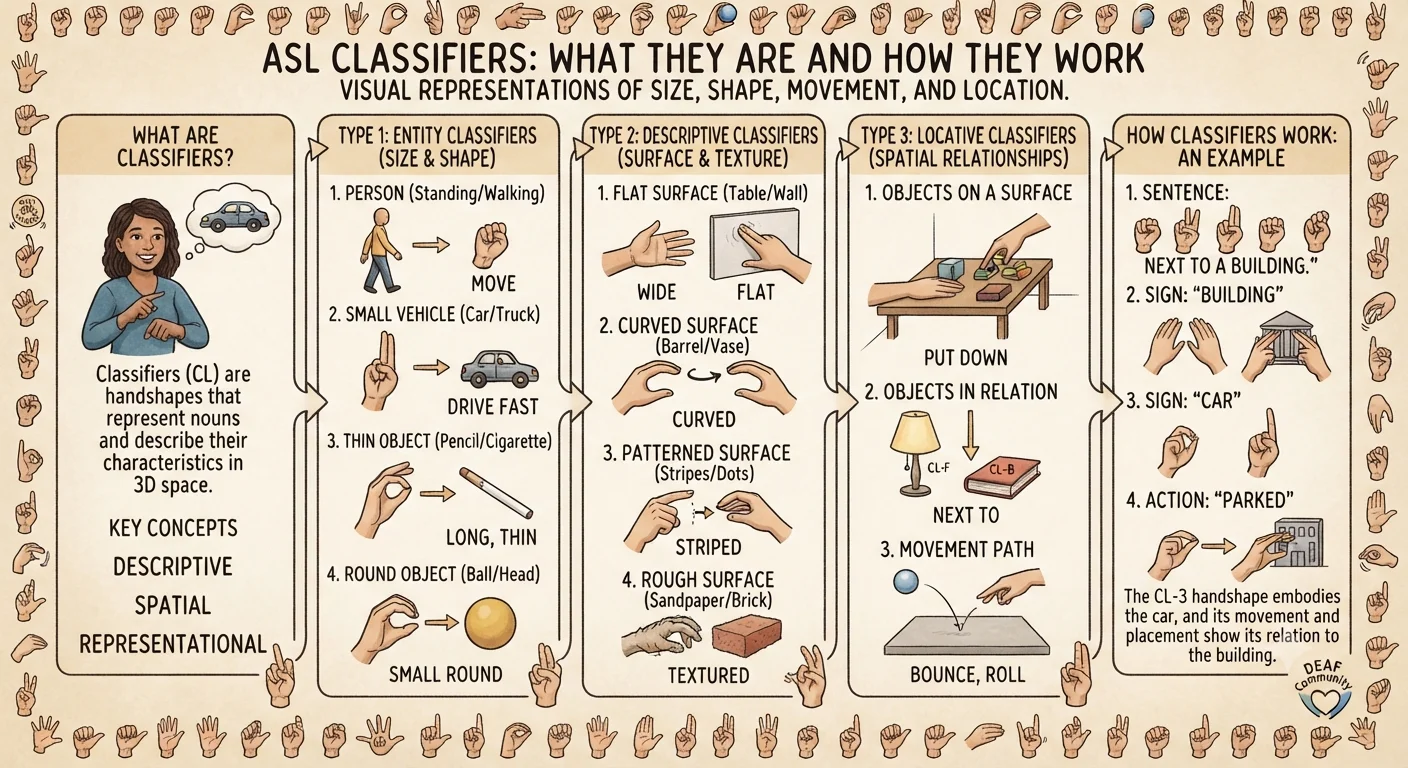
Extended action sequences in master ASL storytelling typically rely heavily on sophisticated classifier use that allows the storyteller to show precisely how objects and people move and interact spatially rather than describing these interactions verbally in ways that would be far less vivid and immediate than the visual spatial representation that classifiers enable. A master signer describing a fight scene a car chase or a dance performance uses classifiers to place figures in space and move them through it with the precision and visual immediacy of film rather than the verbal approximation of spoken description.
The most skilled use of classifiers in storytelling involves seamless transitions between different classifier handshapes as the objects and perspectives being depicted change throughout a scene maintaining spatial consistency and narrative clarity while the visual vocabulary shifts rapidly to track the developing action. This requires not only technical mastery of a wide range of classifier handshapes but the spatial and narrative intelligence to maintain coherent visual logic throughout complex multi element action sequences.
Facial Expression as Narrative Voice
In master ASL storytelling facial expression operates on multiple simultaneous levels serving as grammatical marker character emotional indicator and narrative voice that communicates the storyteller's relationship to the material being told all at the same time. The most skilled storytellers coordinate these different facial expression functions with remarkable sophistication maintaining grammatically accurate facial grammar while also embodying character emotion and simultaneously projecting a narrative voice that audiences intuitively sense even when they could not explicitly identify it as a separate layer of the performance.
The specific quality of a master signer's facial expression during storytelling often reveals years or decades of performance experience in ways that are immediately apparent to experienced audiences even when difficult to articulate analytically. The integration between facial expression and manual signing that characterizes master level storytelling feels seamlessly unified rather than coordinately produced creating the impression of a single complete performance instrument rather than two separate channels being managed simultaneously.
Recommended Articles
 SIGN LANGUAGE EDUCATION
 SIGN LANGUAGE EDUCATION
 SIGN LANGUAGE EDUCATION
 SIGN LANGUAGE EDUCATION
Pacing Rhythm and Dramatic Tension
Master ASL storytellers demonstrate extraordinary control over narrative pacing and rhythm using changes in signing speed spatial scale of movement and pause to create dramatic tension anticipation and release in ways that precisely parallel how skilled spoken storytellers use vocal pace volume and silence as dramatic tools. A master signer can slow the entire physical scale of their signing down to a single small precise movement held in suspension during a moment of maximum dramatic tension before releasing into expansive energetic signing that resolves the tension and carries the narrative forward.
This physical control over narrative pacing requires not just technical mastery but genuine storytelling intelligence about where tension should build how long it should be sustained before release and what the physical quality of the resolution movement should feel like to produce the intended emotional effect on the watching audience. These are judgment calls rooted in deep storytelling craft that separate technically skilled signers from truly masterful narrative artists.
Visual Vernacular Performance Techniques
Visual vernacular is a specific performance tradition within deaf culture that extends ASL storytelling techniques to their cinematic extremes using the storyteller's body as an entire film production including camera movement editing and perspective all embodied simultaneously. Master visual vernacular performers create the impression that the audience is watching a film edited in real time with the storyteller's shifting physical orientation serving as camera angle changes and their body movement representing both subject matter and camera motion simultaneously.
The most celebrated visual vernacular performers achieve effects of extraordinary visual complexity and beauty that demonstrate the full potential of ASL as a performance medium going far beyond what is required for communication into territory that is pure performance art demonstrating what becomes possible when a lifetime of artistic mastery meets a language designed for the full expressive capacity of the human body and face.
The Role of Audience Connection
Master ASL storytellers maintain extraordinarily conscious and active awareness of their audience throughout a performance using the audience's visual attention and response as a live feedback system that informs pacing emphasis and expressive choices in real time. Because ASL storytelling is a fully visual performance form the storyteller can see their audience's engagement and response with unusual clarity during the performance using this visibility to calibrate and adjust the performance in ways that spoken storytellers working in darkened theaters with less visible audiences may find more challenging.
This audience awareness creates a particular quality of direct connection between master ASL storytellers and their audiences that observers often describe as unusually intimate and immediate compared to other theatrical performance forms where the fourth wall convention or physical performance conditions create greater separation between performer and audience than the open facing direct eye contact visual engagement of ASL performance typically involves.
Conclusion
The storytelling techniques of master ASL signers represent one of the most sophisticated and powerful performance traditions in human cultural history combining linguistic mastery visual intelligence dramatic craft and physical artistry into a single unified performance form that creates narrative experiences of extraordinary power and beauty. Studying these techniques offers valuable insight not only into ASL as a language but into the fundamental possibilities of visual embodied storytelling that extend beyond sign language into the broader field of theatrical performance and narrative art.
FAQ
What is the most important technique in master ASL storytelling?
Perspective shifting the technique of physically inhabiting different characters through shifts in body orientation eye gaze and facial expression is arguably the most distinctive and powerful technique distinguishing master ASL storytelling since its skillful execution creates the impression of multiple complete characters being present rather than a single performer moving between roles.
What is visual vernacular and how does it differ from standard ASL storytelling?
Visual vernacular extends ASL storytelling techniques to cinematic extremes using the storyteller's entire body as a film production including camera angles editing and perspective shifts all embodied simultaneously going far beyond standard ASL narrative technique into territory that is pure visual performance art demonstrating the ultimate expressive potential of the human body as storytelling instrument.
How do master signers use pause and pacing as dramatic tools?
Master signers control narrative tension through changes in signing speed spatial scale of movement and deliberate pause using these physical variables in ways that parallel how skilled spoken storytellers use vocal pace and silence to create anticipation tension and emotional release at precisely the most dramatically effective moments in their narratives.