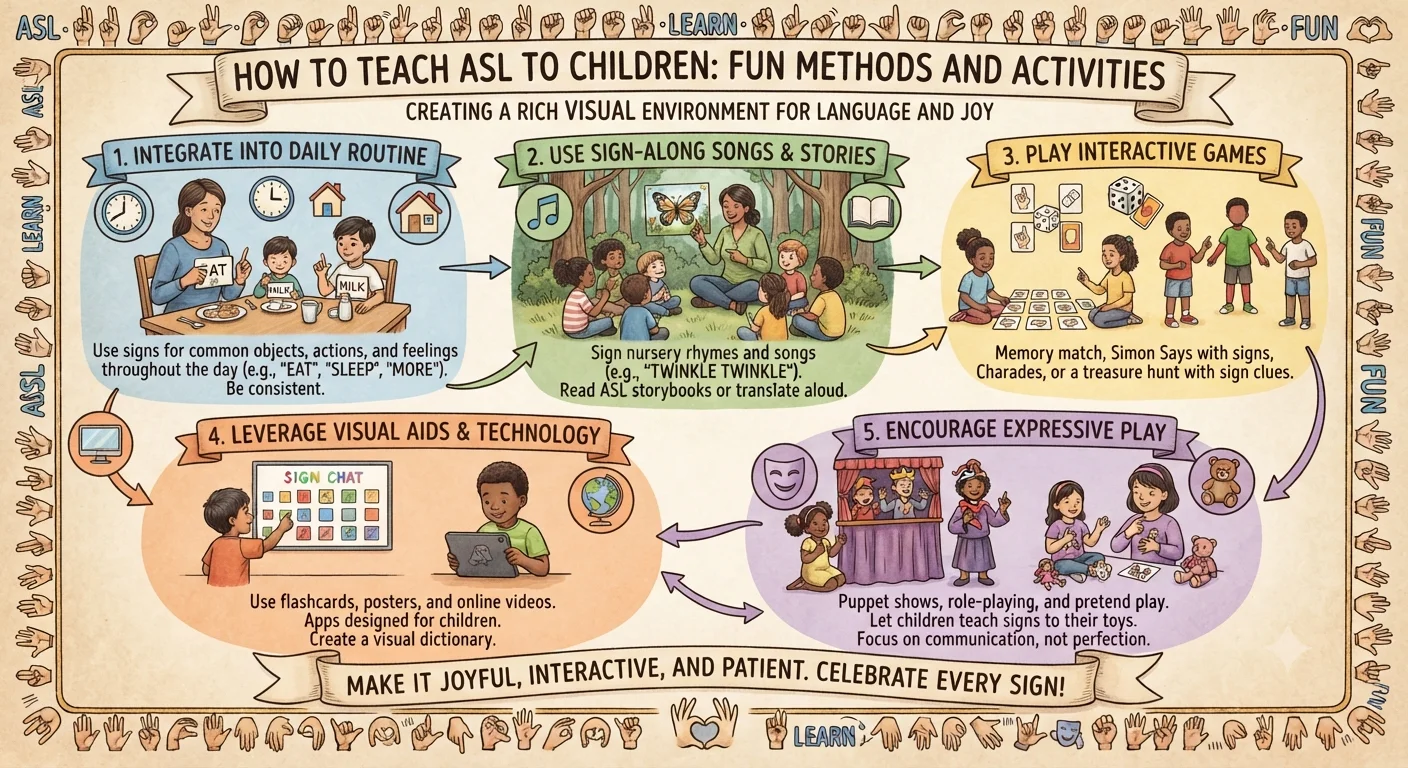
Learn how to teach ASL to children with fun methods activities and proven strategies that make sign language learning engaging effective and culturally meaningful.
Teaching ASL to children whether deaf or hearing requires approaches that honor the playful natural language learning capacity children bring to any new language while also ensuring genuine linguistic and cultural accuracy rather than simply teaching isolated signs as party tricks disconnected from real ASL grammar and deaf cultural context. The most effective approaches to teaching children ASL combine structured learning with abundant play rich authentic input from fluent signers and genuine connection to the living community that uses this beautiful language every day.
Understanding How Children Learn Languages Naturally
Before choosing specific teaching methods it helps enormously to understand how children acquire languages naturally since this understanding should guide every decision about how to introduce and develop ASL with young learners. Children do not learn languages primarily through explicit grammar instruction memorization drills or vocabulary lists. They learn languages through abundant meaningful exposure to the language used in contexts that make sense to them by people they are emotionally connected to and motivated to communicate with.
This means the single most powerful thing any parent teacher or caregiver can do to support a child's ASL development is provide regular meaningful exposure to fluent natural ASL used communicatively rather than only as a teaching subject. For hearing families learning ASL alongside their deaf child this means parents need to be actively developing their own ASL skills rather than delegating all signing input to teachers or therapists who see the child only in limited formal contexts.
Starting with High Frequency Meaningful Signs
- Understanding How Children Learn Languages Naturally
- Starting with High Frequency Meaningful Signs
- Songs and Music as ASL Teaching Tools for Children
- Storytelling and Books in ASL Learning
- Games and Play Based ASL Activities
- Connecting Children with Deaf Community and Culture
- Technology Resources for Teaching Children ASL
- Supporting Deaf Children's ASL Development Specifically
- Conclusion
- FAQ
- What is the best age to start teaching ASL to children?
- Should hearing children learning ASL also learn about deaf culture?
- How can parents without ASL fluency teach their children sign language?
When introducing ASL to young children starting with high frequency signs that serve immediate communicative purposes in the child's daily life produces far better learning outcomes than beginning with the alphabet or arbitrary vocabulary lists organized by category rather than by communicative usefulness. Signs for more, eat, drink, help, all done, play, please, thank you, bathroom and similar high frequency communicative signs give children immediately useful language tools that motivate continued signing because they can see signing working to communicate real needs and desires right away.
This communicative usefulness is particularly important for maintaining young children's motivation to keep signing since children are naturally motivated to learn language tools that work to get them what they want and need rather than language forms with no immediate practical payoff in their current daily communication environment.
Songs and Music as ASL Teaching Tools for Children
Signed songs represent one of the most effective and universally enjoyed methods for teaching ASL to young children combining the natural appeal and memorability of music with sign language vocabulary and basic grammatical patterns in a highly motivating and repeatable format. Children are naturally drawn to songs and will willingly repeat them many times providing exactly the kind of repetition needed for vocabulary consolidation without the boredom that drill based repetition typically produces.
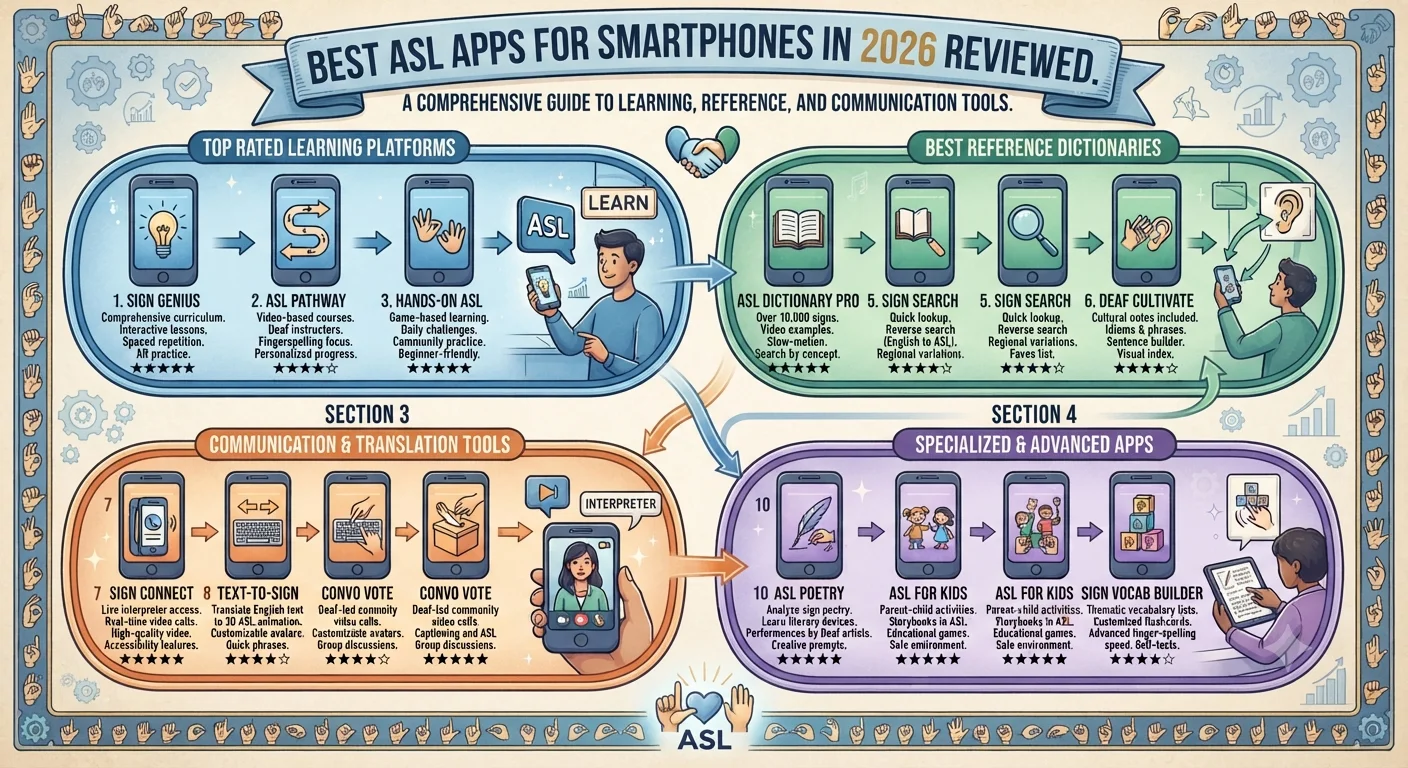
- Best ASL Apps for Smartphones in 2026 Reviewed
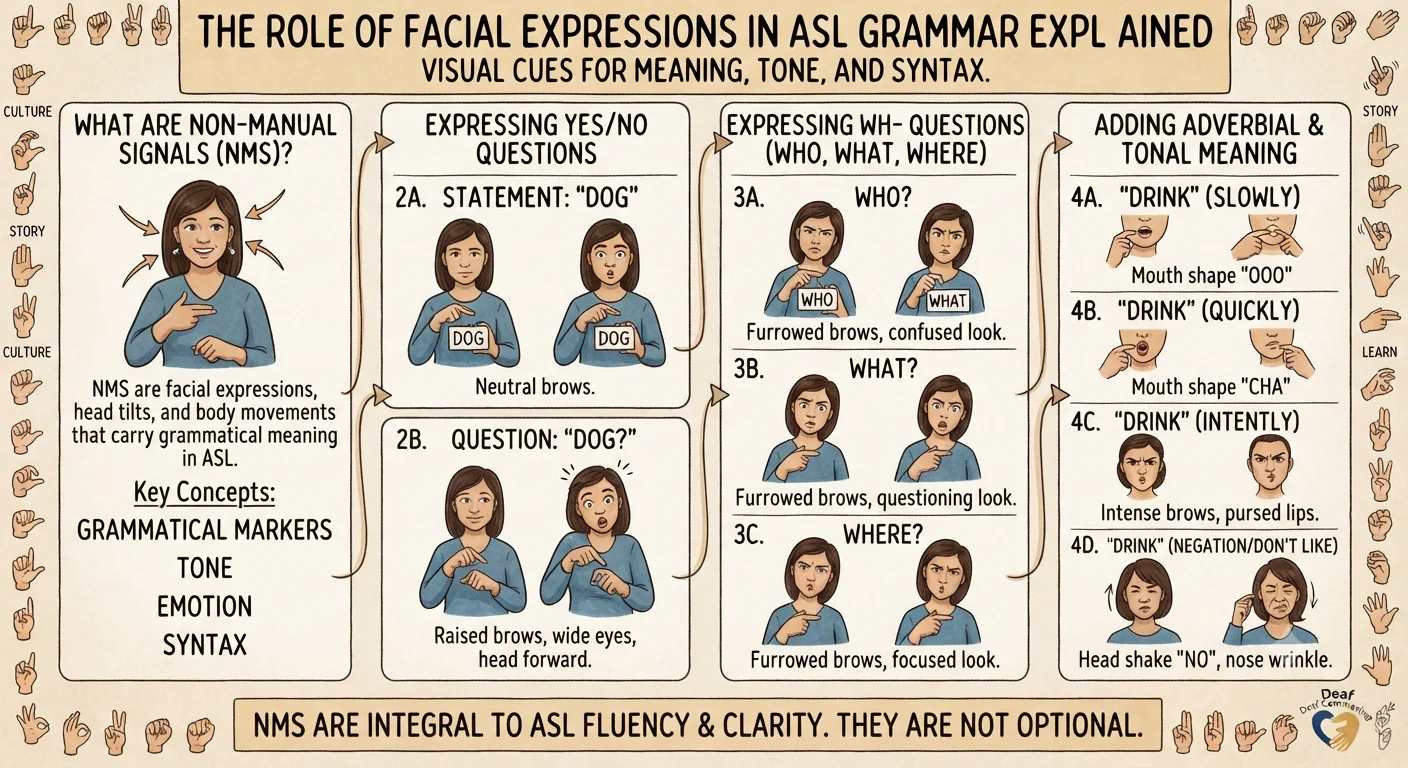
- The Role of Facial Expressions in ASL Grammar Explained
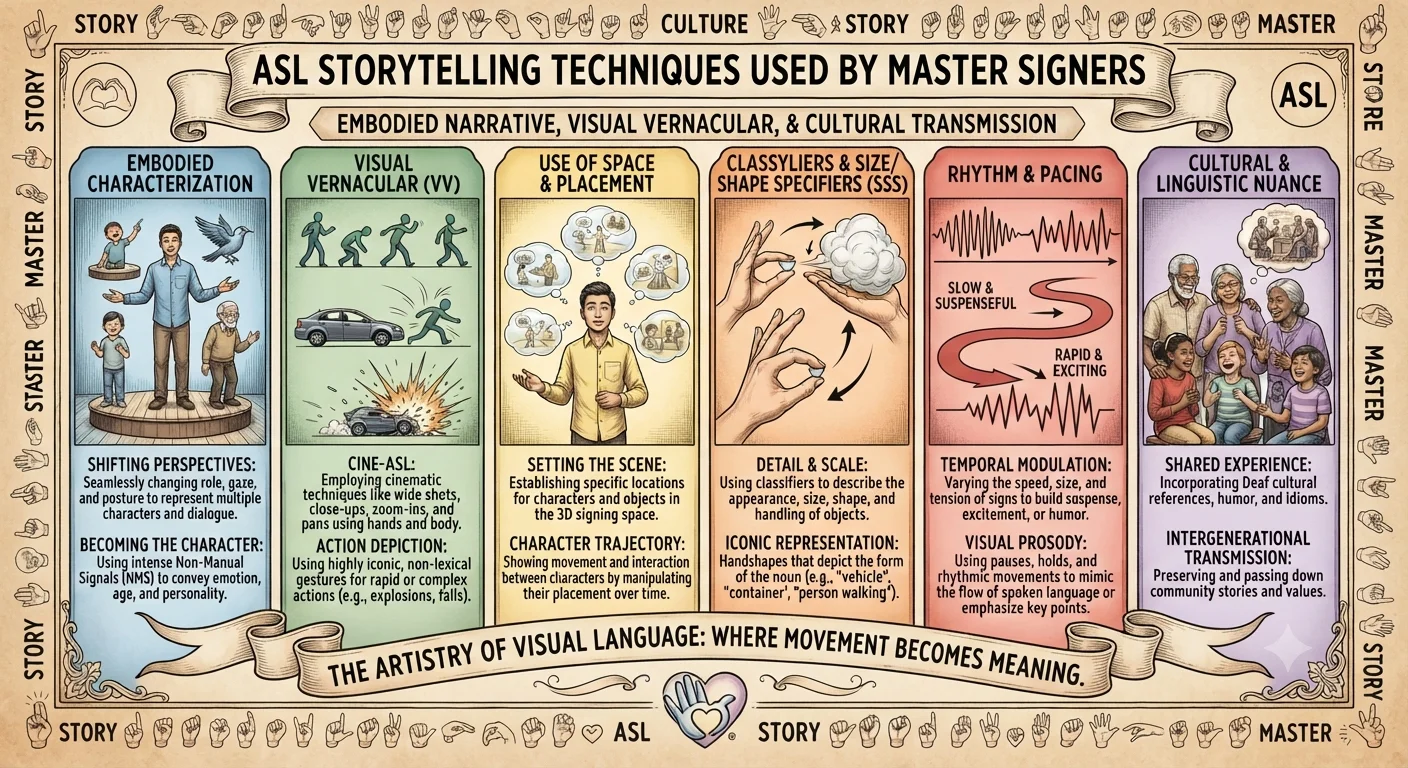
- ASL Classifiers What They Are and How They Work
When selecting signed songs for children it is important to choose songs that use accurate ASL signs rather than invented gesture systems or signed English patterns that do not reflect genuine ASL grammar. Songs developed by deaf ASL users and signed with accurate facial expression and natural signing rhythm provide better language modeling than songs created primarily by hearing educators without deep ASL fluency even when those songs are pedagogically well intentioned.
Storytelling and Books in ASL Learning
Shared storytelling and ASL adapted picture book reading provide rich naturalistic language input contexts where children encounter vocabulary in meaningful narrative frameworks rather than in isolation. Reading picture books in ASL with a skilled signer whether in person through video or through digital resources developed specifically for this purpose exposes children to natural ASL narrative rhythm vocabulary in context and the full range of facial expression and spatial grammar that characterizes authentic ASL storytelling.
Encouraging children to retell stories in ASL after hearing them signed provides valuable production practice that develops expressive signing skills alongside the receptive skills developed through watching others sign. Even simple retellings with young children build narrative signing skills and vocabulary consolidation that more structured practice activities often cannot achieve as naturally and enjoyably.
Games and Play Based ASL Activities
Games that incorporate ASL naturally into play rather than treating signing as a break from real play are among the most effective tools for keeping children engaged with ASL learning over time. Simon Says played in ASL where instructions are signed rather than spoken practices receptive ASL comprehension in a highly motivating game context. ASL Bingo where players identify signs shown on video or by a teacher and mark corresponding pictures on cards builds vocabulary recognition through competitive game play that children find far more engaging than passive vocabulary study.
Recommended Articles
 SIGN LANGUAGE EDUCATION
 SIGN LANGUAGE EDUCATION
 SIGN LANGUAGE EDUCATION
 SIGN LANGUAGE EDUCATION
Handshape games that challenge children to find objects in the room that start with a specific ASL handshape rather than an English letter connect ASL linguistic features to concrete environmental exploration in ways that build ASL specific thinking rather than English based thinking about sign language. These kinds of ASL centered games help children develop genuinely ASL oriented thinking rather than always mentally translating from English which limits genuine ASL fluency development.
Connecting Children with Deaf Community and Culture
Teaching ASL to children without connecting them to the living deaf community and culture that the language belongs to produces language learning that is incomplete at best and culturally appropriative at worst regardless of technical signing accuracy. Children learning ASL genuinely benefit enormously from exposure to deaf adults and deaf peers who use ASL as their natural first language providing the kind of authentic community connection that gives language learning its deepest purpose and most powerful motivation.
Attending deaf community events watching content created by and for the deaf community and where possible building genuine relationships with deaf individuals and families provides children with the cultural context that transforms ASL from a skill being practiced into a living language connecting them to a real community with its own rich history values artistic traditions and ways of being in the world that no classroom activity can fully replicate.
Technology Resources for Teaching Children ASL
High quality video resources including stories signed by skilled deaf signers educational content developed specifically for children and apps designed with input from deaf educators provide valuable supplementary resources for teaching children ASL particularly in contexts where regular access to fluent human signing models is limited. The best children's ASL video resources feature deaf signers as primary models use natural accurate ASL rather than signed English patterns and present signing in meaningful communicative and narrative contexts rather than as isolated vocabulary demonstrations.
Parents and teachers should preview all video resources before sharing them with children to verify signing accuracy and cultural appropriateness since not all commercially available ASL children's resources achieve the linguistic and cultural standards needed for genuine language learning rather than simply entertainment value.
Supporting Deaf Children's ASL Development Specifically
For deaf children specifically ASL is not simply one additional language skill to develop but the primary language through which full cognitive linguistic and emotional development happens most naturally and completely. This means the stakes of providing rich authentic ASL input are higher for deaf children than for hearing children learning ASL as an additional language with delayed or insufficient ASL input during critical developmental windows creating lasting educational and developmental consequences that early and rich input can prevent.
Deaf children need abundant input from skilled ASL signers ideally including deaf native signers who model natural ASL with authentic rhythm facial expression and cultural context that hearing signers learning ASL as a second language may not fully replicate even with excellent skills and genuine commitment to the language and community.
Conclusion
Teaching ASL to children effectively requires combining meaningful communicative exposure with engaging play based activities genuine deaf community connection and culturally accurate language modeling that honors ASL as a complete living language rather than a skill set to be acquired in isolation from the community and culture it belongs to. Children taught ASL within this rich meaningful framework develop not just signing skills but genuine connection to one of the world's most beautiful and distinctive languages and the extraordinary community that has created and sustained it across generations.
FAQ
What is the best age to start teaching ASL to children?
There is no minimum age for introducing ASL to children with research showing that infants as young as six to eight months can begin learning basic signs when exposed to them consistently in meaningful communicative contexts making early introduction both appropriate and beneficial for both deaf and hearing children.
Should hearing children learning ASL also learn about deaf culture?
Yes teaching ASL to hearing children without connecting them to deaf community and culture produces incomplete language learning that lacks the cultural context giving the language its full meaning and purpose making deaf cultural education an essential component of genuine ASL education rather than an optional addition.
How can parents without ASL fluency teach their children sign language?
Parents can learn alongside their children using quality video resources community classes and deaf community connections while being honest with children that they are learning together and ensuring children also have regular access to more fluent signing models including deaf adults and community members whenever possible.