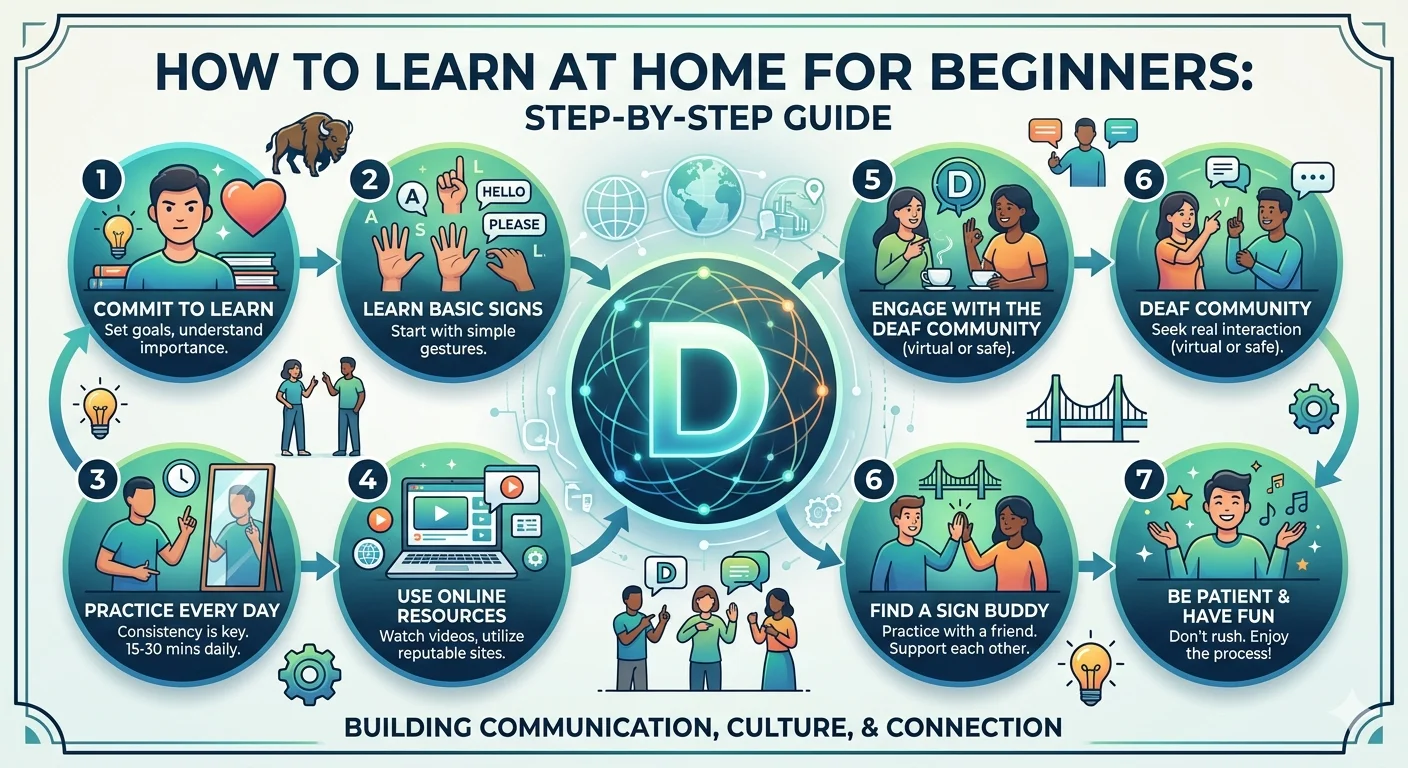
Learning American Sign Language at home is more achievable today than it has ever been thanks to online resources video platforms and structured beginner courses. This guide walks you through exactly how to start learning ASL at home as a complete beginner and how to build real skill over time.
Step one set a clear goal for why you are learning ASL
Before you start you should decide why you want to learn ASL. Are you learning to communicate with a deaf family member or friend. Are you preparing for a career in education healthcare or interpreting. Are you simply interested in deaf culture and language. Your reason will shape how fast you need to progress and which vocabulary you should prioritize first.
Step two learn the ASL alphabet first
The ASL manual alphabet also called fingerspelling is the foundation every beginner should start with. It allows you to spell out words you do not yet know the sign for including names and specific terms. Practice the alphabet daily until you can form each letter clearly and recognize letters quickly when watching others fingerspell.
Many beginners make the mistake of trying to read fingerspelling letter by letter at first. With practice your brain will start to recognize whole fingerspelled words by their shape and rhythm rather than spelling them out mentally one letter at a time.
Step three build core vocabulary before grammar
After the alphabet focus on building a base vocabulary of commonly used signs. Numbers colors family terms common verbs and everyday objects are a strong starting point. Aim to learn a small consistent number of new signs each day rather than trying to memorize large lists infrequently. Spaced repetition works far better for sign vocabulary than cramming.
Step four study ASL grammar structure early
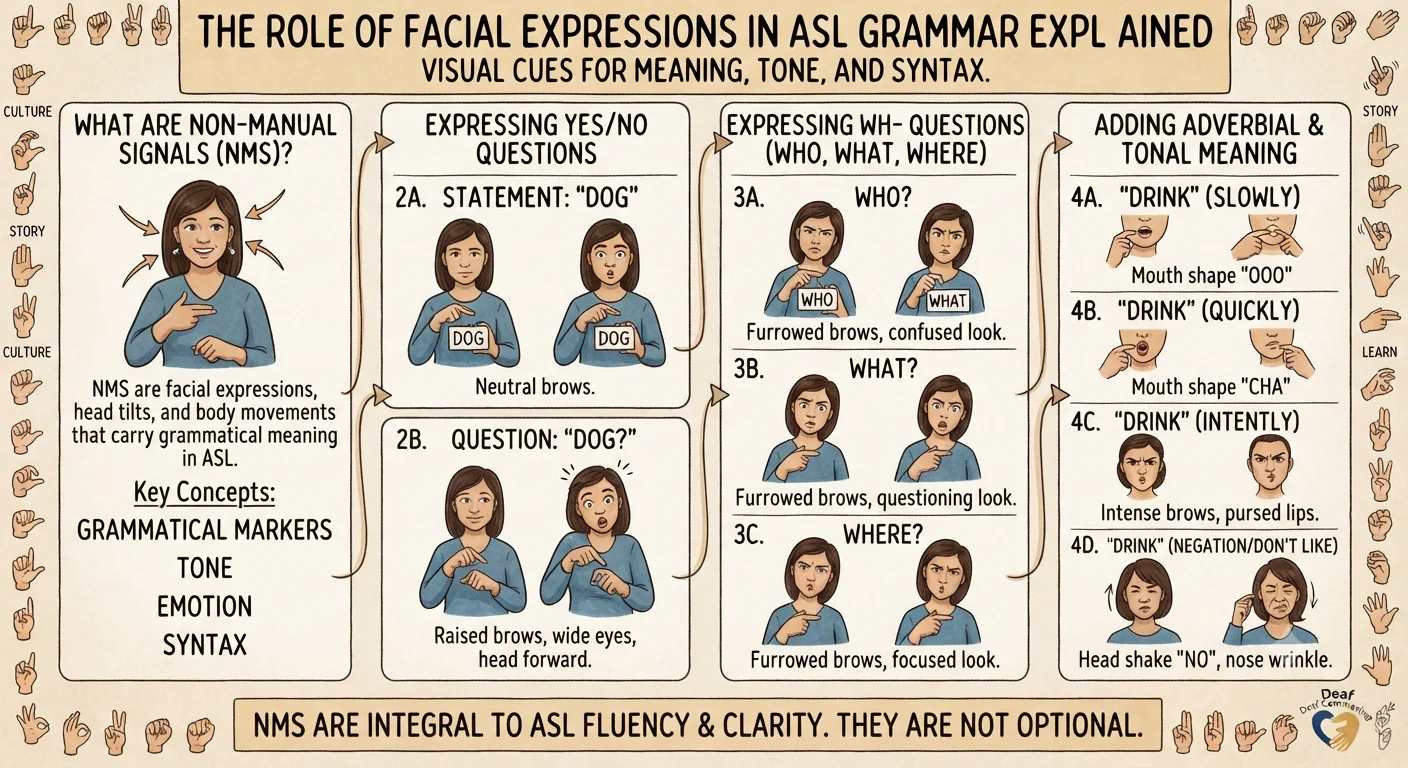
Many beginners delay learning grammar and focus only on vocabulary which can create habits that are hard to unlearn later. ASL grammar differs significantly from English. Topic comment structure time markers placed at the start of sentences and the grammatical use of facial expression are all features that should be introduced early even at a basic level.
Understanding that ASL is not signed English will help you avoid forming sentences that are technically signed but grammatically incorrect in true ASL.
Step five use a mix of learning resources
No single resource will teach you everything. A strong home learning plan usually includes a structured course or app for organized lessons, video content created by deaf creators for authentic language modeling, and a dictionary resource for looking up unfamiliar signs.
Watching native deaf signers is one of the most valuable things a home learner can do. Apps and structured courses teach you signs and rules but watching real conversational ASL helps you absorb natural rhythm facial expression and flow that no app can fully replicate.
Step six practice with real people as soon as possible
Self study alone has limits. As soon as you have basic vocabulary look for ASL practice groups conversation meetups or online communities where you can practice with others. Many cities have ASL meetup groups organized through community centers libraries or universities. Online video chat practice groups have also become widely available.
Recommended Articles
 SIGN LANGUAGE EDUCATION
 SIGN LANGUAGE EDUCATION
 SIGN LANGUAGE EDUCATION
 SIGN LANGUAGE EDUCATION
- National Theatre of the Deaf Complete History and Legacy
- What is ASL and How Many People Use It Worldwide
Practicing with deaf signers specifically rather than only with other hearing learners will improve your skills far faster and will expose you to natural signing rather than learner signing patterns.
Step seven be consistent rather than intense
Twenty minutes of daily practice will produce better long term results than three hours once a week. Sign language is a physical skill as much as a mental one. Your hands and facial muscles need repetition to build fluency just as your brain needs repetition to build vocabulary recall.
Common mistakes beginners should avoid
Many beginners try to translate English sentences word for word into ASL signs which produces a form sometimes called signed English rather than true ASL. Avoid this habit by learning ASL sentence structure directly rather than mentally translating from English as you go.
Another common mistake is neglecting facial expression and treating signs as a purely hand based skill. Facial expression in ASL carries real grammatical meaning and ignoring it will limit your ability to communicate clearly and to understand others.
How long does it take to see real progress
Most dedicated home learners can hold simple conversations within three to six months of consistent practice. Reaching conversational fluency generally takes one to two years of regular study and practice with fluent signers. Like any language the timeline varies significantly based on practice frequency and exposure to native signers.
Conclusion
Learning ASL at home is entirely possible with the right approach and consistent effort. Start with the alphabet and core vocabulary, study grammar early, use a mix of resources, and practice with real signers as soon as you can. Sign language is a rewarding skill that opens the door to deaf culture and community connection that very few hearing people ever experience.
FAQ
Can I become fluent in ASL using only apps? Apps are useful for building vocabulary but fluency requires practice with real signers and exposure to natural conversational ASL that apps alone cannot fully provide.
Do I need to know fingerspelling before learning full sign vocabulary? Fingerspelling is typically taught first because it is foundational and useful immediately for names and unfamiliar words while you build broader vocabulary.
Is it better to learn ASL from a deaf teacher? Yes whenever possible. Deaf instructors model natural signing rhythm and facial expression that hearing instructors who learned ASL later in life may not always replicate as accurately.