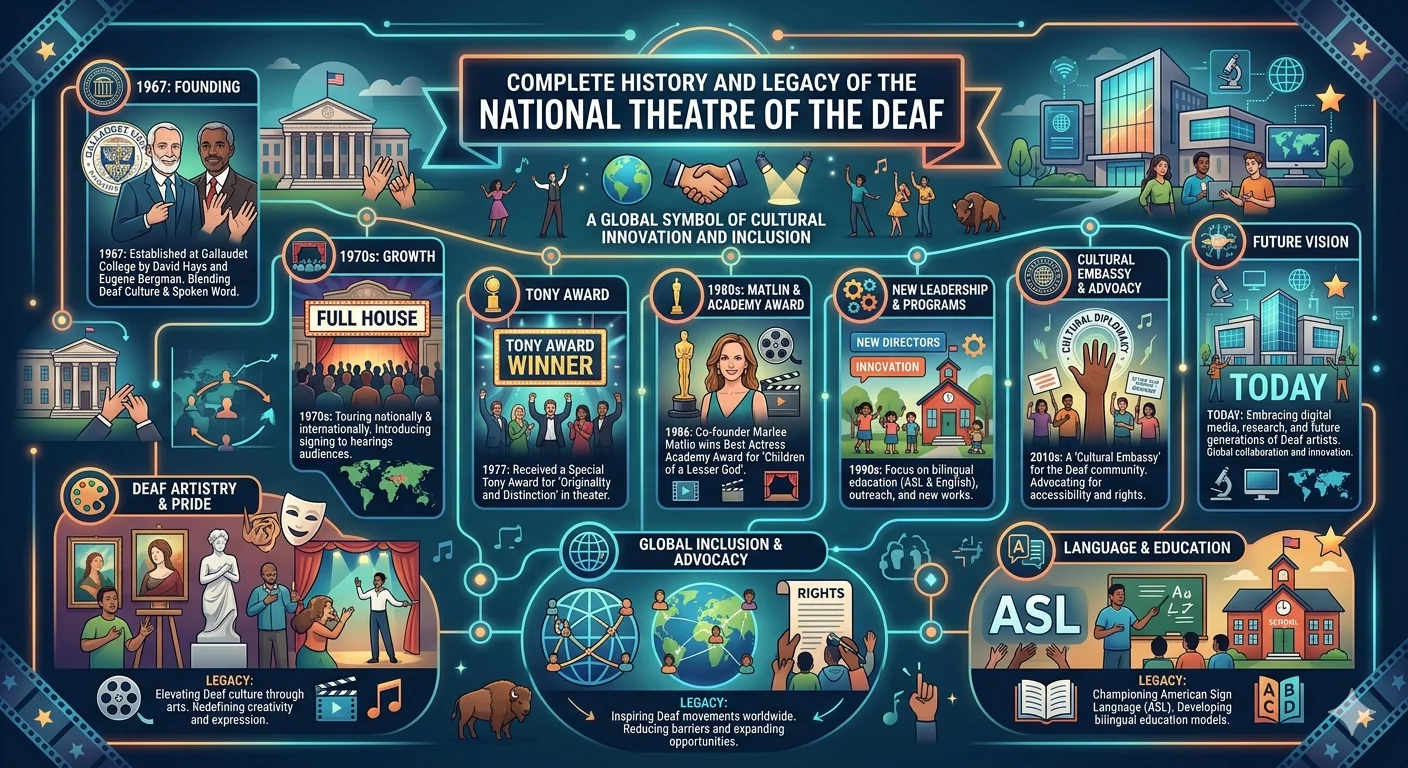
The National Theatre of the Deaf is one of the most important institutions in the history of American theatre. Founded in 1967 it was the first professional theatre company in the United States built specifically around deaf performers and sign language storytelling. Its influence on deaf arts theatre accessibility and mainstream perceptions of deaf talent continues to be felt today.
How the National Theatre of the Deaf began
The National Theatre of the Deaf was founded in 1967 in Waterford Connecticut through the vision of David Hays a Broadway set designer and Dr. Edna Levine a psychologist who specialized in deaf education. The two believed deaf performers possessed extraordinary visual storytelling skills that the American theatre world had never properly showcased.
The company received early funding from the federal government through what was then called the National Endowment for the Humanities along with private foundation support. This funding allowed the founders to recruit talented deaf performers from across the country including many who had trained at Gallaudet University.
The original company combined deaf actors signing in ASL with hearing actors who voiced the dialogue simultaneously. This technique allowed both deaf and hearing audience members to follow the performance fully. It became known as the company's signature style and influenced bilingual theatre techniques used around the world afterward.
Founding members who shaped deaf theatre history
Phyllis Frelich was among the most celebrated founding members of the National Theatre of the Deaf. She would later go on to win a Tony Award for her Broadway performance in Children of a Lesser God a play written specifically for her talents. Her work with the company helped establish the template for what deaf led theatre could achieve at the highest professional level.
Other early members included Bernard Bragg a pioneering deaf actor who had performed in France with renowned mime artist Marcel Marceau before joining the company. Bragg brought a movement based performance tradition that blended naturally with ASL storytelling and helped define the visual language the company became known for.
Landmark productions and tours
The National Theatre of the Deaf toured extensively throughout the late 1960s and 1970s performing in cities across America and eventually internationally. The company brought deaf theatre to audiences who had never seen anything like it including many hearing audiences who had never considered that sign language could be the foundation of compelling drama.
The company's productions ranged from adaptations of classic literature to original works written specifically to showcase ASL as a performance language. Its visual and physical style of storytelling drew comparisons to dance and mime as much as traditional spoken theatre.
Recommended Articles
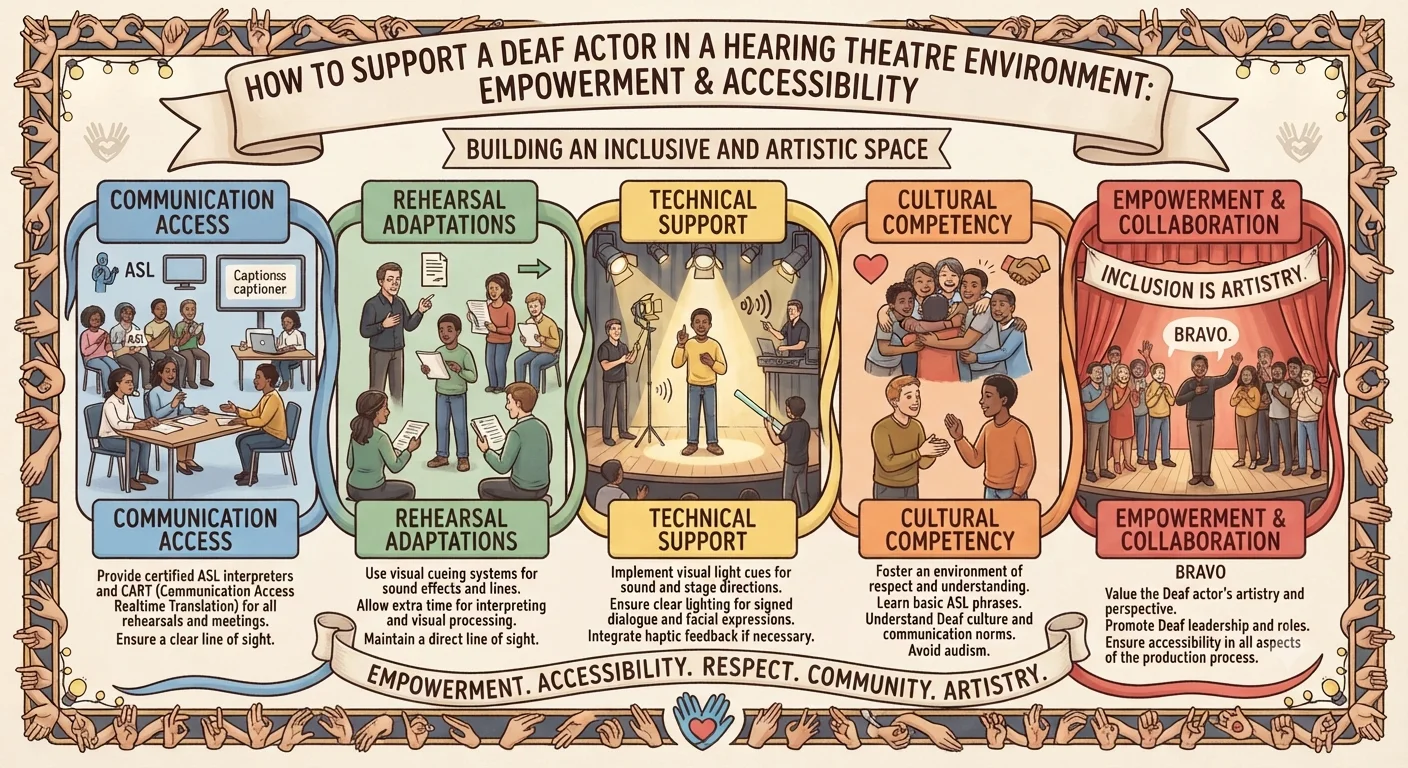 THEATRE AND PERFORMING ARTS
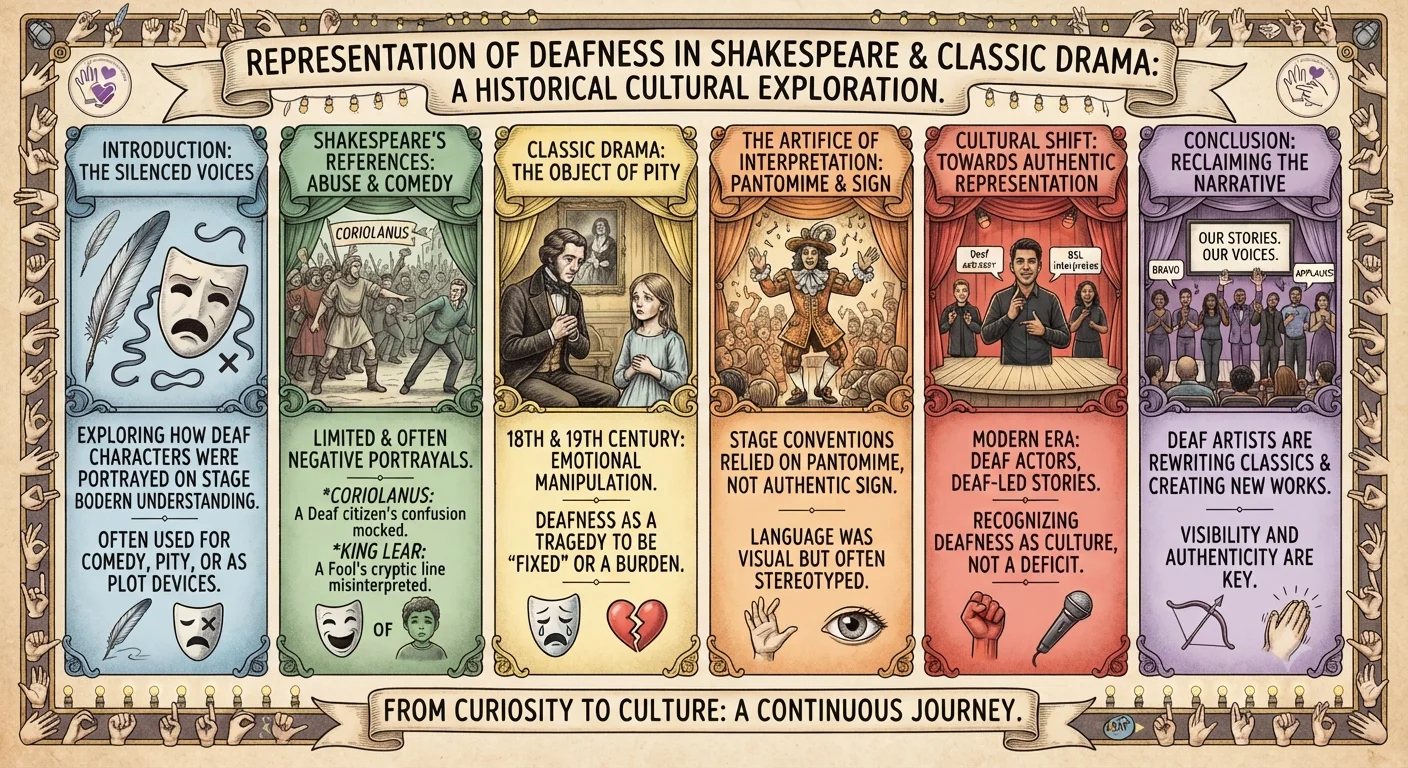 THEATRE AND PERFORMING ARTS
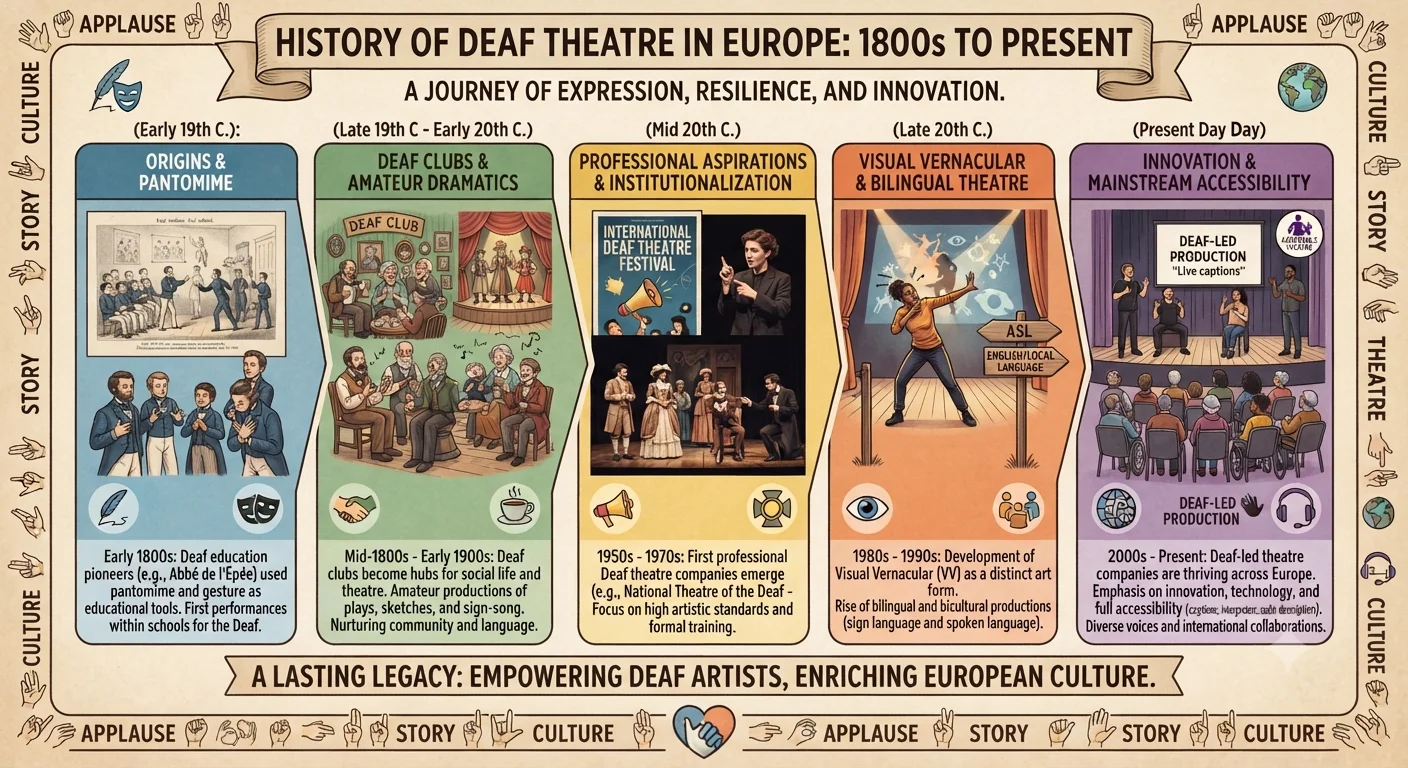 THEATRE AND PERFORMING ARTS
 THEATRE AND PERFORMING ARTS
The National Theatre of the Deaf also created a touring program for schools which exposed thousands of children across the country to deaf performers and ASL for the first time. For many young people this was their very first exposure to deaf culture in any form.
The company's impact on theatre accessibility
Before the National Theatre of the Deaf existed there was no established model for professional deaf theatre in America. The company proved that deaf performers could fill theatres sell tickets earn critical acclaim and build sustainable careers in the arts.
This had ripple effects across the entire theatre industry. Regional theatres began to consider accessibility in new ways. Drama schools and university programs began to take deaf performers seriously as students worth training. The visibility the company created helped pave the way for later deaf theatre organizations including Deaf West Theatre which was founded decades later in Los Angeles.
Why the National Theatre of the Deaf still matters today
While the original touring company eventually evolved and changed structure over the decades its legacy lives on in nearly every deaf theatre organization operating today. The techniques the company pioneered including simultaneous voicing and ASL based visual storytelling remain foundational teaching tools in deaf theatre education.
Modern deaf theatre companies and inclusive productions on Broadway and beyond owe a direct debt to the trail the National Theatre of the Deaf blazed in the late 1960s. The company proved more than fifty years ago that deaf talent belonged on professional stages and that sign language could be a powerful tool for dramatic storytelling rather than a limitation to work around.
Conclusion
The National Theatre of the Deaf changed what American theatre believed was possible. It gave deaf performers a professional stage decades before the rest of the industry was ready to make space for them. Its founders and original members built something that outlived their original company structure and became a permanent part of theatre history. Anyone interested in deaf theatre today is standing on ground this company cleared first.
FAQ
When was the National Theatre of the Deaf founded? The National Theatre of the Deaf was founded in 1967 in Waterford Connecticut by David Hays and Dr. Edna Levine.
What made the National Theatre of the Deaf unique? It was the first professional American theatre company built specifically around deaf performers using ASL combined with simultaneous voicing so hearing and deaf audiences could enjoy productions together.
Is the National Theatre of the Deaf still active? The organization evolved significantly over the decades. Its influence continues through the deaf theatre companies and techniques it inspired across the country today.