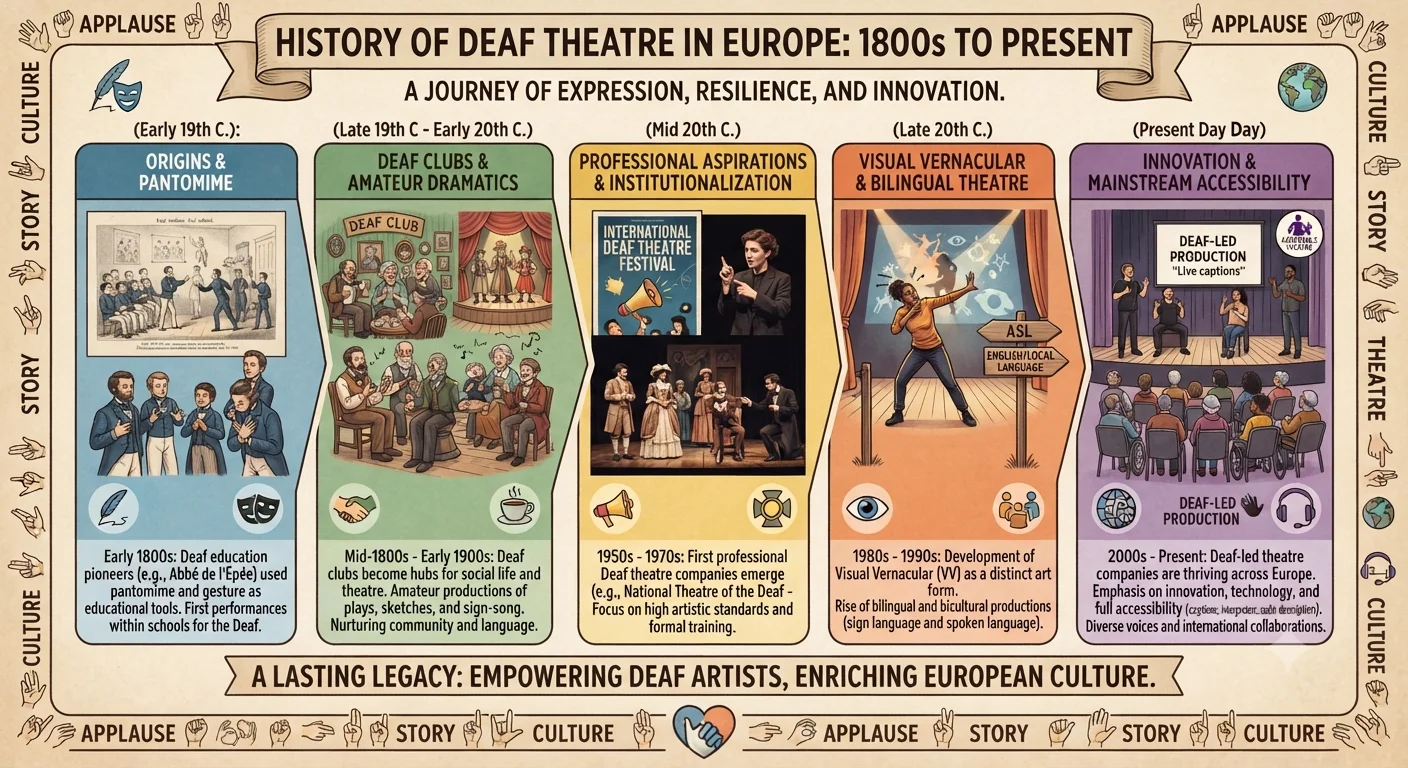
Explore the complete history of deaf theatre in Europe from the 1800s to the present covering major companies landmark productions and ongoing artistic movements
European deaf theatre has a long and distinguished history stretching back to the early 19th century when the first dedicated deaf schools created the concentrated deaf community environments in which theatrical performance traditions could develop and flourish. From these institutional origins European deaf theatre has grown into a diverse and internationally significant artistic movement with companies productions and artists that have influenced deaf theatre worldwide.
The Institutional Origins of European Deaf Theatre
The origins of organized deaf theatrical performance in Europe are closely tied to the development of formal deaf education institutions in the early 19th century. The Royal Institution for the Deaf in Paris established by Abbe Charles Michel de l'Epee in the late 18th century created one of the first concentrated environments where deaf students regularly came together providing the community foundation from which theatrical and performance traditions could naturally emerge and develop.
Similar institutional developments across Europe including the establishment of deaf schools in Germany Britain and other countries created comparable concentrated deaf community environments where theatrical performance became an important part of school cultural life and community celebration. These early institutional performance traditions planted the seeds of what would eventually grow into dedicated deaf theatre companies and professional deaf artistic careers.
France and the Clin d'Oeil Tradition
- The Institutional Origins of European Deaf Theatre
- France and the Clin d'Oeil Tradition
- German Deaf Theatre History
- Scandinavian Deaf Theatre Traditions
- The Impact of Clin d'Oeil on European Deaf Theatre
- Contemporary European Deaf Theatre
- Sign Language Recognition and Its Impact on Deaf Theatre in Europe
- Conclusion
- FAQ
- What is the most significant international deaf theatre festival in Europe?
- How did Nazi persecution affect deaf theatre in Germany?
- How has formal sign language recognition in European countries affected deaf theatre?
France has maintained a particularly rich tradition of deaf theatrical and cultural performance rooted in the country's long history of deaf education and the central role that French Sign Language played in the development of international deaf communication traditions. The Clin d'Oeil festival held in Reims has become one of the most significant international deaf cultural festivals in the world drawing deaf artists and audiences from across Europe and globally to celebrate deaf culture theatre and artistic expression.
- How to Audition for a Deaf Theatre Production Complete Guide
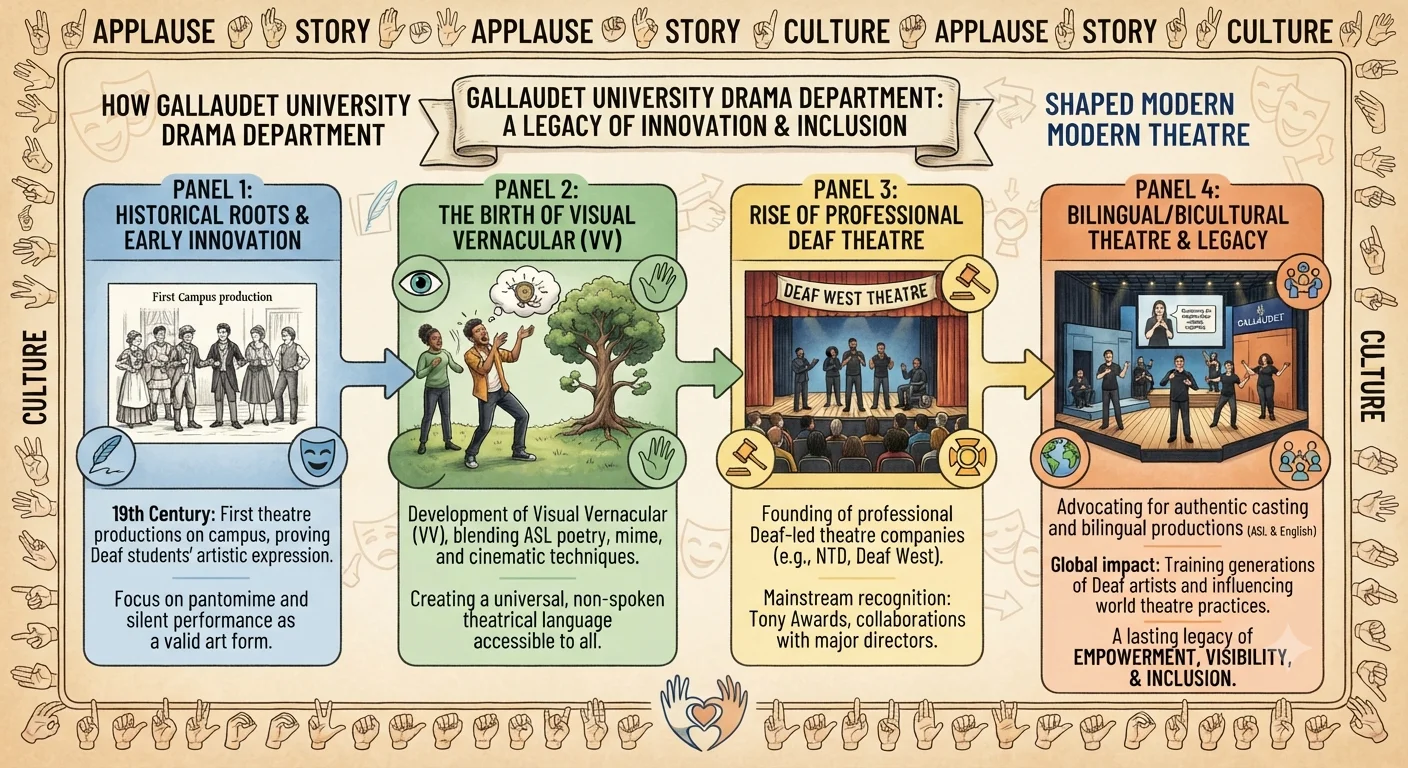
- How Gallaudet University Drama Department Shaped Modern Theatre
- Playwrights Who Changed Deaf Theatre History Forever
French deaf theatre has contributed distinctive artistic approaches that reflect French theatrical traditions including physical theatre mime and visual performance styles that have influenced how French deaf artists integrate their sign language artistry with broader European theatrical aesthetics creating a specifically French inflection on deaf theatrical expression.
German Deaf Theatre History
Germany has a significant deaf theatre history with roots in dedicated deaf education institutions and community organizations that supported theatrical performance as part of deaf cultural life throughout the 19th and 20th centuries. German deaf theatre has both participated in and been significantly affected by the broader cultural and political upheavals of German history including the devastating impact of Nazi persecution of disabled people during the Third Reich which caused catastrophic harm to deaf communities and institutions across Germany.
The recovery and rebuilding of German deaf cultural life including deaf theatre following the Second World War represents an important chapter in European deaf cultural history demonstrating the resilience of deaf community and cultural expression even in the aftermath of unprecedented persecution and destruction.
Scandinavian Deaf Theatre Traditions
Scandinavia has produced distinctive deaf theatre traditions shaped by the region's progressive approaches to disability rights social inclusion and sign language recognition. Nordic countries including Sweden Denmark Norway and Finland each have their own national sign languages and deaf theatre traditions that reflect both shared Scandinavian cultural values and distinctive national deaf cultural contexts.
Swedish deaf theatre in particular has gained international recognition for productions that integrate sophisticated theatrical technique with deep grounding in Swedish Sign Language performance traditions creating work that has influenced deaf theatre internationally through festival participation and touring productions that have brought Scandinavian deaf theatre aesthetic approaches to wider international audiences.
Recommended Articles
 THEATRE AND PERFORMING ARTS
 THEATRE AND PERFORMING ARTS
 THEATRE AND PERFORMING ARTS
 THEATRE AND PERFORMING ARTS
The Impact of Clin d'Oeil on European Deaf Theatre
The Clin d'Oeil festival has played an enormously important role in connecting European deaf theatre artists and companies with each other and with the broader international deaf theatre community since its establishment as a major recurring festival event. By bringing together deaf artists from across Europe and beyond the festival has facilitated artistic cross pollination between different national deaf theatre traditions creating opportunities for collaborative influence that individual national companies working in isolation could not achieve independently.
This international connection function of Clin d'Oeil has been particularly important for smaller national deaf theatre communities whose work might otherwise remain unknown outside their immediate national context gaining international visibility and artistic exchange opportunities through festival participation that have enriched both individual companies and the broader European deaf theatre movement as a whole.
Contemporary European Deaf Theatre
Contemporary European deaf theatre reflects both longstanding national theatrical traditions and increasingly internationalized artistic conversations shaped by festival networks digital communication and the growing global visibility of deaf arts following mainstream recognition milestones like the success of CODA. European deaf theatre companies today navigate complex questions about how to honor and develop their specific national sign language and cultural traditions while also engaging productively with international deaf theatre discourse and the growing mainstream theatre world interest in inclusive and diverse casting and storytelling.
Emerging deaf artists across Europe increasingly access training opportunities professional networks and international visibility through a combination of national institutions regional deaf arts organizations and the international festival circuit that connects European deaf theatre into a genuinely interconnected artistic community rather than a collection of isolated national traditions operating without awareness of each other.
Sign Language Recognition and Its Impact on Deaf Theatre in Europe
The gradual formal recognition of national sign languages across various European countries in recent decades has had meaningful implications for deaf theatre and deaf arts funding since recognized languages are more easily positioned within existing cultural funding frameworks that support minority language arts and cultural preservation. Countries that have formally recognized their national sign languages have created additional policy frameworks within which deaf theatre can be supported as both artistic and cultural heritage preservation activity deserving of dedicated funding and institutional support.
Conclusion
European deaf theatre from its institutional origins in 19th century deaf schools through the landmark cultural festival networks of the present represents a rich and diverse artistic movement shaped by the particular cultural political and linguistic histories of different European nations while sharing a common commitment to sign language as a complete performance language and deaf cultural experience as worthy subject matter for serious theatrical exploration. This history continues developing as new generations of European deaf artists build on these foundations while pushing toward new artistic frontiers.
FAQ
What is the most significant international deaf theatre festival in Europe?
The Clin d'Oeil festival held in Reims France is widely considered one of the most significant international deaf cultural festivals in the world drawing deaf artists and audiences from across Europe and globally to celebrate deaf theatre arts and cultural expression.
How did Nazi persecution affect deaf theatre in Germany?
The Nazi persecution of disabled people including deaf people during the Third Reich caused catastrophic harm to deaf communities and institutions across Germany devastating deaf cultural life including theatre traditions that had developed over the previous century and requiring significant rebuilding after the war.
How has formal sign language recognition in European countries affected deaf theatre?
Formal recognition of national sign languages has helped position deaf theatre within existing cultural funding frameworks that support minority language arts creating additional policy frameworks within which deaf theatre can be supported as both artistic and cultural heritage preservation activity deserving dedicated funding and institutional support.