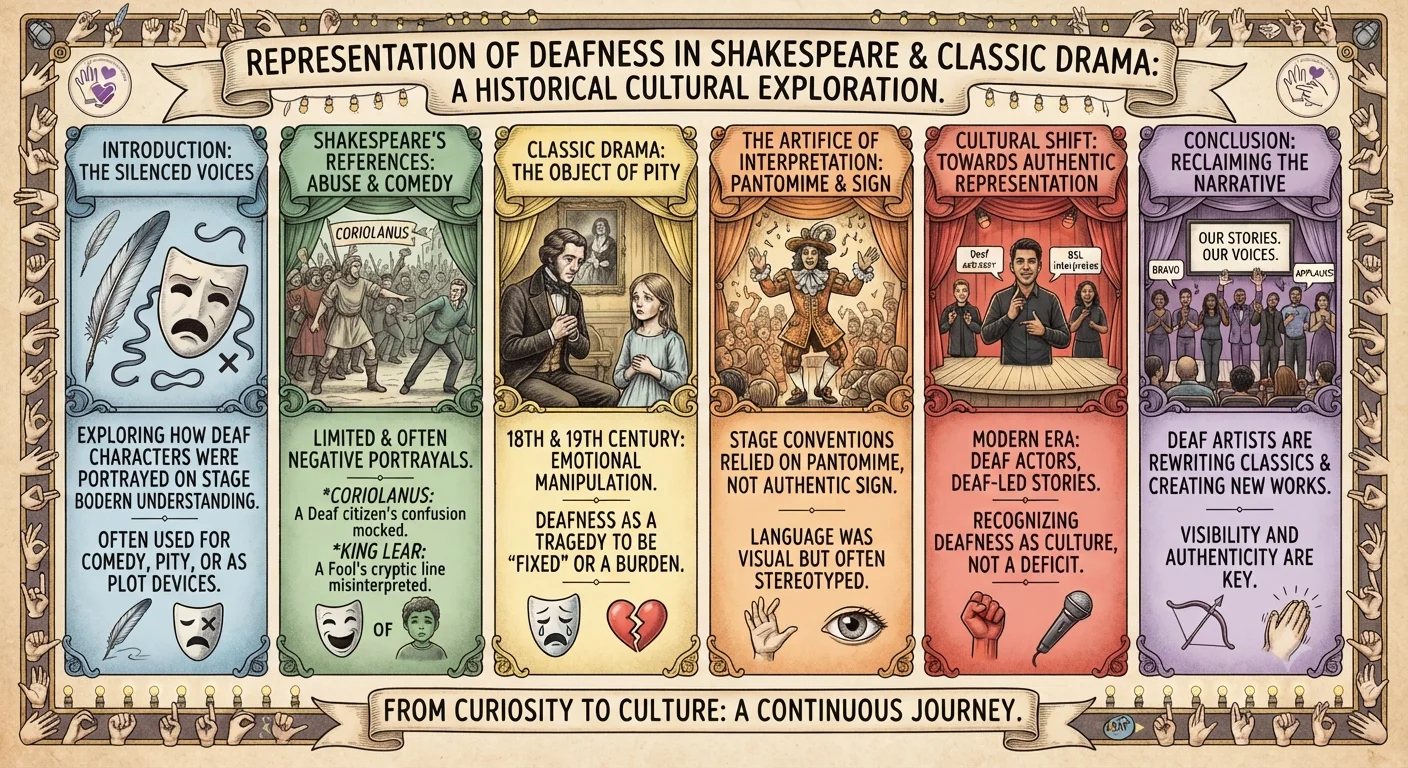
Explore how deafness appears in Shakespeare and classic drama examining historical attitudes toward hearing loss and what these portrayals reveal about their eras.
Deafness and hearing loss appear in Shakespeare and other classic dramatic works in ways that reveal the historical attitudes values and assumptions of the eras that produced them. Examining these representations with modern understanding of deaf culture and identity offers valuable insight into how perceptions of deafness have changed across centuries while also revealing certain enduring patterns in how hearing society has imagined and depicted deaf experience through dramatic fiction.
Deafness as Metaphor in Classical Drama
Throughout classical drama including Shakespeare's plays deafness frequently functions as a powerful metaphor for willful ignorance moral blindness or the refusal to hear truth rather than as a realistic representation of actual deaf experience or identity. When characters in classical plays are described as deaf or when deaf characters appear they often serve primarily metaphorical purposes within the dramatic structure rather than representing any genuine engagement with what deafness actually meant as a lived experience for real deaf people in that historical period.
This metaphorical use of deafness reflects how hearing dominated cultures throughout history have often understood deafness primarily in relation to hearing norms and what hearing people imagine the absence of hearing means rather than engaging with deaf experience and identity on its own terms. Understanding this pattern helps modern readers and theatre makers approach classical texts about deafness with appropriate critical perspective rather than treating historical dramatic representations as accurate portraits of deaf life and experience.
Specific References to Deafness in Shakespeare
- Deafness as Metaphor in Classical Drama
- Specific References to Deafness in Shakespeare
- The Mechanicals and Physical Comedy Related to Hearing
- Deaf Characters in Restoration and 18th Century Drama
- Victorian Drama and Deafness
- Modern Productions of Classical Texts with Deaf Perspectives
- What Classical Representations Teach Modern Theatre Makers
- Conclusion
- FAQ
- Did Shakespeare write any explicitly deaf characters into his plays?
- How did Victorian drama typically represent deaf characters?
- How are modern theatre companies reinterpreting classical texts through deaf perspectives?
Shakespeare's plays contain numerous references to deafness and hearing loss that range from brief metaphorical uses to more extended dramatic engagement with characters experiencing actual hearing loss. In Much Ado About Nothing the play's central plot turns on deliberate acts of overhearing and willful deafness to truth with characters choosing not to hear things that would disrupt their assumptions and desires. This play uses the language and concept of deafness extensively as a metaphor for selective attention and self deception without engaging literally with actual hearing loss.
King Lear uses imagery related to blindness more prominently than deafness but the broader theme of rulers refusing to hear truth and counsel connects to a recurring Shakespearean interest in the political and moral dimensions of selective hearing and willful deafness that recurs across multiple plays in different forms and dramatic contexts throughout the canon.
The Mechanicals and Physical Comedy Related to Hearing
Throughout Shakespeare's comic plays physical miscommunication and failure to hear or understand correctly frequently drives comedic action in ways that modern scholars have analyzed for what they reveal about early modern attitudes toward communication and bodily difference. While these comic miscommunication scenarios do not typically involve actual deaf characters the recurring dramatic interest in failures of hearing and understanding suggests how central hearing and speech were to early modern understandings of social participation and full personhood.
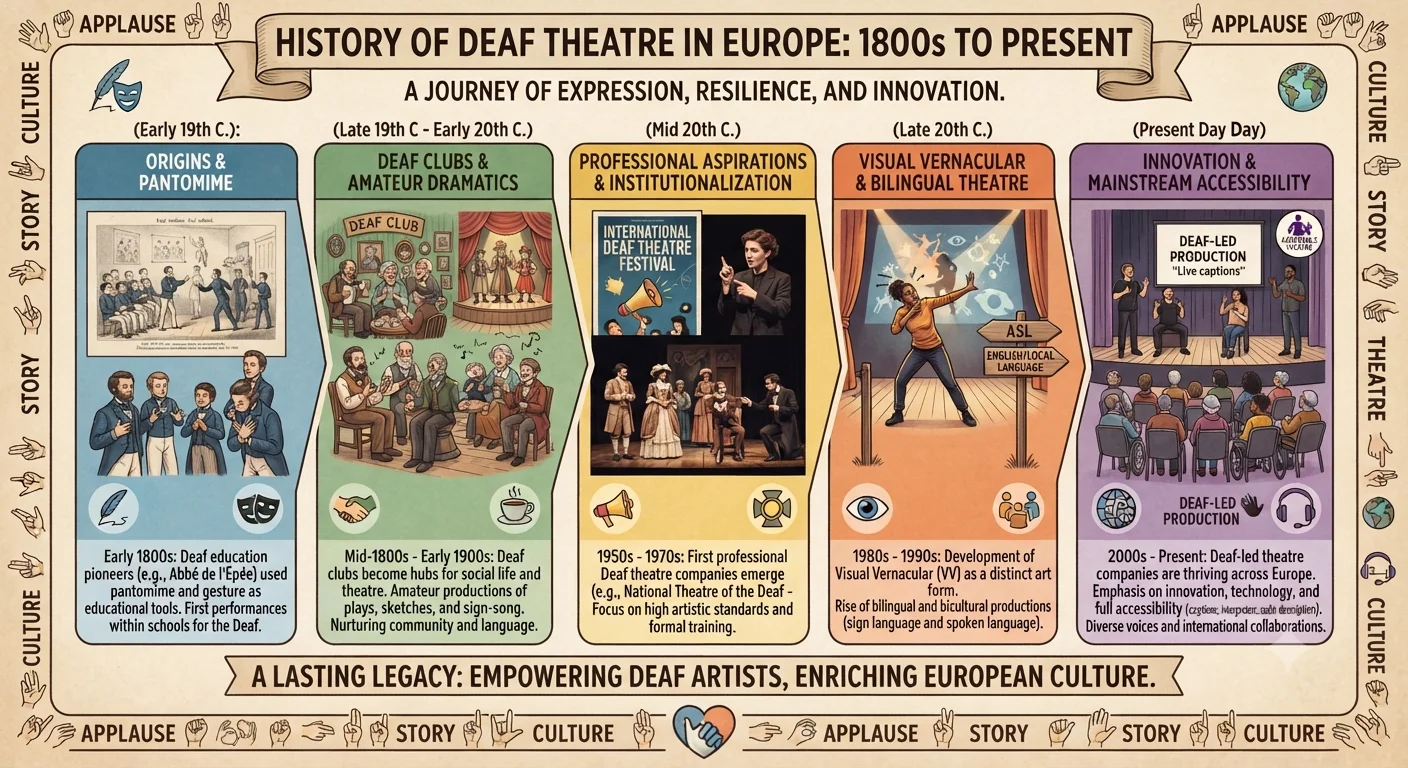
- History of Deaf Theatre in Europe from 1800s to Present
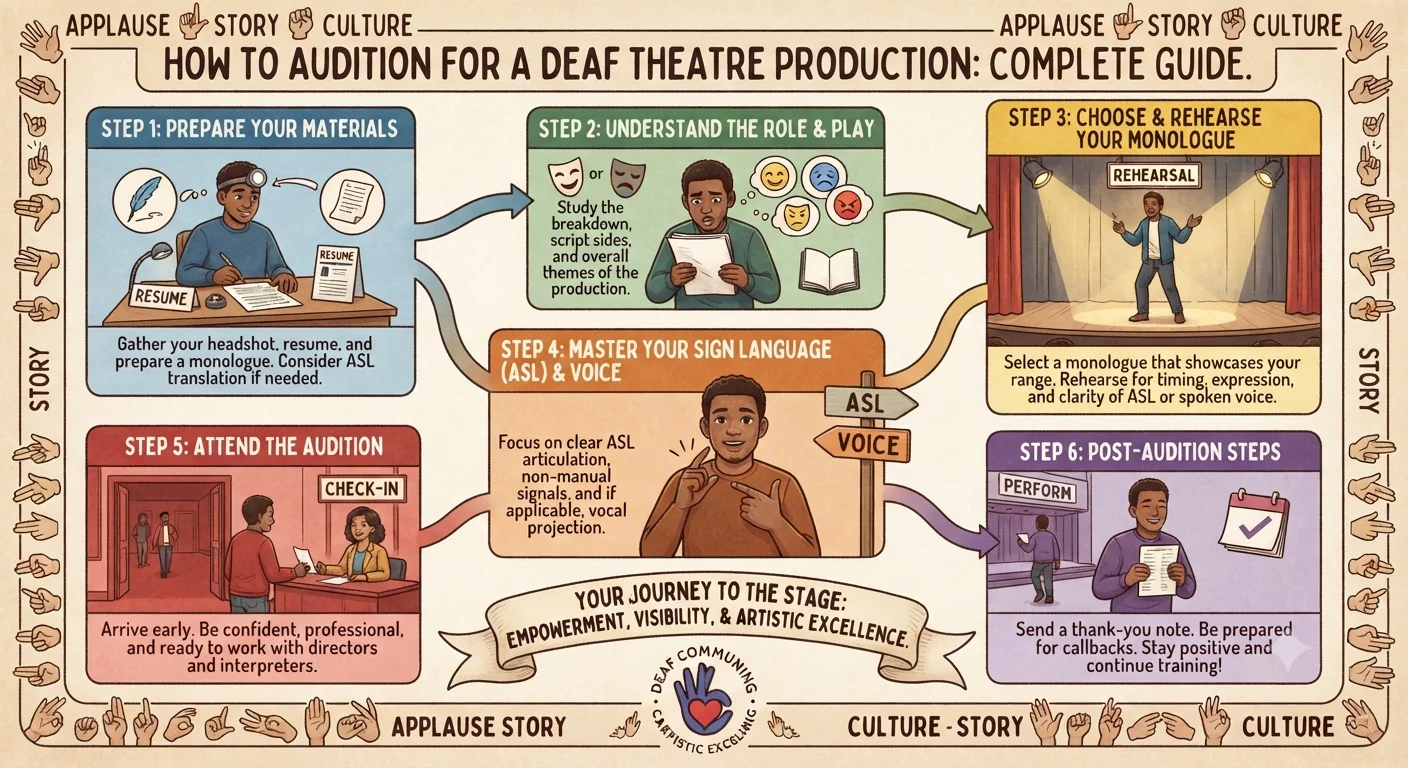
- How to Audition for a Deaf Theatre Production Complete Guide
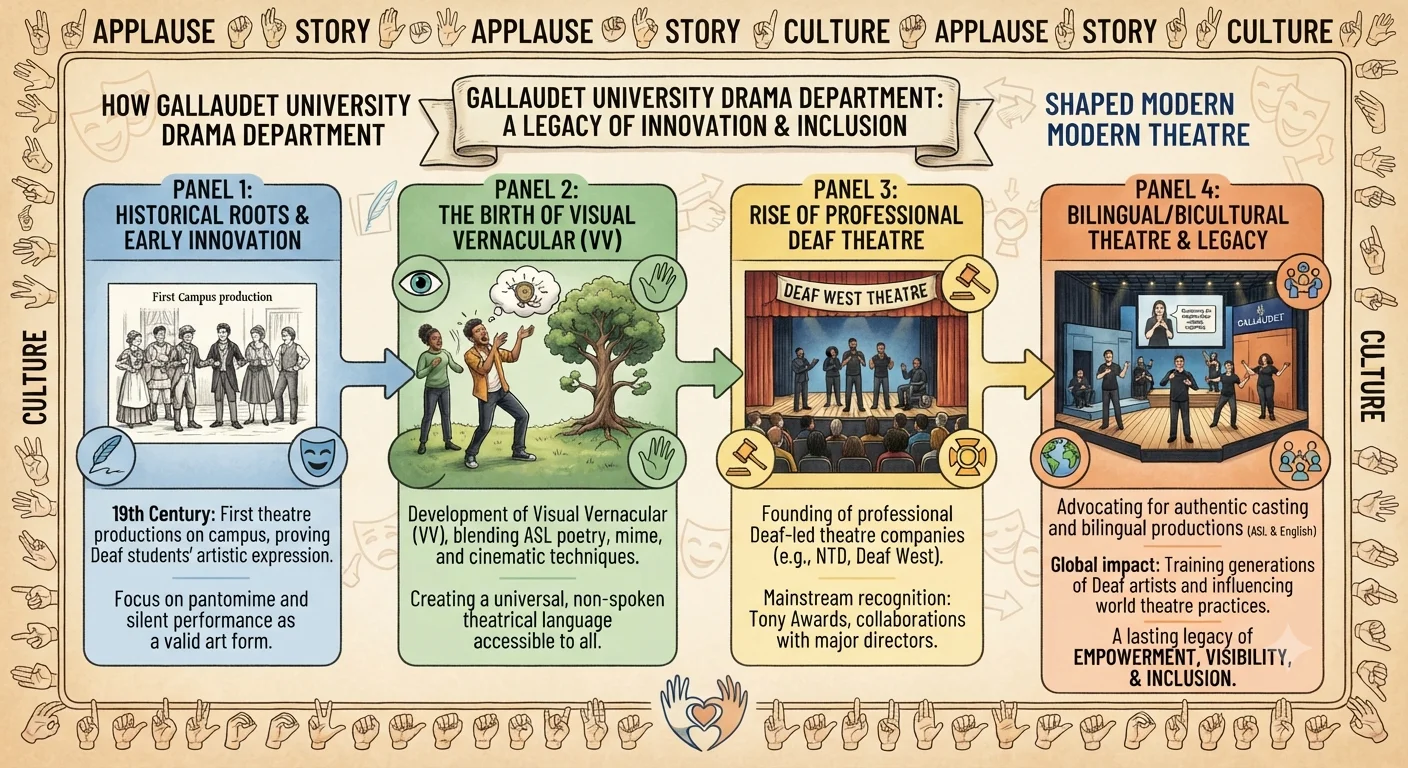
- How Gallaudet University Drama Department Shaped Modern Theatre
This dramatic centrality of speech and hearing in defining social capacity and intelligence in classical comedy reflects the historical context in which deaf people were often legally and socially excluded from full citizenship precisely because their communication differed from dominant hearing norms. Reading classical comedy's treatment of hearing and miscommunication against this historical backdrop reveals how deeply these social assumptions shaped classical dramatic representation of hearing related difference.
Deaf Characters in Restoration and 18th Century Drama
The Restoration period and 18th century theatre produced some more explicit engagement with deaf characters though these representations typically reflected the limited and often patronizing understanding of deafness characteristic of an era when formal deaf education was only beginning to develop and when deaf people remained largely socially and legally marginalized throughout European society.
As formal deaf education developed in the late 18th century following the establishment of schools like de l'Epee's Paris institution public awareness of deaf people's capacity for education communication and intellectual achievement gradually increased. This shifting awareness eventually influenced how dramatists and other creative artists began imagining and representing deaf characters though the change was gradual and uneven across different national theatrical traditions.
Recommended Articles
 THEATRE AND PERFORMING ARTS
 THEATRE AND PERFORMING ARTS
 THEATRE AND PERFORMING ARTS
 THEATRE AND PERFORMING ARTS
Victorian Drama and Deafness
Victorian drama engaged with deafness within the period's characteristic framework of sentiment melodrama and social reform that shaped how disability and physical difference more broadly were typically represented in popular entertainment. Deaf characters in Victorian melodrama often functioned as objects of sympathy and charitable concern reflecting the era's paternalistic approach to disability rather than representing deaf people as autonomous agents with their own full interior lives and self determined identities.
The Victorian theatrical context also reflects the period's growing oralist educational movement which was beginning to influence public understanding of deafness by framing it primarily as a communication deficit requiring medical and educational correction rather than a cultural difference to be respected and accommodated on its own terms. These oralist influenced attitudes shaped how Victorian dramatists imagined and depicted deaf characters in ways that differ markedly from the cultural model of deaf identity that contemporary audiences are increasingly familiar with.
Modern Productions of Classical Texts with Deaf Perspectives
Contemporary theatre makers have increasingly explored how classical texts can be reinterpreted through deaf cultural perspectives creating productions that use classic dramatic works as vehicles for exploring deaf identity and experience rather than simply reproducing historical representations of deafness that reflect outdated assumptions and limited understanding of deaf community and culture. These productions often find in classical texts unexpected resonances with deaf cultural concerns when approached with genuine deaf artistic leadership and cultural perspective.
Deaf West Theatre and similar companies have demonstrated how classic texts including musicals and plays can be transformed through integration of ASL and deaf cultural perspective into productions that speak powerfully to contemporary deaf and hearing audiences simultaneously while also revealing dimensions of the original texts that hearing focused productions cannot access in the same way.
What Classical Representations Teach Modern Theatre Makers
Studying how deafness and deaf characters appear in classical drama is valuable for modern theatre makers not because these historical representations offer models to emulate but because understanding the limitations and assumptions of historical representation helps contemporary artists understand what genuine deaf centered representation requires by contrast. Seeing clearly how classical drama used deafness primarily as metaphor or sentiment rather than engaging with deaf experience authentically helps modern artists understand what it means to move beyond these inherited patterns toward something more genuinely respectful and accurate.
Conclusion
Deafness in Shakespeare and classical drama reflects the limited and often metaphorical engagement with actual deaf experience characteristic of eras when formal deaf education was absent or limited and when deaf people remained largely marginal to mainstream social and cultural life. Reading these historical representations critically while also recognizing their artistic value within their own contexts helps modern theatre makers understand what distinguishes genuinely deaf centered contemporary representation from the patronizing or metaphorical treatments that characterized most classical dramatic engagement with deafness throughout theatrical history.
FAQ
Did Shakespeare write any explicitly deaf characters into his plays?
Shakespeare used deafness primarily as metaphor for willful ignorance and selective attention rather than creating explicitly deaf characters with genuine deaf identity suggesting his engagement with deafness was primarily rhetorical and symbolic rather than reflecting direct experience with or knowledge of actual deaf people and their lives.
How did Victorian drama typically represent deaf characters?
Victorian drama typically represented deaf characters as objects of sympathy and charitable concern within the period's characteristic melodramatic framework reflecting paternalistic attitudes toward disability rather than portraying deaf people as autonomous individuals with self determined identities and full interior lives.
How are modern theatre companies reinterpreting classical texts through deaf perspectives?
Companies like Deaf West Theatre have demonstrated how classical texts can be transformed through integration of ASL and deaf cultural perspective creating productions that reveal new dimensions of original texts while speaking powerfully to contemporary deaf and hearing audiences in ways that hearing focused traditional productions cannot achieve.