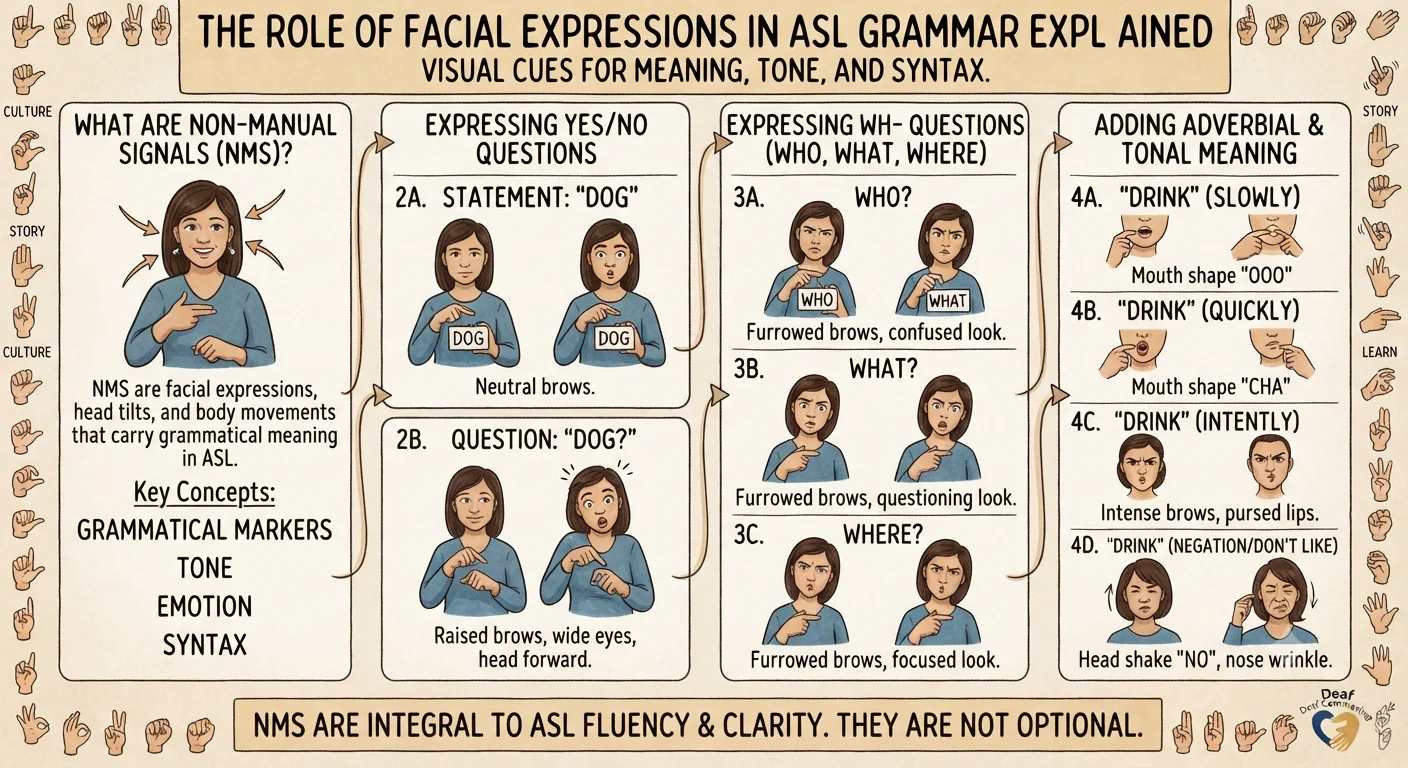
Understand the critical role of facial expressions in ASL grammar covering question markers conditionals intensity and why face is as important as hands in signing.
Facial expressions in American Sign Language are not optional emotional additions to signing. They are essential grammatical components that carry specific linguistic meaning changing the grammatical function and meaning of signed sentences in ways that hand movements alone cannot convey. Understanding the grammatical role of facial expression is one of the most important conceptual shifts any ASL learner must make to move from producing technically correct signs to communicating in genuinely grammatical ASL.
Why Facial Expression Is Grammatical Not Just Emotional
Hearing people first encountering ASL often interpret signers' facial expressions primarily as emotional communication similar to how facial expression functions in everyday hearing communication where it predominantly signals emotional state rather than carrying specific grammatical meaning. In ASL facial expression serves both emotional and grammatical functions simultaneously and learning to distinguish and produce these grammatical facial expressions correctly is as essential to clear ASL communication as learning correct handshapes and movements.
This dual function means ASL learners must develop a level of deliberate facial expression control and awareness that goes well beyond natural everyday expressive habits. Grammatical facial expressions in ASL are often more precisely defined and consistently applied than everyday emotional expression requiring conscious practice and attention to develop correctly rather than emerging naturally from emotional engagement with the signing content alone.
Facial Expression in Yes or No Questions
- Why Facial Expression Is Grammatical Not Just Emotional
- Facial Expression in Yes or No Questions
- Facial Expression in WH Questions
- Facial Expression in Conditional Sentences
- Intensity and Degree Modification Through Facial Expression
- Negation and Facial Expression
- How to Practice Grammatical Facial Expression
- Conclusion
- FAQ
- What is the difference between facial expression for yes or no questions and WH questions in ASL?
- Is head movement part of ASL grammar or just physical emphasis?
- Why do many ASL learners struggle with grammatical facial expression?
One of the clearest examples of grammatical facial expression in ASL is the marking of yes or no questions. In English yes or no questions are typically marked through changes in word order or rising vocal intonation. In ASL yes or no questions are grammatically marked through a specific facial expression that includes raised eyebrows combined with a slight forward lean of the head and body toward the end of the question.
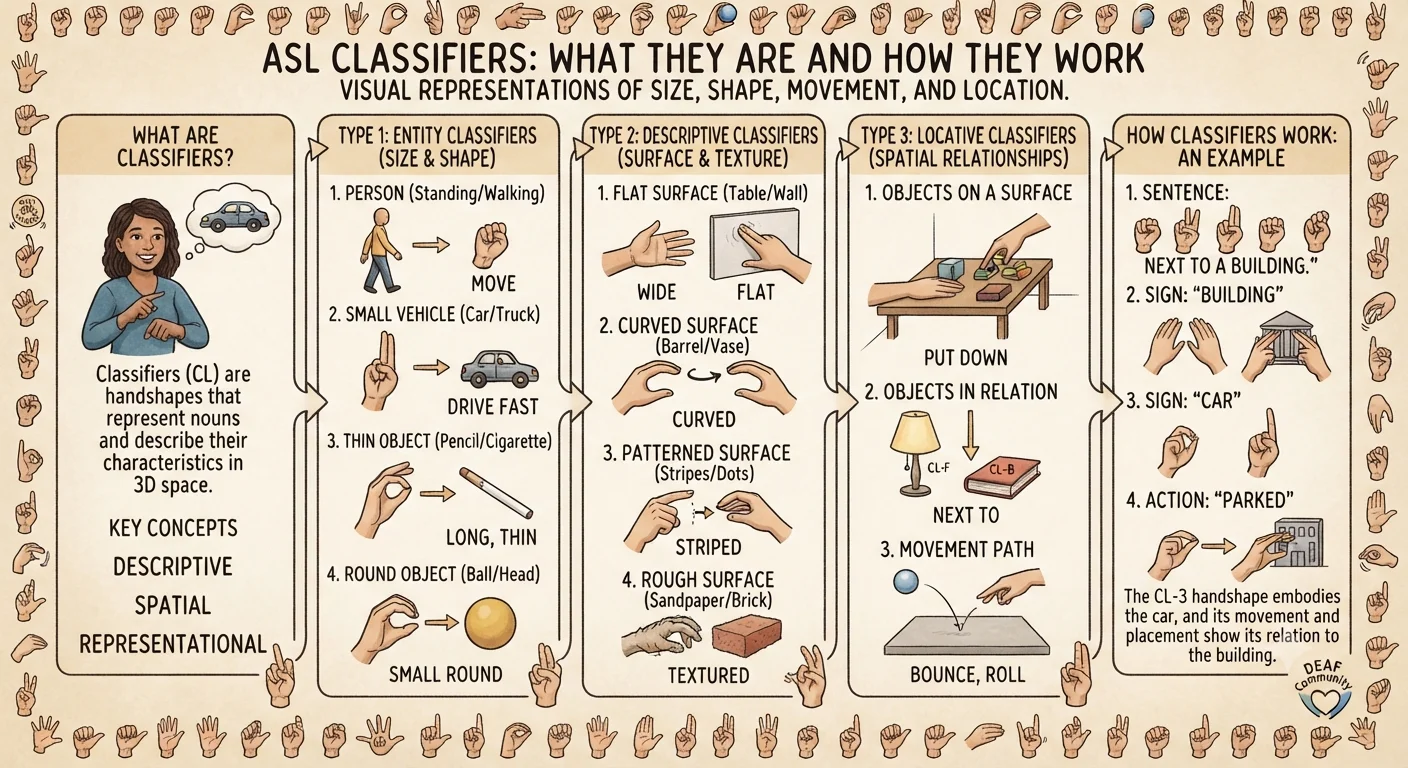
- ASL Classifiers What They Are and How They Work
- Differences Between ASL BSL Auslan and Other Sign Languages
- Top ASL YouTube Channels for Learners in 2026
This raised eyebrow marker is not optional decoration indicating that the signer is curious or interested. It is the grammatical marker that makes a statement into a yes or no question in the same way that question word order or rising intonation performs this grammatical function in English. Without the raised eyebrow marker a sentence that looks like a question from its content may be grammatically interpreted as a statement rather than a question by a fluent ASL signer.
Facial Expression in WH Questions
WH questions in ASL those asking who what where when why and how use a different facial expression from yes or no questions. Rather than raised eyebrows WH questions are marked by furrowed or lowered eyebrows combined with a slight head tilt. This contrasting facial expression allows signers and viewers to immediately recognize which type of question is being asked based on the facial grammar rather than only from the specific question sign used in the sentence.
The contrast between raised eyebrows for yes or no questions and furrowed eyebrows for WH questions is one of the most fundamental grammatical distinctions carried by facial expression in ASL and one that learners must master early since question formation is a basic and frequently needed grammatical function in any conversational context.
Facial Expression in Conditional Sentences
Conditional sentences in ASL those expressing if then relationships use another distinct facial expression to mark the conditional clause. The conditional facial marker typically involves raised eyebrows similar to yes or no questions but combined with a more sustained hold and often a slight backward lean rather than the forward lean used in questions. This facial marking signals to the viewer that the clause being signed is a conditional if clause rather than an independent statement or question.
Recommended Articles
 SIGN LANGUAGE EDUCATION
 SIGN LANGUAGE EDUCATION
 SIGN LANGUAGE EDUCATION
 SIGN LANGUAGE EDUCATION
Understanding this conditional facial marker is important for following complex ASL sentences that involve hypothetical or conditional meaning since the grammatical relationship between clauses is conveyed significantly through facial expression rather than through the kind of explicit conditional conjunctions that English relies on to mark these relationships linguistically.
Intensity and Degree Modification Through Facial Expression
Beyond marking grammatical sentence types facial expression in ASL also modifies the intensity and degree of adjectives adverbs and other descriptive elements. The same basic sign for an adjective like big or slow can be modified to mean very big or extremely slow through changes in the accompanying facial expression including mouth morphemes specific mouth shapes that carry intensifying or modifying meaning alongside the manual sign.
These intensity modifications through facial expression give skilled signers extraordinary expressive precision in describing gradations of quality and degree that would require additional words or vocal emphasis to convey in spoken language. Learners who neglect this aspect of facial grammar produce signing that feels flat and expressively limited even when their manual vocabulary and grammar are otherwise technically accurate.
Negation and Facial Expression
Negation in ASL is also marked partly through facial expression with a side to side head shake typically accompanying negative signs and negative constructions throughout the signed sentence rather than only appearing at the grammatically negative element itself. This sustained head movement throughout a negated sentence reinforces the negative meaning and is considered grammatically correct ASL rather than simply emphatic physical expression added on top of the linguistic content.
How to Practice Grammatical Facial Expression
Developing natural and grammatically accurate facial expression in ASL requires deliberate conscious practice since the specific facial configurations required for ASL grammar often differ from natural everyday expressive habits in ways that do not emerge automatically from emotional engagement with the language content. Practicing in front of a mirror recording signing on video for self review and seeking feedback from deaf or highly fluent instructors on facial expression accuracy all help learners develop this crucial component of ASL grammar.
Watching native signers with specific attention to facial expression rather than focusing exclusively on hand movements helps learners develop better intuitive understanding of how grammatical facial expression functions in natural fluent signing before they can produce it consistently themselves.
Conclusion
Facial expressions in ASL grammar are as linguistically essential as any other component of the language carrying grammatical functions related to question type conditionals negation and intensity that hand movements alone cannot convey. Learners who understand and develop accurate grammatical facial expression move from producing technically correct but expressively limited signing toward genuinely grammatical and communicatively effective ASL that fully utilizes the remarkable expressive capacity this beautiful visual language possesses.
FAQ
What is the difference between facial expression for yes or no questions and WH questions in ASL?
Yes or no questions use raised eyebrows while WH questions use furrowed or lowered eyebrows creating a clear grammatical distinction between question types that fluent signers immediately recognize from the facial grammar alone.
Is head movement part of ASL grammar or just physical emphasis?
Head movement including the side to side head shake accompanying negation is a genuine grammatical component of ASL rather than simply emphatic physical expression and is considered correct grammatical ASL when used consistently throughout negated constructions.
Why do many ASL learners struggle with grammatical facial expression?
The specific facial configurations required for ASL grammar often differ from natural everyday expressive habits and require deliberate conscious practice to develop correctly since they do not emerge automatically from emotional engagement with signing content the way emotional facial expression does in everyday communication.