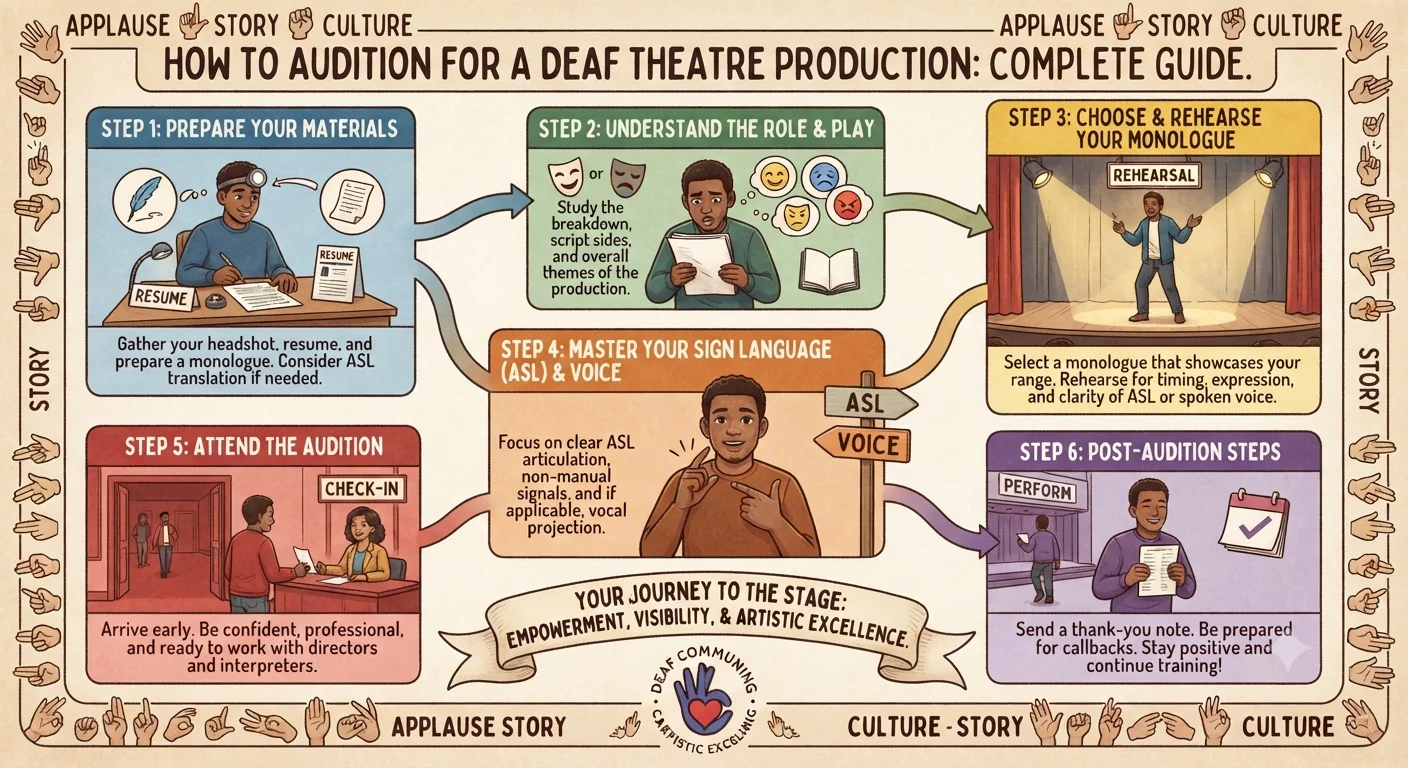
Learn how to audition for a deaf theatre production with this complete guide covering preparation ASL skills what directors look for and audition etiquette.
Auditioning for a deaf theatre production requires specific preparation and understanding of what deaf theatre directors are looking for that differs in important ways from audition preparation for standard hearing theatre productions. Whether you are a deaf performer auditioning for a role in ASL or a hearing performer seeking a role in an integrated bilingual production this complete guide provides the practical knowledge you need to audition with confidence and skill.
Understanding What Deaf Theatre Productions Look For
Before preparing for a deaf theatre audition it is essential to understand what the specific production is looking for since deaf theatre encompasses a wide range of production types with different casting needs and priorities. A production by Deaf West Theatre seeking integrated deaf and hearing performers has different requirements from a Gallaudet University production seeking deaf ASL performers or a mainstream theatre company seeking a deaf actor for a specific role within an otherwise hearing cast.
Research the producing organization its history and specific production before audition preparation begins. Understanding whether the production uses simultaneous voicing integrated casting or another bilingual approach helps you prepare appropriately rather than bringing generic preparation that may not align with what the specific production needs from its performers.
ASL Fluency Requirements for Different Types of Roles
- Understanding What Deaf Theatre Productions Look For
- ASL Fluency Requirements for Different Types of Roles
- Preparing Your Audition Material
- The Role of Facial Expression in Your Audition
- Physical Presence and Body Language in the Audition
- Research the Company and Its Artistic Aesthetic
- Audition Etiquette Specific to Deaf Theatre Contexts
- After the Audition
- Conclusion
- FAQ
- Do hearing performers need to be fluent in ASL to audition for deaf theatre productions?
- What should a deaf theatre audition monologue demonstrate?
- How important is cultural knowledge about deaf theatre for audition success?
ASL fluency requirements for deaf theatre auditions vary significantly depending on the specific role and production type. Productions where ASL is the primary performance language require genuine fluency rather than beginner or intermediate signing ability. Directors of ASL centered productions can immediately identify the difference between natural fluent signing and the halting or signed English patterns that characterize learners who have not yet achieved true ASL fluency.
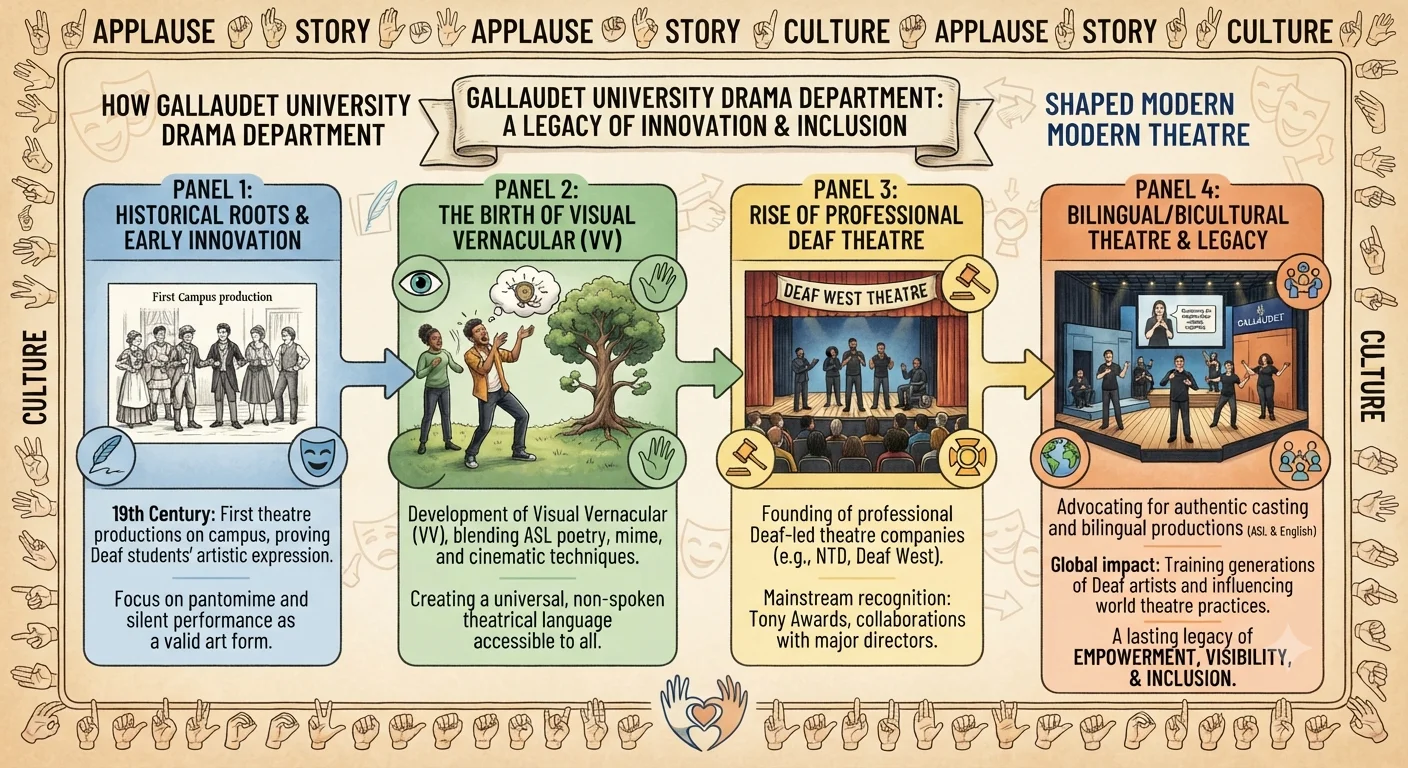
- How Gallaudet University Drama Department Shaped Modern Theatre
- Playwrights Who Changed Deaf Theatre History Forever
- Best Deaf Theatre Companies Operating in the World Today
For hearing performers auditioning for voicing roles in simultaneous voicing productions genuine ASL fluency may be less critical than strong acting skills and the ability to synchronize effectively with a deaf signing partner. However even hearing performers in these roles benefit significantly from meaningful ASL knowledge since understanding the signing happening alongside your voicing creates more authentic and responsive ensemble performance than purely mechanical synchronization without genuine linguistic comprehension.
Preparing Your Audition Material
Most deaf theatre auditions require performers to prepare a monologue or short scene that demonstrates their performance abilities within the specific language and style context of the production. For ASL performances choose material that showcases the full range of ASL's expressive capacity including facial expression spatial grammar and physical embodiment of character rather than material that is so linguistically simple it cannot demonstrate genuine performance sophistication.
If the audition sides or material are provided in advance practice them thoroughly with specific attention to both linguistic accuracy and theatrical effectiveness since deaf theatre directors are evaluating performance craft alongside language facility. Working with a coach or mentor who has professional deaf theatre experience can provide invaluable feedback on whether your audition material is achieving genuine theatrical impact rather than simply demonstrating correct signing without expressive depth.
The Role of Facial Expression in Your Audition
Facial expression is evaluated with particular attention in deaf theatre auditions since it is both a grammatical necessity in ASL and a primary carrier of character emotion and dramatic intention in performance. Directors will be watching whether your facial expression is genuinely integrated with your signing reflecting both correct ASL grammar and authentic character life or whether it feels disconnected performative or grammatically inconsistent with the signed content.
Many performers preparing for deaf theatre auditions benefit from recording their audition practice on video specifically to evaluate their own facial expression since it is extremely difficult to monitor this aspect of your own performance accurately without the external perspective that video review provides.
Recommended Articles
 THEATRE AND PERFORMING ARTS
 THEATRE AND PERFORMING ARTS
 THEATRE AND PERFORMING ARTS
 THEATRE AND PERFORMING ARTS
Physical Presence and Body Language in the Audition
Physical presence and body language carry enormous weight in deaf theatre auditions since sign language performance is a full body art form rather than only a hand and arm activity. Directors evaluating deaf theatre auditions pay close attention to the performer's use of the full body including posture weight and physical energy as carriers of character life rather than only evaluating the technical accuracy of hand signs and facial expression in isolation from broader physical performance.
Grounding exercises physical warm up and practice of your audition material with specific attention to full body character commitment rather than only linguistic accuracy will help ensure your physical presence in the audition room reflects the fully embodied performance craft that deaf theatre demands.
Research the Company and Its Artistic Aesthetic
Researching the producing company's specific artistic aesthetic and previous productions before your audition helps you understand not just the technical requirements of the role but the broader artistic context within which the production is being created. Watching recordings of previous productions by the company when available gives you valuable insight into the visual storytelling style physical performance approach and overall aesthetic that the company values in its performers.
This research also helps you tailor your audition material selection and preparation to align with the company's aesthetic rather than bringing material that may be technically accomplished but stylistically mismatched with what the specific company is looking for in its performers.
Audition Etiquette Specific to Deaf Theatre Contexts
Deaf theatre audition etiquette includes some conventions that differ from standard hearing theatre audition protocol. Being familiar with and respectful of deaf cultural communication norms including appropriate ways of gaining attention in a group setting and respectful use of sign language in a community where ASL is not just a professional tool but a cultural language demonstrates the kind of cultural awareness and respect that deaf theatre companies value in their collaborators.
If you are a hearing performer auditioning for a bilingual production approach the audition with humility and genuine respect for the deaf performers and directors you are working with rather than treating ASL knowledge as simply a technical skill you have acquired for professional advancement. The cultural dimension of this work matters to the community creating it and that matters to the directors evaluating your audition.
After the Audition
After completing a deaf theatre audition follow standard professional theatre etiquette regarding follow up communication and next steps. If you are not cast in this particular production treat the audition as a valuable experience that builds your relationship with the company and community for future opportunities. Deaf theatre is a relatively small professional world where ongoing relationships matter significantly and handling the audition process with grace and professionalism regardless of outcome builds the kind of reputation that opens doors over time.
Conclusion
Auditioning for deaf theatre production requires thorough research into the specific production and company genuine ASL fluency preparation for signing roles strong physical and facial expression work and cultural respect for the deaf community context within which this work is created. Performers who approach deaf theatre auditions with this level of preparation and genuine cultural engagement give themselves the strongest possible foundation for successful auditions and meaningful contributions to this extraordinary theatrical tradition.
FAQ
Do hearing performers need to be fluent in ASL to audition for deaf theatre productions?
Requirements vary by production and role type with ASL centered productions requiring genuine fluency while voicing roles in bilingual productions may prioritize acting skills and synchronization ability though meaningful ASL knowledge always strengthens hearing performers' contributions to bilingual work.
What should a deaf theatre audition monologue demonstrate?
An audition monologue should demonstrate the full range of ASL's expressive capacity including facial expression spatial grammar and physical character embodiment rather than material so linguistically simple it cannot show genuine performance sophistication and theatrical craft.
How important is cultural knowledge about deaf theatre for audition success?
Cultural knowledge and genuine respect for deaf community context is highly valued by deaf theatre companies and directors since this work carries cultural significance beyond technical performance craft making informed respectful engagement with the community an important component of overall audition readiness.