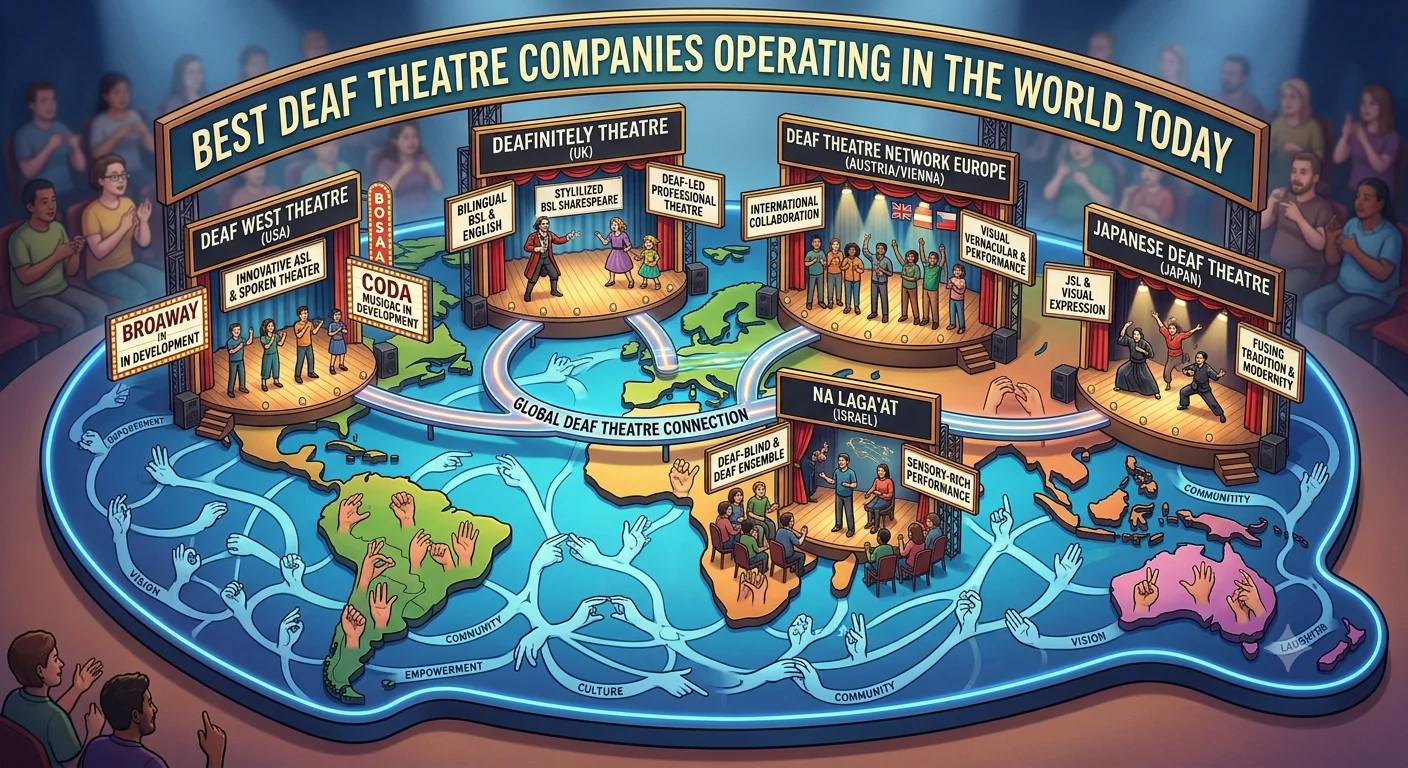
Deaf theatre companies around the world continue to push artistic boundaries while providing essential professional opportunities for deaf performers directors and designers. These organizations carry forward a rich tradition while continuing to innovate and reach new audiences with powerful theatrical storytelling.
Deaf West Theatre
Deaf West Theatre based in Los Angeles has become one of the most critically acclaimed deaf theatre companies in the world particularly known for its innovative integration of deaf and hearing performers within single unified productions. The company's landmark Broadway revivals of Big River and Spring Awakening demonstrated that fully integrated bilingual musical theatre could achieve both critical acclaim and significant commercial success.
Deaf West Theatre continues to produce original and adapted works that showcase ASL as a core artistic element woven directly into staging and choreography rather than treated as an accommodation layered on top of an otherwise unchanged production. The company has become a vital training ground and professional home for deaf theatre artists pursuing careers at the highest levels of the industry.
National Theatre of the Deaf legacy organizations
- Deaf West Theatre
- National Theatre of the Deaf legacy organizations
- International deaf theatre companies
- University and educational deaf theatre programs
- Regional and community based deaf theatre organizations
- What makes a deaf theatre company successful
- Challenges facing deaf theatre companies today
- The future of deaf theatre companies
- Conclusion
- FAQ
- What is considered one of the most successful deaf theatre companies today?
- Where can someone train to become a professional deaf theatre artist?
- What challenges do deaf theatre companies commonly face?
While the original National Theatre of the Deaf founded in 1967 evolved significantly over the decades its influence and techniques continue through various organizations and educational programs that carry forward the simultaneous voicing and ASL based visual storytelling traditions the company pioneered. These legacy organizations continue introducing new audiences to deaf theatre through touring productions and educational programming.
International deaf theatre companies
Beyond the United States numerous deaf theatre companies operate internationally bringing their own national sign languages and cultural contexts to deaf theatre production. These companies often face similar challenges around funding and mainstream recognition while developing distinctive artistic traditions shaped by their own specific deaf community and cultural context within their respective countries.
- How Deaf Theatre Directors Stage Productions Differently
- Children of a Lesser God Play and Movie Complete Review
- Top Deaf Theatre Productions You Should Know About
International deaf theatre festivals and gatherings provide important opportunities for these companies to connect share techniques and showcase work to broader international audiences interested in deaf theatre beyond their home countries creating valuable cross cultural artistic exchange within the global deaf theatre community.
University and educational deaf theatre programs
Gallaudet University maintains one of the most respected deaf theatre programs in the world combining rigorous theatrical training with deep grounding in deaf culture and ASL performance traditions. The program has trained generations of deaf theatre professionals who have gone on to work with companies like Deaf West Theatre and other organizations throughout the industry.
Other universities with strong deaf studies programs also maintain notable theatre programs that contribute to training the next generation of deaf theatre artists providing important educational pathways into professional deaf theatre careers.
Recommended Articles
 THEATRE AND PERFORMING ARTS
 THEATRE AND PERFORMING ARTS
 THEATRE AND PERFORMING ARTS
 THEATRE AND PERFORMING ARTS
Regional and community based deaf theatre organizations
Beyond major nationally recognized companies numerous regional and community based deaf theatre organizations operate across the United States and internationally providing important local opportunities for deaf performers and audiences who may not have access to major metropolitan deaf theatre companies. These smaller organizations play a vital role in keeping deaf theatre accessible and connected to local deaf communities throughout the country.
What makes a deaf theatre company successful
The most successful and respected deaf theatre companies typically share certain qualities including strong commitment to authentic deaf casting and creative leadership genuine integration of ASL as a core artistic element rather than simply an accommodation and sustained institutional support that allows the company to produce consistent high quality work over an extended period rather than operating only sporadically based on uncertain funding.
Strong relationships with deaf community organizations and educational institutions also tend to characterize the most successful deaf theatre companies since these relationships help ensure a pipeline of trained deaf theatre artists and engaged audience members supporting the company's ongoing work.
Challenges facing deaf theatre companies today
Despite significant artistic achievements deaf theatre companies continue to face funding challenges that affect many smaller arts organizations more broadly compounded by the additional costs sometimes associated with accessibility accommodations and specialized staffing needs unique to deaf theatre production.
Building consistent mainstream audience awareness and ticket sales also remains an ongoing challenge for many deaf theatre companies despite critical acclaim for productions like Deaf West Theatre's Broadway revivals demonstrating that continued advocacy and audience development work remains necessary even after achieving significant artistic recognition.
The future of deaf theatre companies
As successful productions continue demonstrating both artistic merit and commercial viability deaf theatre companies appear positioned for continued growth and recognition within the broader theatre industry. Increased mainstream awareness following productions like CODA's Academy Award success may also help build broader audience interest in deaf theatre companies and their ongoing work moving forward.
Conclusion
Deaf theatre companies around the world continue carrying forward a rich artistic tradition while pushing toward new innovations in staging storytelling and representation. From Deaf West Theatre's groundbreaking Broadway success to dedicated university programs and international companies these organizations provide essential professional opportunities and powerful artistic experiences that continue shaping the broader theatre industry's understanding of inclusive and innovative storytelling.
FAQ
What is considered one of the most successful deaf theatre companies today?
Deaf West Theatre based in Los Angeles is widely considered one of the most critically acclaimed deaf theatre companies known for its innovative Broadway revivals integrating deaf and hearing performers.
Where can someone train to become a professional deaf theatre artist?
Gallaudet University maintains one of the most respected deaf theatre training programs in the world combining theatrical training with deep grounding in deaf culture and ASL performance traditions.
What challenges do deaf theatre companies commonly face?
Deaf theatre companies often face funding challenges compounded by accessibility accommodation costs along with the ongoing need to build mainstream audience awareness despite achieving significant critical acclaim for their productions.