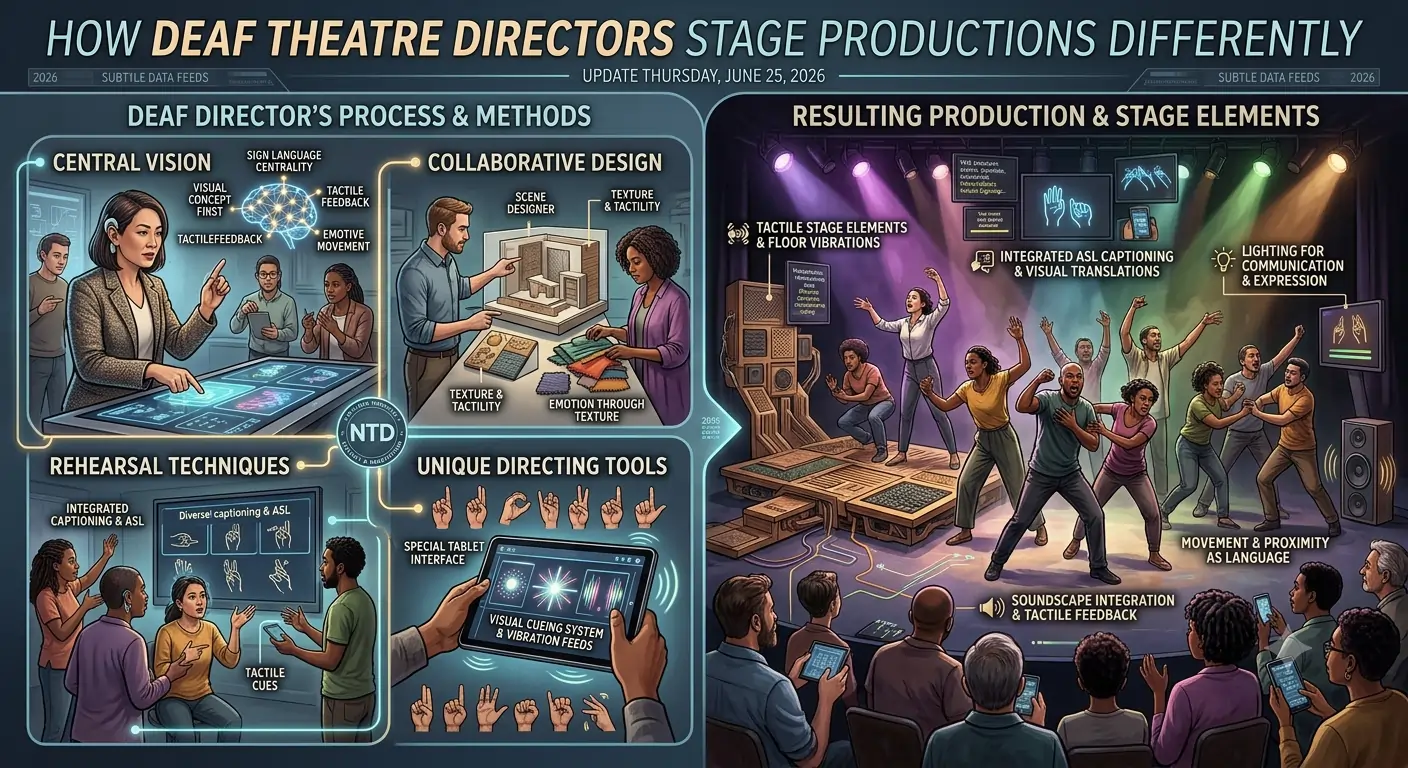
Deaf theatre directors bring a distinct approach to staging productions shaped by deep fluency in visual language and a lived understanding of how deaf audiences and performers experience theatrical space. Understanding how their directorial approach differs from typical hearing centered staging reveals the unique artistic contributions deaf directors bring to the theatre world.
Prioritizing sightlines for sign language
One of the most fundamental considerations for deaf theatre directors is ensuring clear sightlines so audience members can see signing actors clearly at all times. This consideration shapes blocking decisions in ways that may differ significantly from typical hearing theatre staging where actors can speak from various positions on stage without concern about whether their faces and hands remain visible to the entire audience.
Deaf directors often avoid blocking that turns a signing actor's back to significant portions of the audience even briefly since this would make their dialogue completely inaccessible during that moment. This requires creative solutions for staging multi character scenes that still feel dynamic and theatrically interesting while respecting these visual access requirements throughout.
Staggering rather than overlapping dialogue
In spoken theatre overlapping dialogue between characters can create realistic and dynamic scenes since audiences can process multiple voices simultaneously to some degree. Deaf theatre directors typically avoid overlapping signed dialogue since audience members cannot easily watch two signers at once the way hearing audiences can process overlapping speech.
This often means deaf directors stage conversations with more deliberate turn taking or use staging techniques that direct audience attention clearly to whichever character is signing at a given moment ensuring the visual information remains accessible throughout group scenes.
Using stage space to represent relationships and meaning
Deaf theatre directors often draw on ASL's grammatical use of space when designing blocking and staging. Just as ASL signers establish spatial relationships between people and ideas in the signing space directors may use the physical stage space to represent relationships hierarchies or emotional distance between characters in ways that complement the visual grammar already present in signed dialogue.
This can create a more integrated visual language throughout a production where staging choices and signed dialogue work together to reinforce meaning rather than existing as separate theatrical elements layered on top of each other.
Lighting design considerations unique to deaf theatre
Lighting design takes on particular importance in deaf theatre productions since visibility of hands face and body is essential for the audience to follow signed dialogue at all. Deaf theatre directors often work closely with lighting designers to ensure performers remain clearly visible throughout a scene avoiding silhouette effects or dramatic shadow that might look visually striking but would render signed dialogue unreadable.
This does not mean deaf theatre lighting design sacrifices artistic ambition. Rather it requires lighting designers to find creative solutions that achieve mood and atmosphere while still maintaining the visibility signed performance requires throughout every scene.
Integrating visual storytelling techniques beyond dialogue
Deaf theatre directors often draw on visual vernacular techniques and other visually rich storytelling methods that extend beyond simply staging dialogue scenes. These techniques can include highly physical and cinematic storytelling sequences that convey action and perspective shifts through movement and visual composition in ways that parallel film editing techniques translated into live physical performance.
Recommended Articles
 THEATRE AND PERFORMING ARTS
 THEATRE AND PERFORMING ARTS
 THEATRE AND PERFORMING ARTS
 THEATRE AND PERFORMING ARTS
This visual storytelling tradition gives deaf directed productions a distinct aesthetic quality that audiences often describe as more visually dynamic and physically expressive compared to typical dialogue heavy hearing theatre productions.
Working with mixed deaf and hearing casts
Many deaf theatre directors work on productions with mixed deaf and hearing casts requiring careful attention to how both groups of performers can work together cohesively on stage. This often involves directors making deliberate choices about how spoken and signed dialogue interact whether through simultaneous voicing techniques or through integrated storytelling where both languages occur naturally within the narrative itself.
- Children of a Lesser God Play and Movie Complete Review
- Top Deaf Theatre Productions You Should Know About
- National Theatre of the Deaf Complete History and Legacy
Successfully directing mixed cast productions requires directors to think carefully about pacing since ASL and spoken English do not always take the same amount of time to convey equivalent information which can create timing challenges that experienced deaf directors learn to navigate skillfully.
Notable deaf theatre directors and their influence
Directors associated with companies like Deaf West Theatre have played significant roles in developing and refining these distinctive staging approaches over decades of professional work. Their influence extends beyond their own specific productions by training and mentoring younger deaf theatre artists who carry these techniques forward into new projects and collaborations throughout the broader theatre industry.
Why this directorial approach matters
The distinctive staging approaches deaf theatre directors bring to their work are not simply technical accommodations. They represent genuine artistic innovations that have influenced theatrical staging more broadly even in productions without significant deaf casting. Techniques developed to serve visual storytelling needs in deaf theatre have informed how hearing directors think about visual clarity stage composition and physical storytelling in their own work as well.
Conclusion
Deaf theatre directors bring a distinctive and artistically rich approach to staging shaped by deep understanding of visual language sightline requirements and the grammatical use of space found in sign language itself. Their innovations in blocking lighting and visual storytelling have not only created powerful deaf theatre productions but have influenced theatrical staging practices more broadly across the industry.
FAQ
Why do deaf theatre directors avoid overlapping dialogue in their staging? Audience members following signed dialogue cannot easily watch two signers simultaneously the way hearing audiences can process overlapping speech so deaf directors typically stage conversations with clearer turn taking instead.
How does lighting design differ in deaf theatre productions? Lighting must prioritize keeping performers clearly visible throughout scenes since audiences need to see hands face and body clearly to follow signed dialogue which influences choices around shadow and silhouette effects.
Can hearing directors learn from deaf theatre staging techniques? Yes many staging innovations developed within deaf theatre including visual storytelling techniques and attention to stage composition have influenced broader theatrical practice even in productions without significant deaf casting.