
Learning to express emotions and feelings in ASL requires mastering both specific sign vocabulary and the facial expressions that work alongside these signs to convey full emotional meaning. This guide covers common ASL emotion vocabulary along with important tips for beginners learning to express feelings accurately and naturally.
Why emotional vocabulary matters early in ASL learning
Emotional vocabulary represents some of the most practically useful early vocabulary for ASL learners since expressing and understanding feelings comes up constantly in everyday conversation. Building strong emotional vocabulary early helps learners engage in more meaningful and natural conversations rather than being limited to purely functional or factual communication.
Beyond vocabulary emotional signs in ASL particularly emphasize the importance of facial expression since facial expression often intensifies or clarifies the specific emotional meaning being conveyed beyond what the hand sign alone communicates.
Basic positive emotion signs
- Why emotional vocabulary matters early in ASL learning
- Basic positive emotion signs
- Basic negative emotion signs
- Signs for more nuanced emotional states
- The critical role of facial expression
- How emotional signs can intensify or soften meaning
- Practicing emotional vocabulary effectively
- Common mistakes beginners make with emotional signs
- Conclusion
- FAQ
- Why is facial expression so important when signing emotions in ASL?
- Can the same ASL emotional sign convey different intensity levels?
- What is a common mistake beginners make when learning ASL emotional vocabulary?
Happy in ASL is typically signed with both hands brushing upward against the chest with an accompanying smile that reinforces the positive emotional meaning being conveyed. Excited involves a similar brushing motion but performed with more energy and intensity reflecting the heightened emotional state being expressed.
- How to Become a Sign Language Interpreter Career Guide
- How Signed Exact English Differs from ASL
- ASL Numbers and Counting Complete Beginner Guide
Love is commonly signed by crossing both arms over the chest in a hugging motion. Proud is signed with the thumb moving up the chest. These positive emotion signs are foundational vocabulary that beginners should prioritize early given how frequently they come up in everyday conversation.
Basic negative emotion signs
Sad in ASL involves both hands moving down the face with fingers spread reflecting a visual representation of a downward emotional expression. Angry is typically signed with a clawed hand shape moving up from the stomach toward the chest often accompanied by a more intense facial expression that reinforces the emotional intensity being conveyed.
Scared or afraid involves both hands moving up from the chest with a startled facial expression. Frustrated is commonly signed with a flat hand striking near the chin or face area reflecting the visual intensity associated with this particular emotional state.
Signs for more nuanced emotional states
Beyond basic emotions ASL includes vocabulary for more nuanced emotional and psychological states including signs for anxious, confused, embarrassed, jealous and many other more specific emotional experiences that go beyond the most basic happy sad angry vocabulary that beginners typically learn first.
Learning this more nuanced emotional vocabulary becomes increasingly important as ASL learners progress beyond basic conversational ability toward more sophisticated and natural emotional expression that matches the full range of feelings people commonly need to express and discuss in everyday conversation.
The critical role of facial expression
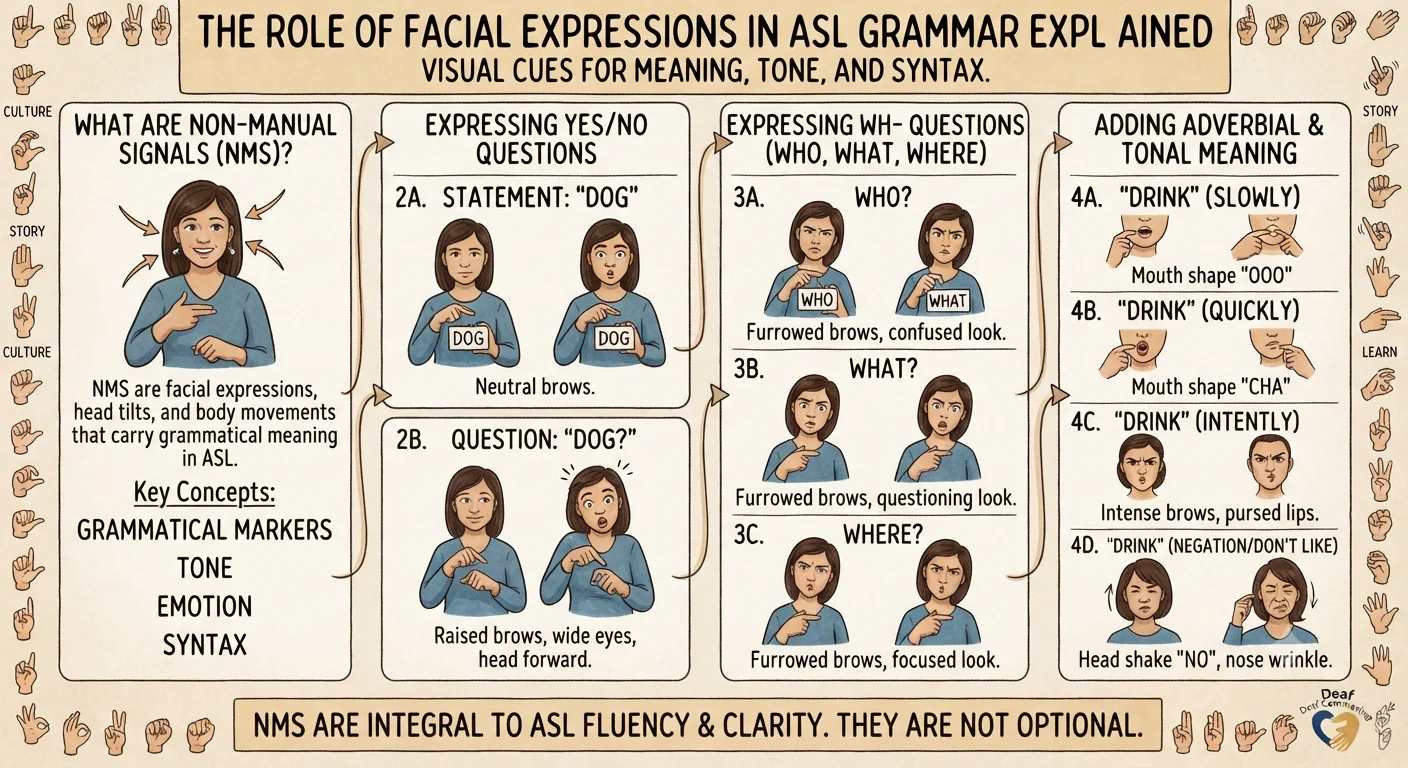
Facial expression in ASL emotional vocabulary is not optional or purely decorative. It often carries essential grammatical and intensity information that significantly affects how an emotional sign is understood. The same basic hand sign for an emotion can convey very different intensity levels depending on the accompanying facial expression used alongside it.
Recommended Articles
 SIGN LANGUAGE EDUCATION
 SIGN LANGUAGE EDUCATION
 SIGN LANGUAGE EDUCATION
 SIGN LANGUAGE EDUCATION
Beginners sometimes make the mistake of focusing exclusively on hand shape accuracy while neglecting facial expression which can result in emotional signs that are technically correct but feel flat or unclear to fluent signers who expect and rely on facial expression to convey full emotional meaning and intensity.
How emotional signs can intensify or soften meaning
Many ASL emotional signs can be modified through changes in movement speed size and accompanying facial expression to convey different intensity levels of the same basic emotion. A slightly modified version of the sign for happy performed with smaller movement and more subdued facial expression might convey mild contentment while a larger more energetic version with an enthusiastic facial expression could convey intense joy or excitement.
This flexibility allows ASL signers to convey nuanced emotional gradations similar to how spoken language speakers might use different words or vocal tone to distinguish between mild satisfaction and intense joy even when discussing fundamentally similar positive emotional states.
Practicing emotional vocabulary effectively
The most effective way to practice emotional vocabulary in ASL involves combining vocabulary memorization with deliberate facial expression practice ideally using a mirror or video recording to check that facial expressions are clear and appropriately matched to the intended emotional meaning being conveyed.
Watching native signers discuss emotional topics in natural conversation also provides valuable exposure to how emotional vocabulary and facial expression work together fluently in real communication contexts beyond isolated vocabulary practice alone.
Common mistakes beginners make with emotional signs
Beyond neglecting facial expression beginners sometimes confuse similar emotional signs that share similar handshapes or movement patterns. Taking time to practice potentially confusing emotional sign pairs side by side can help beginners build clearer distinction between similar signs that might otherwise be mixed up in actual conversation.
Another common mistake involves using overly intense facial expressions for relatively mild emotional states or conversely using flat facial expressions for intense emotional content which can create confusing or unclear communication even when the basic hand sign itself is technically correct.
Conclusion
Building strong ASL emotional vocabulary combined with appropriate facial expression skills represents essential foundational learning for any ASL student given how frequently emotional expression comes up in natural everyday conversation. By practicing both vocabulary and facial expression together beginners can develop more natural and effective emotional communication skills that support meaningful conversation with deaf community members.
FAQ
Why is facial expression so important when signing emotions in ASL?
Facial expression often carries essential information about emotional intensity and specific meaning that significantly affects how an emotional sign is understood making it just as important as correct hand shape for clear communication.
Can the same ASL emotional sign convey different intensity levels?
Yes many ASL emotional signs can be modified through changes in movement size speed and accompanying facial expression to convey different intensity levels of the same basic underlying emotion.
What is a common mistake beginners make when learning ASL emotional vocabulary?
Beginners often focus exclusively on hand shape accuracy while neglecting facial expression which can result in technically correct signs that feel flat or unclear to fluent signers expecting full facial expression alongside emotional vocabulary.