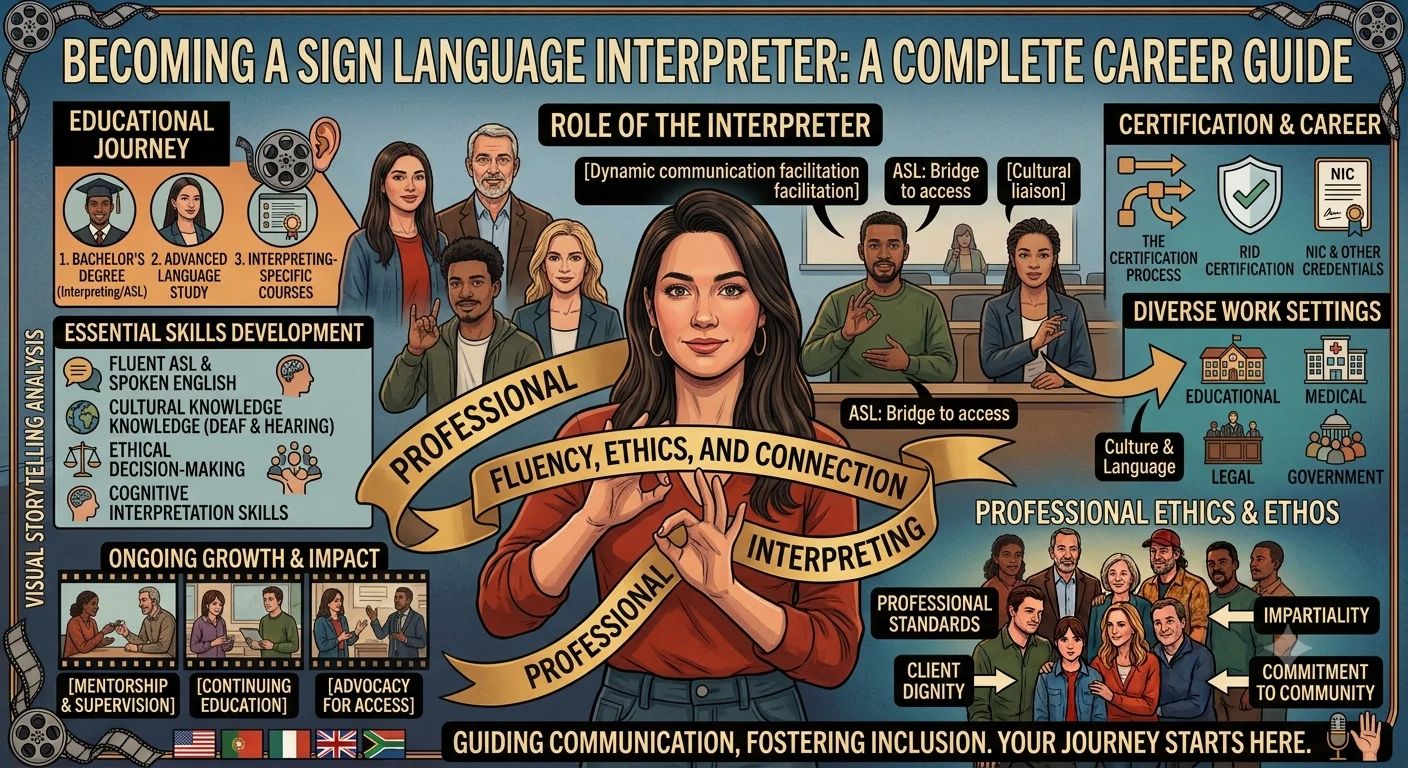
Becoming a sign language interpreter is a rewarding career path that requires significant dedication to language fluency cultural competency and specialized professional training. This complete guide walks through exactly what it takes to become a qualified sign language interpreter and build a successful career in this important profession.
Understanding what sign language interpreters do
Sign language interpreters facilitate communication between deaf or hard of hearing individuals who use ASL and hearing individuals who use spoken English. This work happens across countless settings including medical appointments legal proceedings educational settings business meetings and countless other contexts where clear accurate communication is essential.
Interpreters must convey not just literal word meaning but full contextual and cultural meaning between two distinct languages with different grammatical structures which requires far more than simple word for word translation ability. This work demands deep fluency in both languages along with strong cultural competency regarding deaf community norms and values.
Step one achieve genuine ASL fluency
- Understanding what sign language interpreters do
- Step one achieve genuine ASL fluency
- Step two pursue formal interpreter training
- Step three obtain national certification
- Step four gain practical experience
- Specialized interpreting career paths
- Skills beyond language fluency that successful interpreters need
- The job outlook for sign language interpreters
- Conclusion
Before pursuing formal interpreter training aspiring interpreters need to achieve strong conversational and ideally near native ASL fluency. This typically requires years of dedicated study and immersion in deaf community contexts rather than simply completing introductory ASL coursework which provides only foundational skills insufficient for professional interpreting work.
Many successful interpreters begin their ASL journey years before pursuing formal interpreter training whether through having deaf family members taking extensive university ASL coursework or deeply immersing themselves in deaf community spaces and relationships over an extended period before considering interpreting as a career path.
Step two pursue formal interpreter training
Most aspiring professional interpreters complete a formal interpreter training program typically through a college or university offering an interpreter training program degree or certificate. These programs go beyond basic ASL fluency to teach the specific cognitive and technical skills interpreting requires including simultaneous interpreting techniques memory and processing strategies and professional ethics specific to interpreting work.
Interpreter training programs also typically include significant coursework on deaf culture and community norms ensuring interpreters develop genuine cultural competency alongside their linguistic skills since effective interpreting requires much more than language conversion alone.
Step three obtain national certification
In the United States the Registry of Interpreters for the Deaf offers national certification that most professional interpreting positions require or strongly prefer. This certification process typically involves rigorous testing of both interpreting skills and knowledge of professional standards and ethics within the field.
Certification requirements and processes can vary somewhat by state and specific work context with some specialized settings like legal or medical interpreting sometimes requiring additional specialized certification beyond general interpreting credentials given the high stakes and specialized vocabulary involved in these particular contexts.
Step four gain practical experience
Building practical interpreting experience is essential for developing the real world skills and confidence that classroom training alone cannot fully provide. Many new interpreters begin by working in lower stakes educational or community settings before progressing toward more demanding specialized contexts like medical or legal interpreting which require additional experience and often additional specialized training.
Recommended Articles
 SIGN LANGUAGE EDUCATION
 SIGN LANGUAGE EDUCATION
 SIGN LANGUAGE EDUCATION
 SIGN LANGUAGE EDUCATION
- How Signed Exact English Differs from ASL
- ASL Numbers and Counting Complete Beginner Guide
- History of Sign Languages Across Different Countries
Mentorship from experienced interpreters during this early career period can be invaluable for developing practical skills and professional judgment that takes time and guided experience to fully develop beyond formal training alone.
Specialized interpreting career paths
Within the broader interpreting profession several specialized career paths exist including educational interpreting which involves working within school settings to support deaf students medical interpreting which requires specialized medical vocabulary and high stakes communication skills and legal interpreting which demands particular precision and understanding of legal proceedings and terminology.
Some interpreters also specialize in performing arts interpreting working specifically within theatre and other artistic contexts which requires not just linguistic skill but understanding of how to interpret artistic and creative content effectively for deaf audience members attending interpreted performances.
Skills beyond language fluency that successful interpreters need
Beyond pure language skills successful interpreters need strong cognitive processing abilities since simultaneous interpreting requires listening processing and producing language output essentially at the same time which is cognitively demanding work requiring significant mental stamina especially during longer assignments.
Cultural competency and genuine respect for deaf community norms and values are equally essential since interpreters serve as a bridge between two distinct linguistic and cultural communities and must navigate this role with appropriate humility and professional boundaries throughout their interpreting work.
The job outlook for sign language interpreters
Demand for qualified sign language interpreters has generally remained strong given legal requirements for accessibility accommodations across many institutional settings combined with a persistent shortage of qualified interpreters relative to existing need particularly in certain geographic regions and specialized interpreting contexts like medical and legal settings.
This combination of legal accessibility requirements and ongoing interpreter shortages suggests continued strong career prospects for individuals who successfully complete the rigorous training and certification process required to become qualified professional interpreters.
Conclusion
Becoming a sign language interpreter requires significant dedication to achieving genuine ASL fluency completing formal interpreter training and obtaining professional certification before building practical experience within this demanding and rewarding profession. For individuals willing to commit to this rigorous preparation process interpreting offers a meaningful career path that provides essential communication access for deaf and hard of hearing individuals across countless important life contexts.
FAQ
How long does it take to become a qualified sign language interpreter? The full path typically takes several years combining ASL fluency development formal interpreter training program completion and certification preparation though exact timelines vary significantly based on individual starting points and program structure.
Is national certification required to work as a sign language interpreter? While requirements vary by state and specific position most professional interpreting positions require or strongly prefer national certification through the Registry of Interpreters for the Deaf or equivalent credentialing.
What is the difference between general interpreting certification and specialized certifications like medical or legal interpreting? General certification covers broad interpreting competency while specialized certifications address the specific vocabulary high stakes communication demands and procedural knowledge required in particular fields like medical or legal settings.