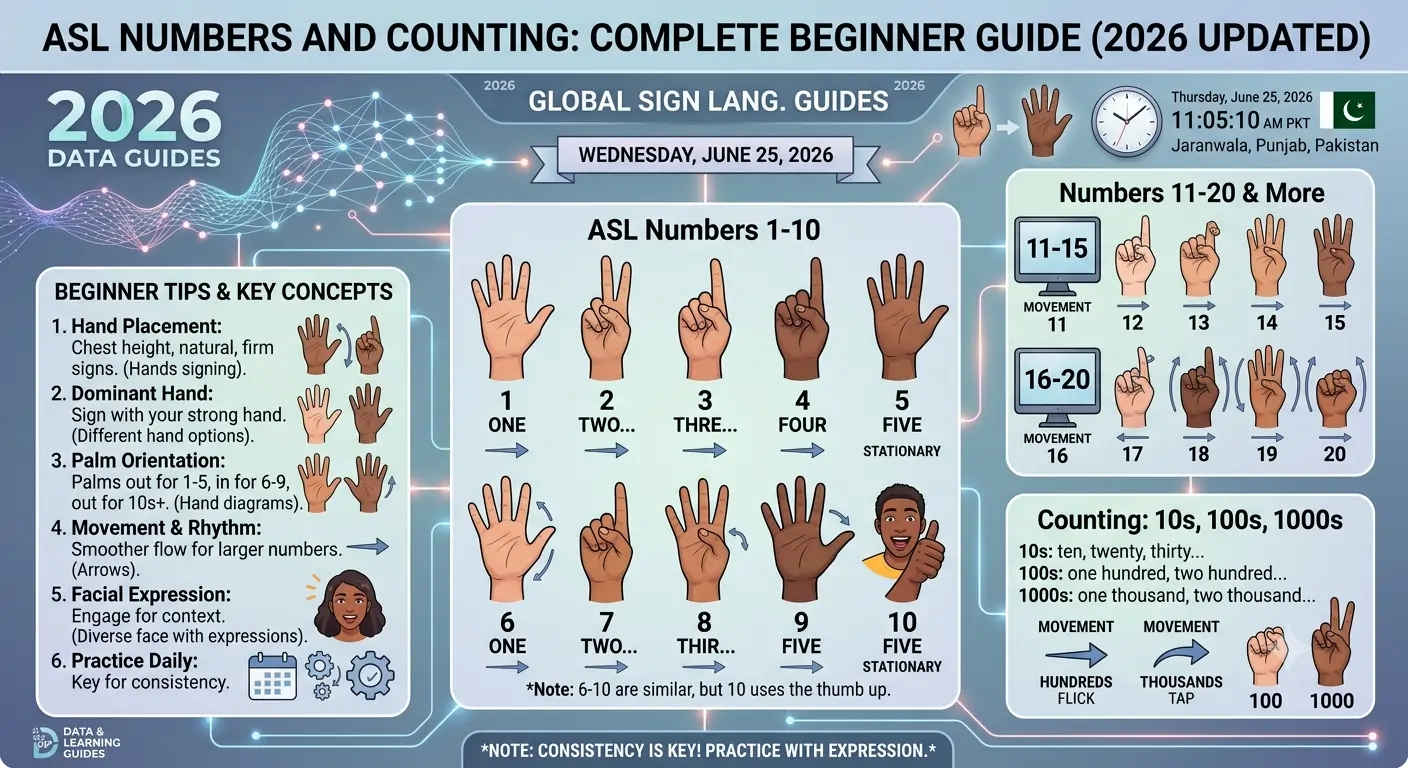
Learning ASL numbers is one of the most practical early steps for any sign language beginner since numbers come up constantly in everyday conversation. This complete guide covers the handshapes for counting from one through twenty along with important variations and common mistakes beginners should watch for.
ASL numbers one through five
The numbers one through five in ASL are formed using a palm orientation facing toward the signer's own body which is an important detail beginners often overlook. The number one extends only the index finger. The number two extends the index and middle fingers together. The number three in ASL has a specific variation that differs from how many beginners initially assume.
The number four extends four fingers with the thumb tucked in. The number five extends all five fingers spread apart. These five basic numbers form the foundation for understanding how ASL counting handshapes build progressively before the system shifts for higher numbers.
ASL numbers six through nine
Numbers six through nine introduce a different pattern where specific fingers touch the thumb while other fingers remain extended. The number six touches the pinky finger to the thumb while the index middle and ring fingers stay extended. The number seven touches the ring finger to the thumb. The number eight touches the middle finger to the thumb. The number nine touches the index finger to the thumb.
This pattern can be confusing for beginners at first since it requires remembering which specific finger touches the thumb for each number rather than simply counting extended fingers as with one through five. Practicing this sequence slowly and repeatedly helps build the muscle memory needed for fluent counting.
The number ten and the shift in palm orientation
The number ten introduces a thumbs up handshape with a slight twisting wrist movement. This represents an important transition point in ASL counting where the system begins to shift toward different formation patterns for higher numbers.
Numbers eleven through fifteen
Numbers in the teens in ASL involve specific movement patterns that combine elements of the one through nine handshapes with additional motion. These numbers require more practice than the basic one through ten sequence since they involve more complex coordinated movement rather than simple static handshapes.
Numbers sixteen through nineteen
The pattern continues for sixteen through nineteen building on similar movement principles established in the eleven through fifteen range. Consistent practice with these numbers in sequence helps beginners build fluency since the patterns share underlying logical structure once a learner becomes familiar with the system.
The number twenty and beyond
Twenty in ASL introduces yet another distinct handshape pattern that begins the system used for counting through the twenties and beyond. As numbers increase further into the hundreds and thousands ASL uses combination techniques that build on the foundational number handshapes covered in this guide combined with additional signs indicating place value.
Common mistakes beginners make with ASL numbers
One of the most common mistakes beginners make is using incorrect palm orientation. Numbers one through five and many other numbers require the palm to face the signer rather than facing outward toward the person being addressed which differs from how some learners initially assume numbers should be signed.
Recommended Articles
 SIGN LANGUAGE EDUCATION
 SIGN LANGUAGE EDUCATION
 SIGN LANGUAGE EDUCATION
 SIGN LANGUAGE EDUCATION
- History of Sign Languages Across Different Countries
- ASL Alphabet Chart with Pictures Complete Visual Guide
- Sign Language vs Spoken Language Key Differences Explained
Another common mistake involves rushing through number sequences without ensuring each handshape is formed clearly and held for an appropriate moment before transitioning to the next number which can make numbers difficult for others to read accurately especially when signing phone numbers addresses or other important numerical information.
Why ASL numbers vary by context
Interestingly some numbers in ASL change their specific handshape or orientation depending on context such as whether the number is being used for counting age telling time or indicating quantity in certain grammatical constructions. This contextual variation is something beginners typically learn progressively as they advance beyond basic counting into more functional everyday use of numbers within sentences.
Practicing ASL numbers effectively
The most effective way to build fluency with ASL numbers is consistent daily practice counting through the full sequence along with practical application such as signing your own phone number address or age regularly. Numbers come up so frequently in everyday conversation that dedicated practice time pays off quickly in practical conversational ability.
Watching native signers use numbers in natural conversation such as discussing dates times or quantities provides valuable exposure to how numbers function fluently within real sentences rather than only as an isolated counting exercise.
Conclusion
ASL numbers represent an essential building block for any sign language learner given how frequently numerical information comes up in everyday communication. By practicing the distinct handshape patterns for one through ten and understanding how the system shifts for higher numbers beginners can build a strong practical foundation that supports countless everyday conversations in ASL.
FAQ
Why do ASL numbers one through five face the signer while other signs typically face outward? This palm orientation is simply the correct grammatical convention for these specific number handshapes and is one of the details beginners should learn carefully and practice correctly from the start.
Are ASL numbers the same in every country that uses sign language? No each country's sign language typically has its own number system just as it has its own broader vocabulary and grammar so ASL numbers would not be understood by users of British Sign Language or other sign languages without separate study.
What is the most common mistake beginners make with ASL numbers six through nine? Beginners often struggle remembering exactly which specific finger touches the thumb for each number in this range since the pattern is less intuitive than simply counting extended fingers as with one through five.