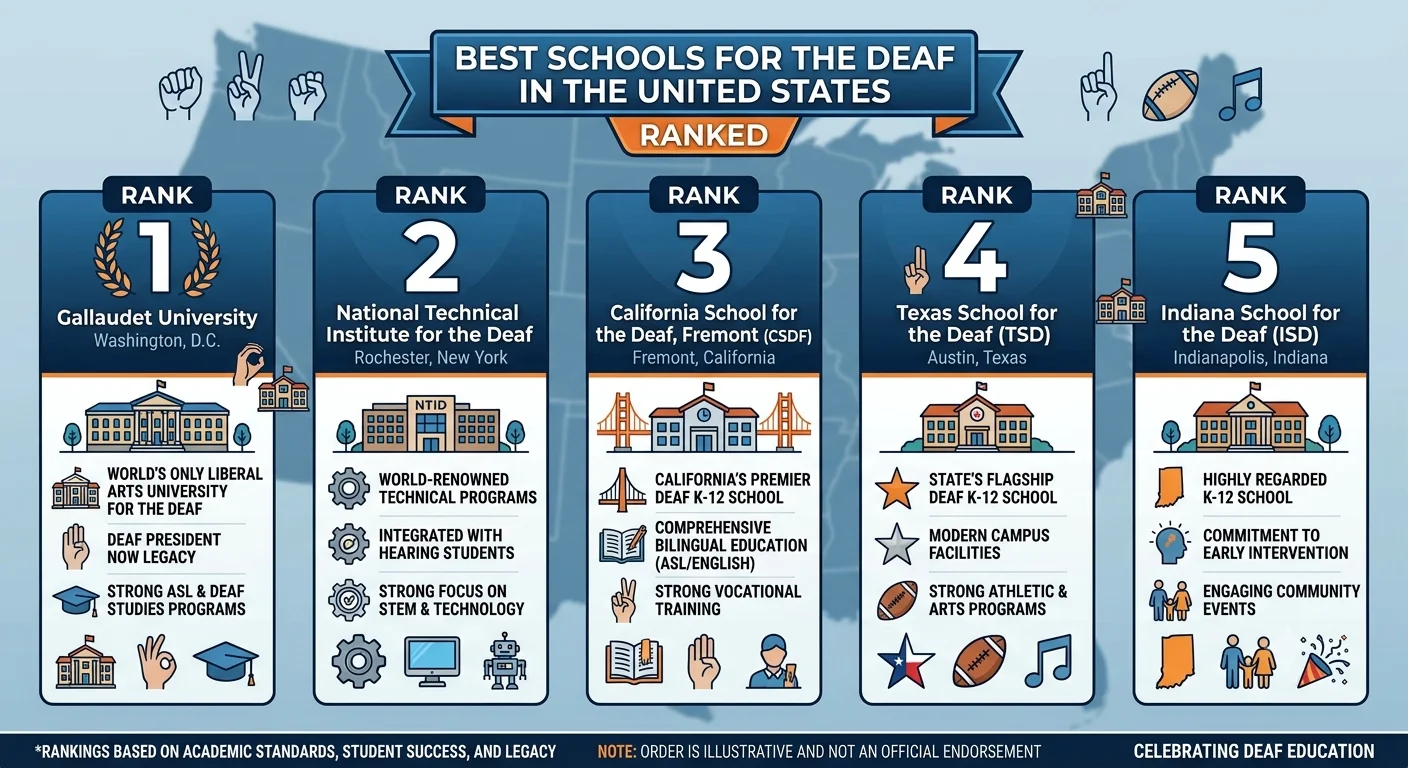
Schools for the deaf have shaped deaf education and deaf culture in America for over two centuries. These institutions provide far more than academics. They serve as cultural centers where deaf students build identity language and lifelong community connections. Here is a complete look at the best and most historically significant schools for the deaf in the United States.
American School for the Deaf
The American School for the Deaf in Hartford Connecticut holds the distinction of being the first permanent school for deaf students in the United States. Founded in 1817 by Thomas Hopkins Gallaudet and Laurent Clerc this school is where American Sign Language itself began to take shape as students from different backgrounds blended their home sign systems into a shared language.
The school continues to operate today serving students from early childhood through high school. Its historical significance combined with its ongoing commitment to bilingual ASL and English education makes it one of the most important institutions in deaf education history.
Gallaudet University and Model Secondary School for the Deaf
While Gallaudet University is a higher education institution it also operates the Model Secondary School for the Deaf on its Washington DC campus. This school serves deaf high school students nationally and gives them access to a university level campus environment and resources while still completing secondary education.
Students benefit enormously from immersion in a fully accessible campus alongside university students and faculty who are deaf or fluent signers. This unique setup gives Model Secondary School students an early introduction to the kind of deaf led intellectual community they may continue into at the university level.
California School for the Deaf Fremont and Riverside
California operates two well regarded schools for the deaf. The California School for the Deaf in Fremont serves the northern part of the state while the California School for the Deaf in Riverside serves the south. Both schools have strong academic and extracurricular programs including competitive sports theatre and arts programs.
California's deaf schools benefit from being located near significant deaf community hubs and have produced many notable alumni who have gone on to prominent roles in deaf advocacy education and the arts.
Texas School for the Deaf
The Texas School for the Deaf in Austin is one of the largest schools for the deaf in the country. It offers a comprehensive curriculum along with strong vocational and college preparatory tracks. The school has a long history dating back to 1857 and has built a reputation for strong athletics and a deeply rooted deaf community culture on campus.
Indiana School for the Deaf
Founded in 1843 the Indiana School for the Deaf in Indianapolis is one of the older institutions in the country and has built a reputation for strong academics alongside a notable theatre and performing arts program. The school emphasizes bilingual education in ASL and English and has produced graduates who have gone on to leadership roles in deaf education nationally.
Maryland School for the Deaf
The Maryland School for the Deaf operates campuses in Frederick and Columbia and is known for its strong academic outcomes and robust extracurricular offerings. The school places significant emphasis on ASL fluency from early childhood and has built strong partnerships with Gallaudet University given the geographic proximity to Washington DC.
Recommended Articles
 DEAF EDUCATION AND SCHOOLS
 DEAF EDUCATION AND SCHOOLS
 DEAF EDUCATION AND SCHOOLS
 DEAF EDUCATION AND SCHOOLS
What makes a great school for the deaf
The strongest schools for the deaf share several common qualities. They prioritize ASL fluency and bilingual education rather than treating sign language as secondary to English. They employ a significant number of deaf teachers and staff so students see deaf adults in leadership roles regularly. They maintain strong extracurricular programs including sports drama and arts because these activities are central to building deaf community and identity.
Residential schools for the deaf in particular often become the primary site where deaf culture is transmitted from one generation to the next since many deaf children are born into hearing families with limited exposure to deaf community life at home.
The role of residential schools in deaf culture
Historically residential schools for the deaf have played an outsized role in deaf culture compared to their relatively small enrollment numbers. For generations of deaf children especially those from hearing families with no prior connection to deaf community these schools were often the first place a child encountered other deaf people fluent ASL and a sense of cultural belonging.
This explains why so many of the most significant deaf cultural movements arts organizations and advocacy efforts trace back to graduates of these specific schools. The relationships and cultural foundation built during residential schooling often last a lifetime.
Choosing the right school for a deaf child
Parents considering school options for a deaf child should consider the school's approach to language whether ASL bilingual or oral based, the presence of deaf faculty and staff, the strength of extracurricular and social programs, and the school's track record of preparing students for college or career paths successfully.
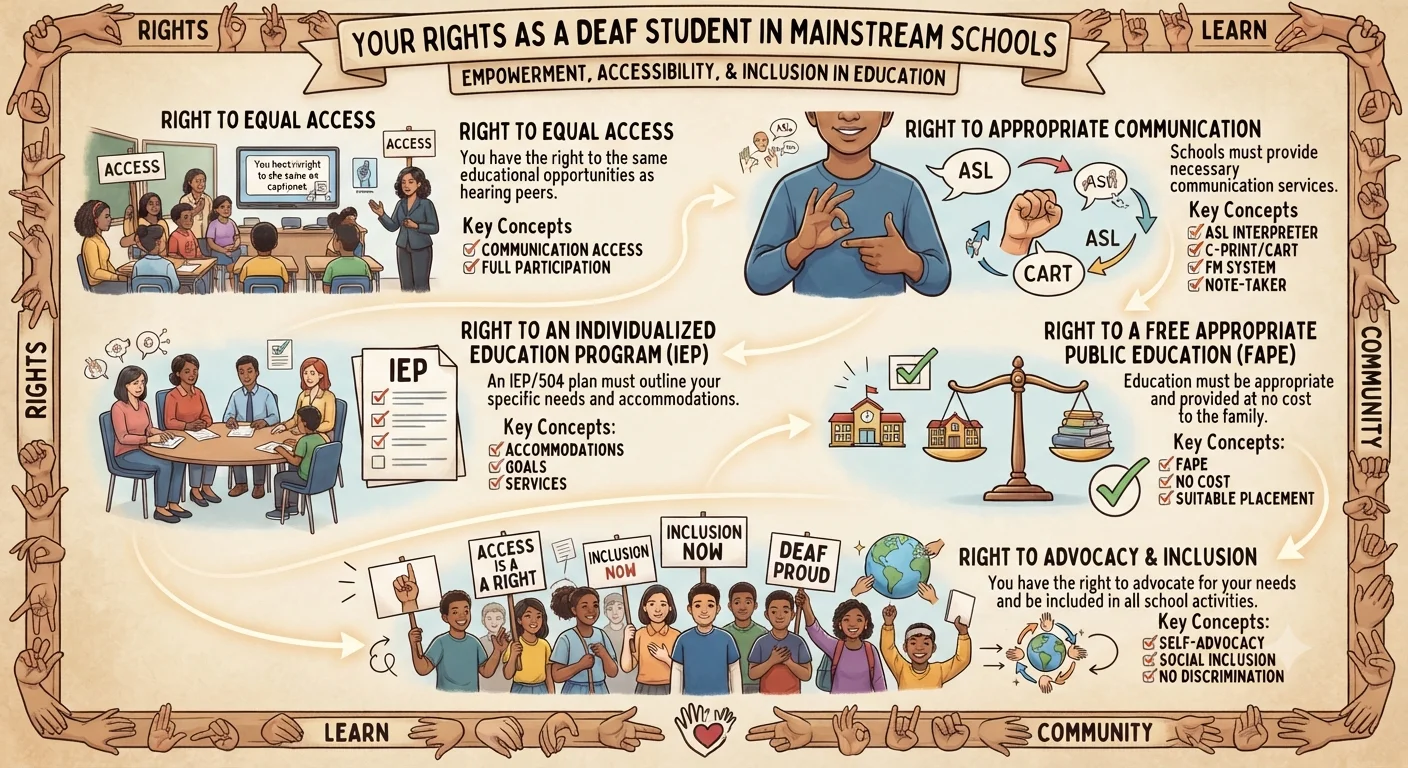
Every family's situation is different and there is no single right answer for every deaf child. Some families choose mainstream schools with strong deaf education support services while others choose dedicated schools for the deaf for the cultural and linguistic immersion they provide.
Conclusion
Schools for the deaf in America have a legacy stretching back over two hundred years and continue to play an essential role in deaf education and deaf culture today. From the historic American School for the Deaf to large modern institutions like the Texas School for the Deaf these schools offer far more than classroom instruction. They offer deaf children language community and identity in an environment built specifically for them.
FAQ
What was the first school for the deaf in America? The American School for the Deaf founded in 1817 in Hartford Connecticut was the first permanent school for deaf students in the United States.
Are schools for the deaf only for children with no hearing at all? No schools for the deaf typically serve students across the full range of hearing loss including those who are hard of hearing and benefit from ASL based instruction.
Do schools for the deaf prepare students for college? Yes many schools for the deaf have strong college preparatory tracks and partnerships with institutions like Gallaudet University and the National Technical Institute for the Deaf.