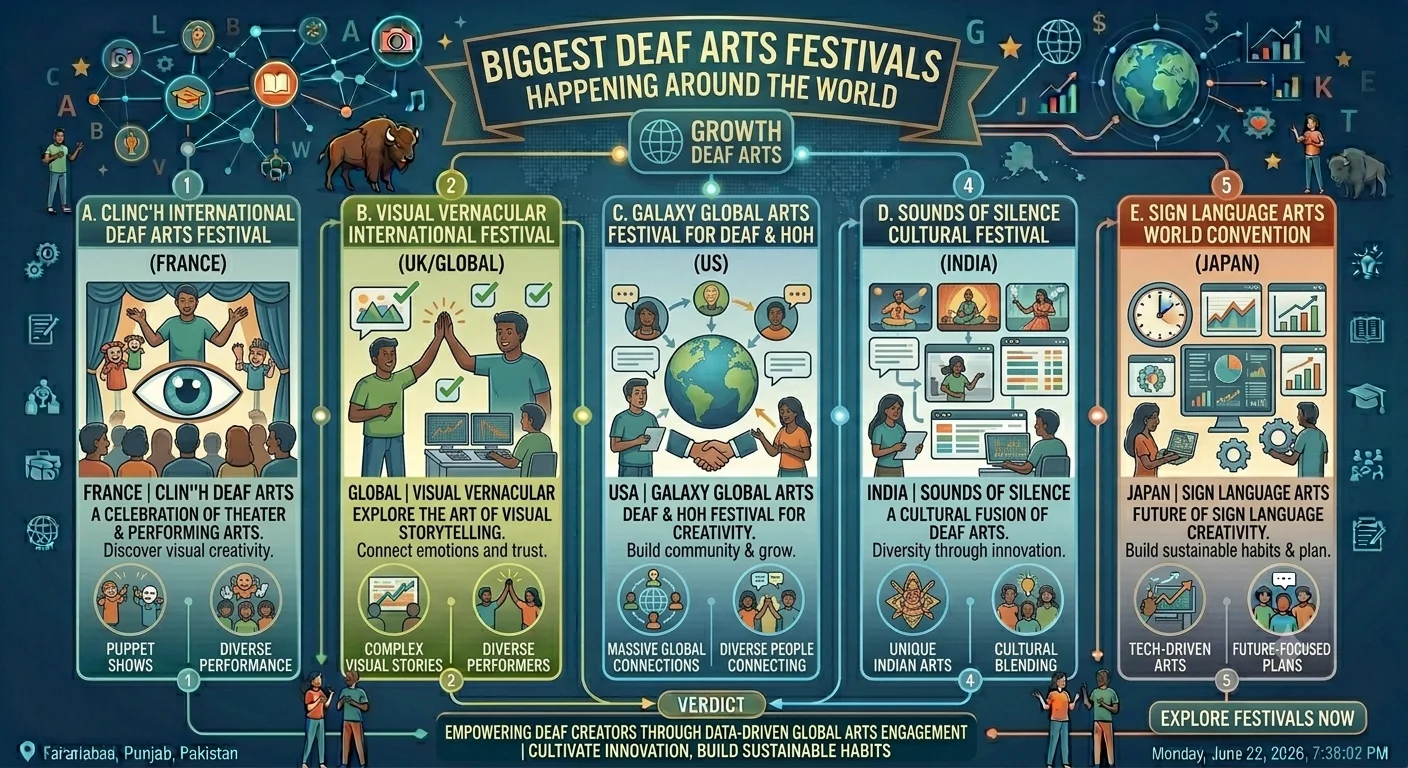
Deaf arts festivals provide essential platforms for showcasing deaf talent across theatre film visual art and performance to audiences who might not otherwise encounter this work. These festivals have grown significantly in number and scale in recent years and now span multiple continents giving deaf artists global stages for their work.
Clin d'Oeil Festival
Clin d'Oeil is one of the largest deaf cultural festivals in the world taking place in Reims France. The festival brings together deaf artists performers and audiences from across the globe for several days of theatre dance visual art and community celebration. Clin d'Oeil translates roughly to a wink in French and the festival has built a reputation as a major international gathering point for the global deaf arts community.
The festival features performances in numerous national sign languages and has become an important meeting point for deaf artists from different countries to connect collaborate and share techniques across linguistic and cultural boundaries.
Deaf Film Festivals in the United States
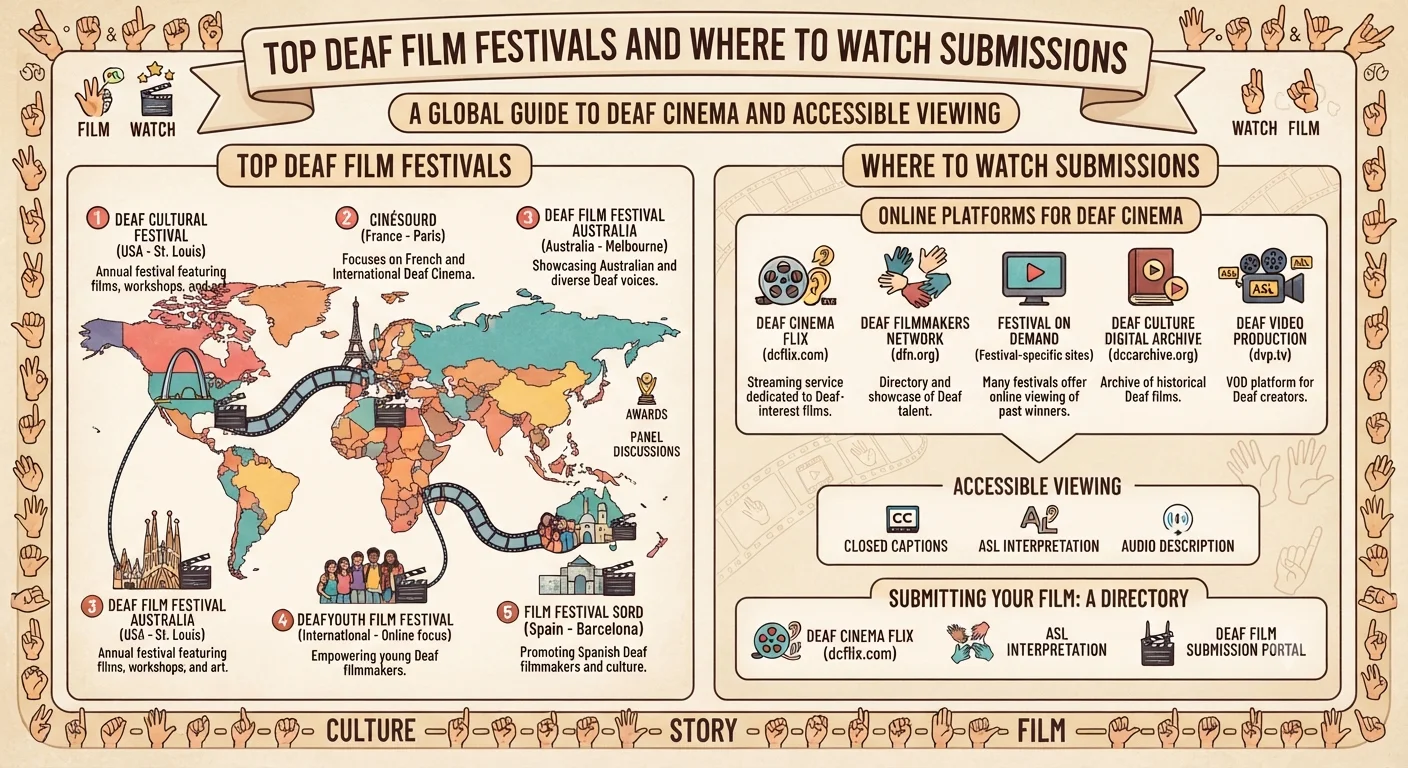
Several dedicated deaf film festivals operate across the United States showcasing films made by deaf filmmakers or featuring significant deaf representation in front of and behind the camera. These festivals provide crucial visibility for deaf filmmakers who often struggle to get their work seen through mainstream film festival circuits that may not actively seek out deaf submissions.
These festivals typically feature both short and feature length films along with panel discussions and networking opportunities specifically designed to help deaf filmmakers build industry connections and develop their craft alongside peers facing similar challenges in the broader film industry.
Gallaudet University Arts Festivals and Showcases
Gallaudet University regularly hosts arts festivals and showcases on its Washington DC campus that highlight student and alumni work across theatre visual art and ASL poetry performance. These events serve as both educational showcases for current students and important networking opportunities for graduates entering professional deaf arts careers.
The university's central role in deaf culture more broadly means these campus events often attract attention and participation from the wider deaf arts community well beyond the student body itself.
Deaflympics Cultural and Arts Programming
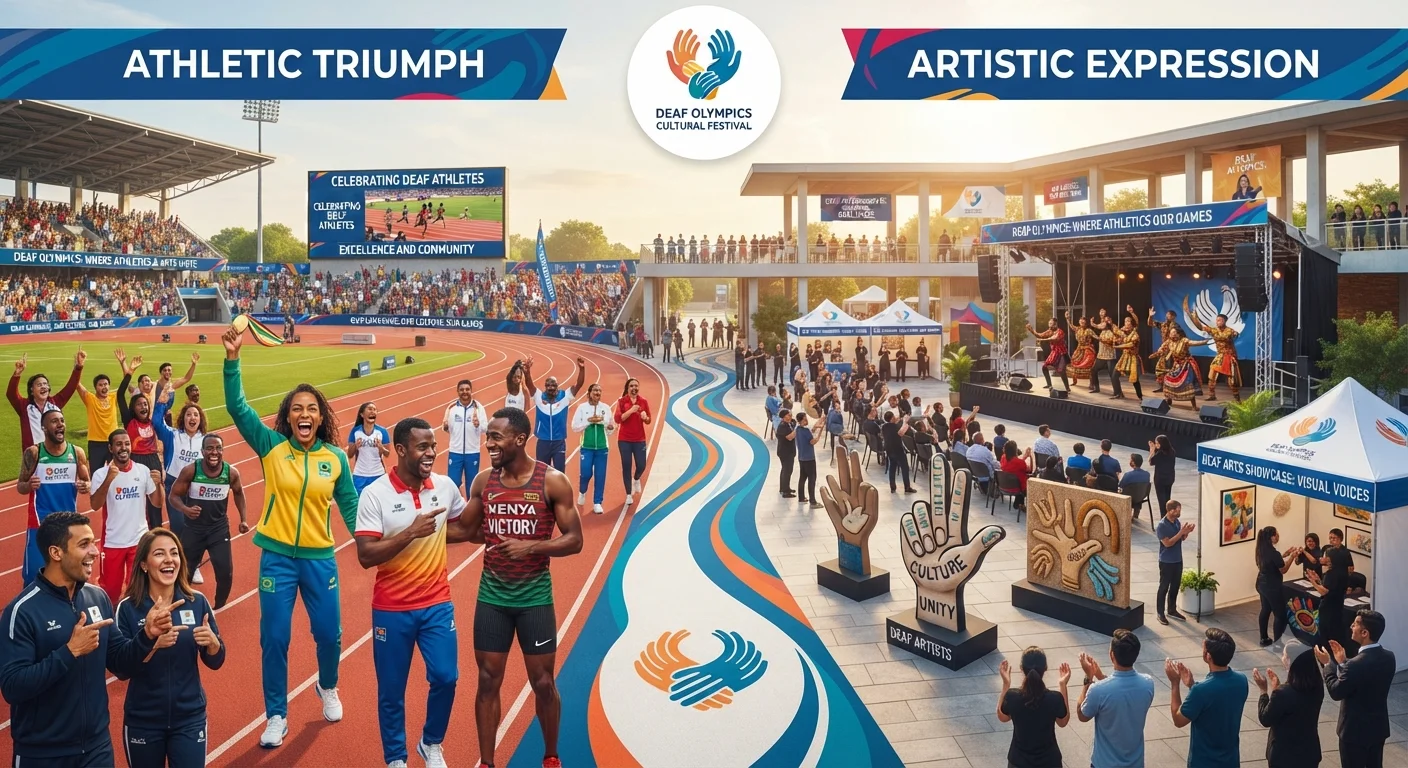
While primarily known as an international sports competition for deaf athletes the Deaflympics has historically included cultural and arts programming alongside athletic competition celebrating deaf culture more broadly during the games. These cultural components highlight how deeply connected deaf identity is across multiple areas of community life including both athletics and the arts.
Regional Deaf Theatre Festivals
Beyond major international festivals numerous regional deaf theatre festivals take place across the United States and internationally often organized by university deaf studies programs deaf theatre companies or community organizations. These smaller scale festivals play an important role in nurturing emerging deaf theatre talent and providing performance opportunities that may not yet be ready for larger international stages.
These regional festivals often serve as proving grounds where emerging deaf playwrights directors and actors can develop and showcase new work before pursuing larger opportunities at major festivals or with established theatre companies.
Recommended Articles
 EVENTS AND FESTIVALS
 EVENTS AND FESTIVALS
 EVENTS AND FESTIVALS
 EVENTS AND FESTIVALS
How to attend a deaf arts festival
Most deaf arts festivals welcome both deaf and hearing attendees and many provide some form of accessibility accommodation for hearing visitors who do not sign fluently such as interpreters for select sessions or programming designed to be visually accessible regardless of language background. Checking each festival's official website for accessibility information and registration details is the best first step for anyone interested in attending.
How deaf artists can submit work to festivals
Festivals focused on deaf film and theatre typically have submission processes similar to other arts festivals including specific deadlines entry fees in some cases and formal submission guidelines regarding format and length. Deaf artists interested in submitting work should research each festival's specific requirements well in advance since submission windows often close months before the festival itself takes place.
Building connections within the deaf arts community through smaller regional festivals and Gallaudet University programming can also help emerging artists learn about submission opportunities and build relationships that lead to invitations for larger international festivals over time.
Why these festivals matter for deaf arts globally
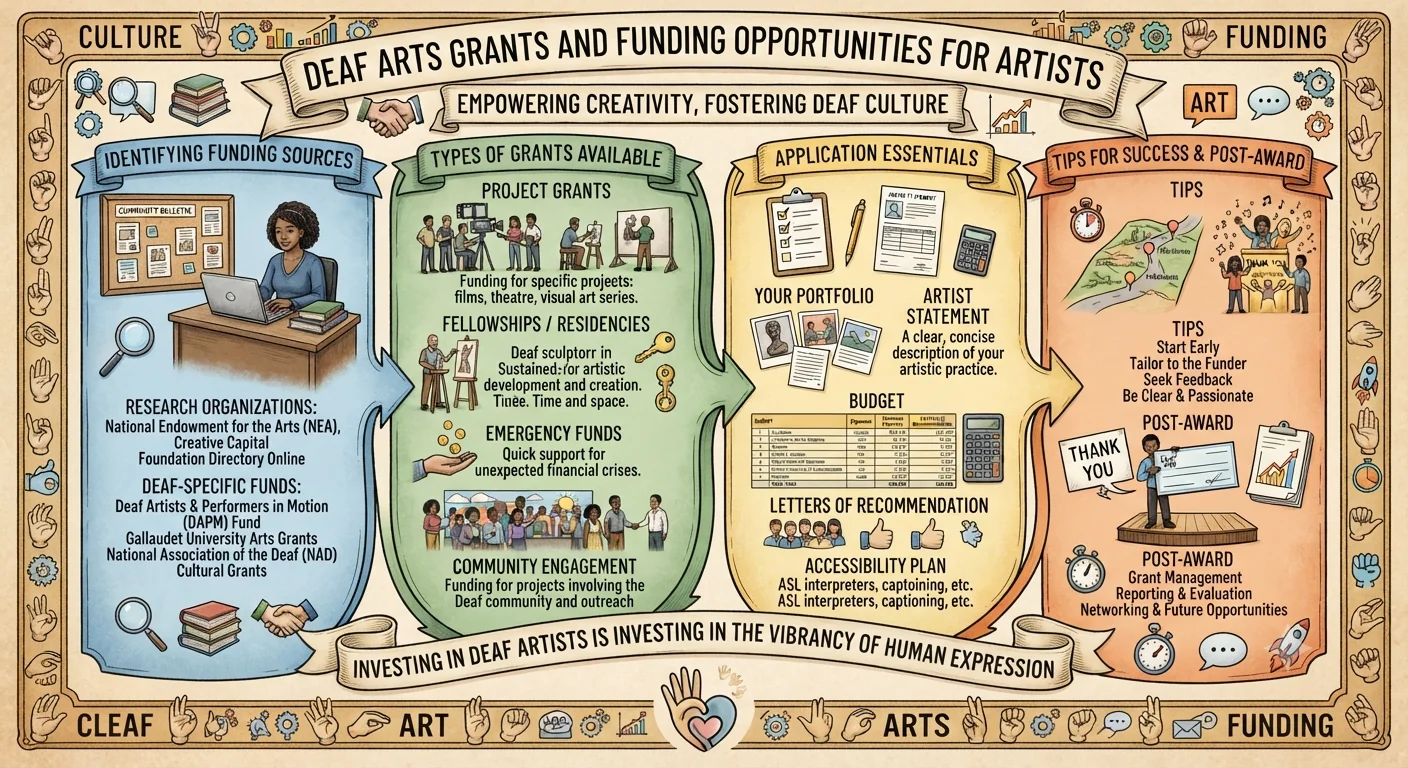
Deaf arts festivals provide visibility funding opportunities and community connection that deaf artists often struggle to find within mainstream arts institutions that remain predominantly hearing focused. These festivals create dedicated spaces where deaf artistic achievement is celebrated on its own terms rather than treated as a niche addition to broader programming.
The international scope of festivals like Clin d'Oeil also helps deaf artists from different countries learn from each other's distinct sign languages and cultural traditions creating a genuinely global deaf arts conversation that benefits the entire community.
Conclusion
From the large scale international celebration of Clin d'Oeil in France to dedicated deaf film festivals across the United States and ongoing programming at institutions like Gallaudet University deaf arts festivals provide essential platforms for showcasing deaf talent and building global community connections. These events continue to grow in scale and significance as deaf arts gain wider recognition around the world.
FAQ
What is the largest deaf cultural festival in the world? Clin d'Oeil in Reims France is widely considered one of the largest and most significant international deaf cultural festivals bringing together deaf artists and audiences from around the globe.
Can hearing people attend deaf arts festivals? Yes most deaf arts festivals welcome hearing attendees and often provide some accessibility accommodations though visitors should expect ASL or other sign languages to be the primary mode of communication throughout the event.
How can a deaf filmmaker submit their work to a festival? Deaf filmmakers should research each festival's specific submission guidelines deadlines and fees well in advance since most festivals follow structured submission processes similar to mainstream film festivals.