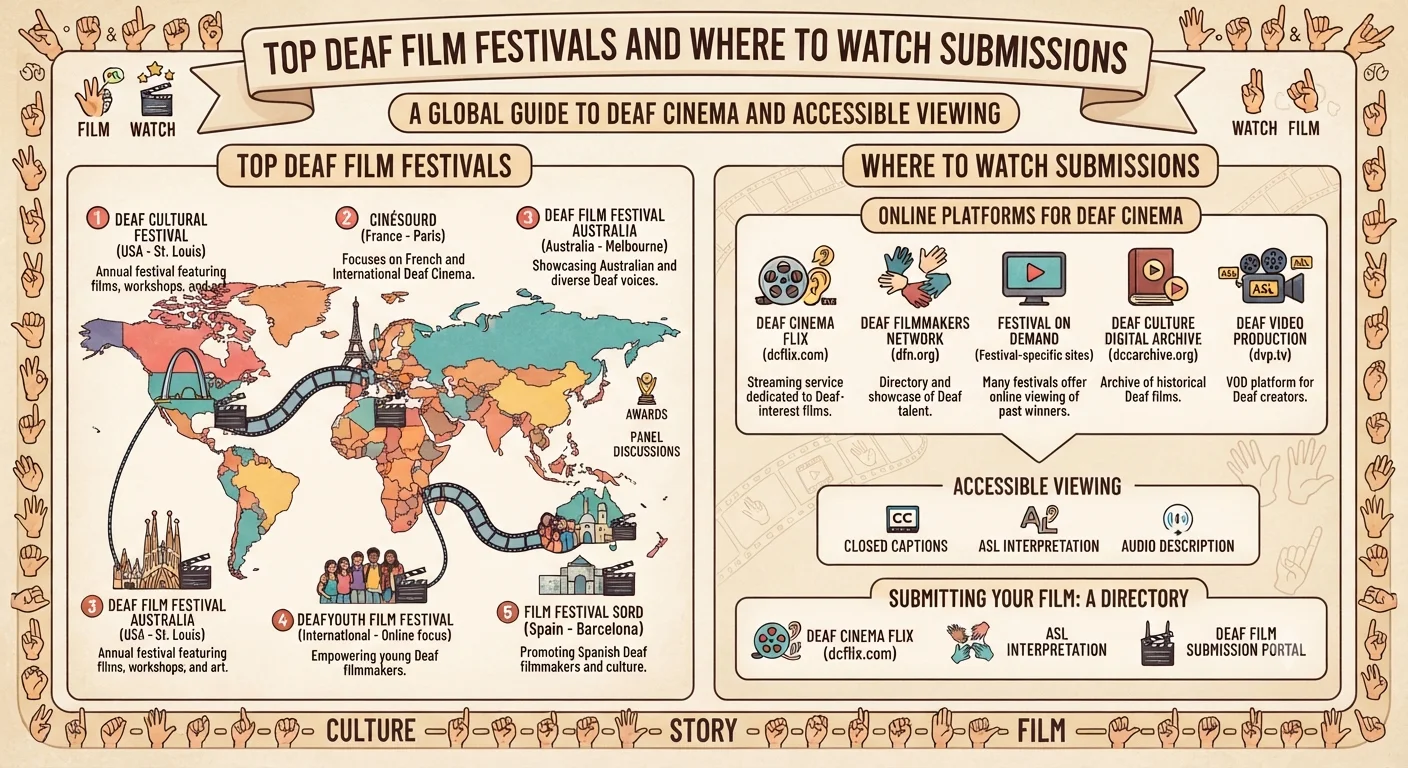
Discover the top deaf film festivals around the world where to watch submissions and how deaf filmmakers can submit their work for consideration.
Deaf film festivals have grown significantly in number and prominence over recent decades providing essential platforms for deaf filmmakers and films featuring authentic deaf representation to reach audiences who might not encounter this work through mainstream film festival circuits. Understanding which festivals exist how they operate and where audiences can access submissions helps both deaf filmmakers and interested viewers engage with this important and growing area of cinema.
Why Dedicated Deaf Film Festivals Matter
Deaf film festivals serve multiple important functions simultaneously for the deaf arts community. They provide visibility for deaf filmmakers whose work might struggle to gain selection at mainstream festivals that historically have not actively sought out or prioritized deaf led content. They create community gathering opportunities where deaf film enthusiasts filmmakers and advocates can connect share work and build professional relationships within a specifically supportive context.
These festivals also serve an important educational function for hearing audiences who attend exposing them to deaf cultural perspectives storytelling and filmmaking approaches they might not encounter through mainstream cinema. This cross cultural audience building contributes to broader public understanding of deaf community and culture beyond the specifically deaf audience that already engages with this content through community networks and organizations.
Deaf Film Festival USA
- Why Dedicated Deaf Film Festivals Matter
- Deaf Film Festival USA
- International Deaf Film Initiatives
- Online Platforms for Deaf Film Content
- How Deaf Filmmakers Can Submit Their Work
- Accessibility Requirements for Film Festival Submissions
- The Future of Deaf Film Festivals
- Conclusion
- FAQ
- Why are dedicated deaf film festivals important when mainstream festivals could include deaf films?
- How can deaf filmmakers find submission opportunities for their work?
- Where can hearing audiences access deaf film content outside of festival events?
The United States has seen several dedicated deaf film festival initiatives emerge in different cities over the years providing regional platforms for deaf filmmaking that complement the national visibility provided by major mainstream festivals that occasionally feature deaf content. These American deaf film festivals typically feature both short and feature length films created by deaf filmmakers or featuring significant authentic deaf representation with programs often including documentary narrative and experimental work across multiple formats.
Programming at these festivals frequently includes filmmaker discussions panel conversations and community events alongside film screenings creating a fuller festival experience that extends beyond pure film viewing into active community dialogue about representation storytelling and the state of deaf filmmaking more broadly.
International Deaf Film Initiatives
Beyond specifically dedicated deaf film festivals several major international deaf cultural festivals including Clin d'Oeil in France incorporate significant film programming alongside their broader performing arts and cultural content. These internationally focused events provide important exposure for deaf filmmakers seeking to reach global deaf community audiences beyond their home country contexts.
- Deaf Awareness Week Events Activities and History
- How the Deaflympics Celebrates Deaf Athletes and Arts Together
- World Deaf Day History and How It Is Celebrated Globally
International deaf film initiatives also facilitate cross cultural exchange between deaf filmmakers from different countries using different sign languages and coming from different cultural contexts creating productive dialogue about how deaf experience and community life are understood and depicted across different national and cultural frameworks.
Online Platforms for Deaf Film Content
The growth of online video platforms has created new opportunities for deaf filmmakers to reach audiences beyond what physical festival attendance alone could achieve. Dedicated online platforms and streaming services focused specifically on deaf content have emerged providing ongoing access to deaf created film and video content for audiences who cannot attend physical festival events due to geographic or other constraints.
Recommended Articles
 EVENTS AND FESTIVALS
 EVENTS AND FESTIVALS
 EVENTS AND FESTIVALS
 EVENTS AND FESTIVALS
Social media platforms have also become important distribution channels for short deaf film content with many deaf filmmakers building significant audiences for their work through direct platform distribution rather than relying exclusively on traditional festival circuits for visibility and audience building.
How Deaf Filmmakers Can Submit Their Work
Deaf filmmakers interested in submitting work to dedicated deaf film festivals should research each festival's specific submission guidelines well in advance since requirements regarding format length eligibility and submission fees vary significantly across different festivals. Most festivals use standard film submission platforms that allow filmmakers to submit work digitally along with required technical information and promotional materials.
Building relationships within the deaf filmmaking community through attendance at festivals and participation in online deaf filmmaker networks often provides valuable information about submission opportunities and deadlines that may not be widely publicized through mainstream film industry channels. These community networks also provide mentorship and collaboration opportunities that can significantly support emerging deaf filmmakers developing their craft and building their professional networks.
Accessibility Requirements for Film Festival Submissions
Many deaf film festivals require or strongly encourage submitted films to include captions subtitles or other accessibility features that make the content accessible to the full range of festival audience members including both deaf and hearing viewers. Understanding and meeting these accessibility requirements from the earliest stages of film production rather than adding them as an afterthought helps ensure submitted work is fully eligible and competitive across multiple festival contexts.
Films featuring ASL or other sign languages should also consider whether English subtitles or other language access features are included in submissions intended for mixed deaf and hearing audience contexts since this access consideration affects how broadly the work can be screened and discussed across different festival and educational settings.
The Future of Deaf Film Festivals
As authentic deaf representation in mainstream cinema has gained greater visibility and recognition through films like CODA interest in dedicated deaf film festivals and deaf created content more broadly has grown among both deaf community audiences and mainstream film enthusiasts seeking out the kind of authentic storytelling these festivals specifically champion. This growing interest suggests continued expansion in both the number and scale of dedicated deaf film festival programming in coming years.
Conclusion
Deaf film festivals provide essential platforms for deaf filmmakers and authentic deaf cinema to reach appreciative audiences while building community connections and advancing the broader visibility of deaf cultural perspectives in film. As both dedicated festivals and online distribution platforms continue expanding the accessibility of deaf created film content the audience for this important and growing area of cinema continues to broaden in ways that benefit deaf filmmakers and audiences alike.
FAQ
Why are dedicated deaf film festivals important when mainstream festivals could include deaf films?
Dedicated deaf film festivals provide specifically supportive contexts where deaf filmmaking is actively prioritized creating visibility community connection and professional networking opportunities that deaf filmmakers often struggle to access through mainstream festival circuits that historically have not actively sought deaf led content.
How can deaf filmmakers find submission opportunities for their work?
Researching each festival's specific submission guidelines well in advance building community relationships through deaf filmmaker networks and participating in online deaf arts communities all help deaf filmmakers identify and successfully navigate submission opportunities across multiple festival contexts.
Where can hearing audiences access deaf film content outside of festival events?
Online platforms dedicated to deaf content social media channels maintained by deaf filmmakers and occasional mainstream streaming service programming featuring deaf created work all provide access points for hearing audiences interested in deaf cinema outside of physical festival attendance.