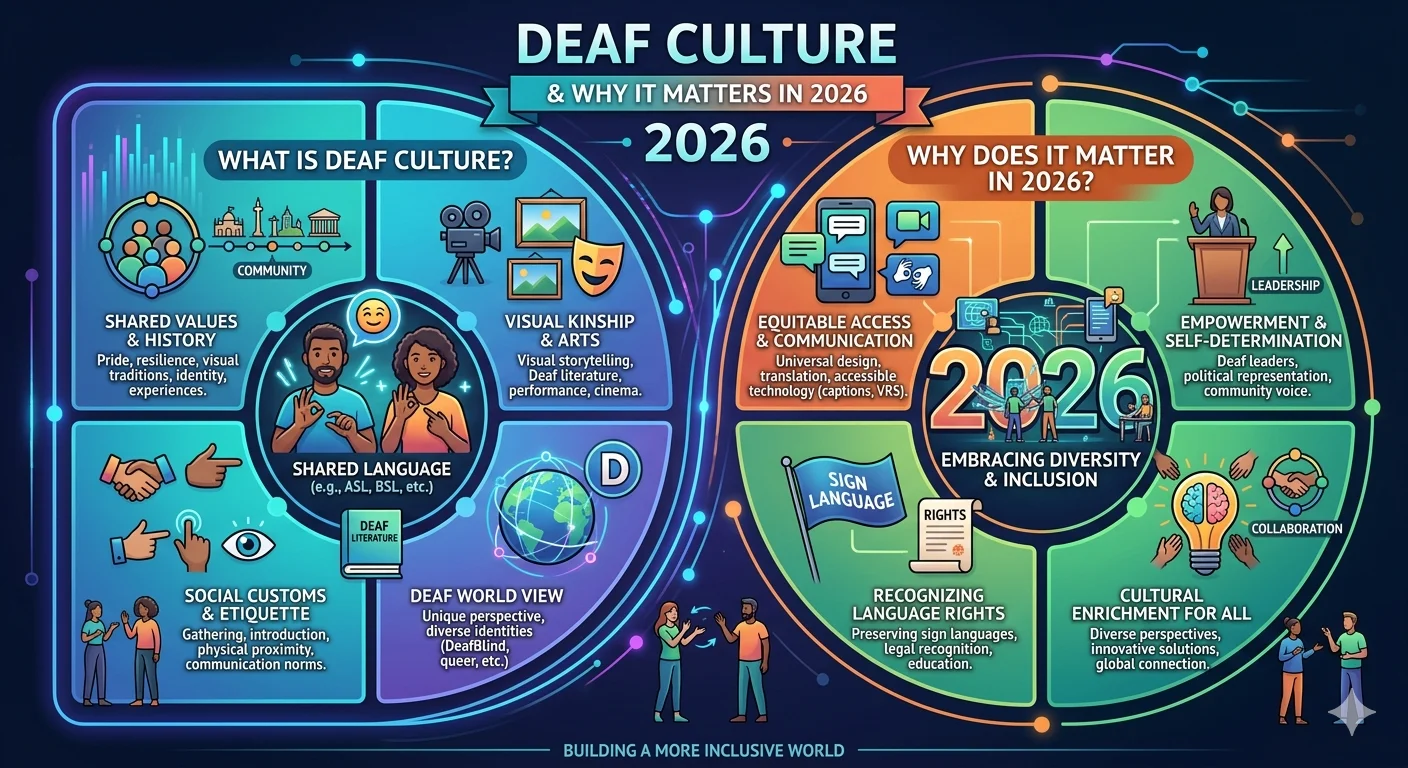
Deaf culture is a shared way of life built around sign language identity and community belonging that millions of people across the world embrace and celebrate. It is not about what a person cannot hear. It is about what a community creates together through language art storytelling and a proud sense of self. In 2026 deaf culture continues to grow in visibility influence and global reach.
What is deaf culture exactly
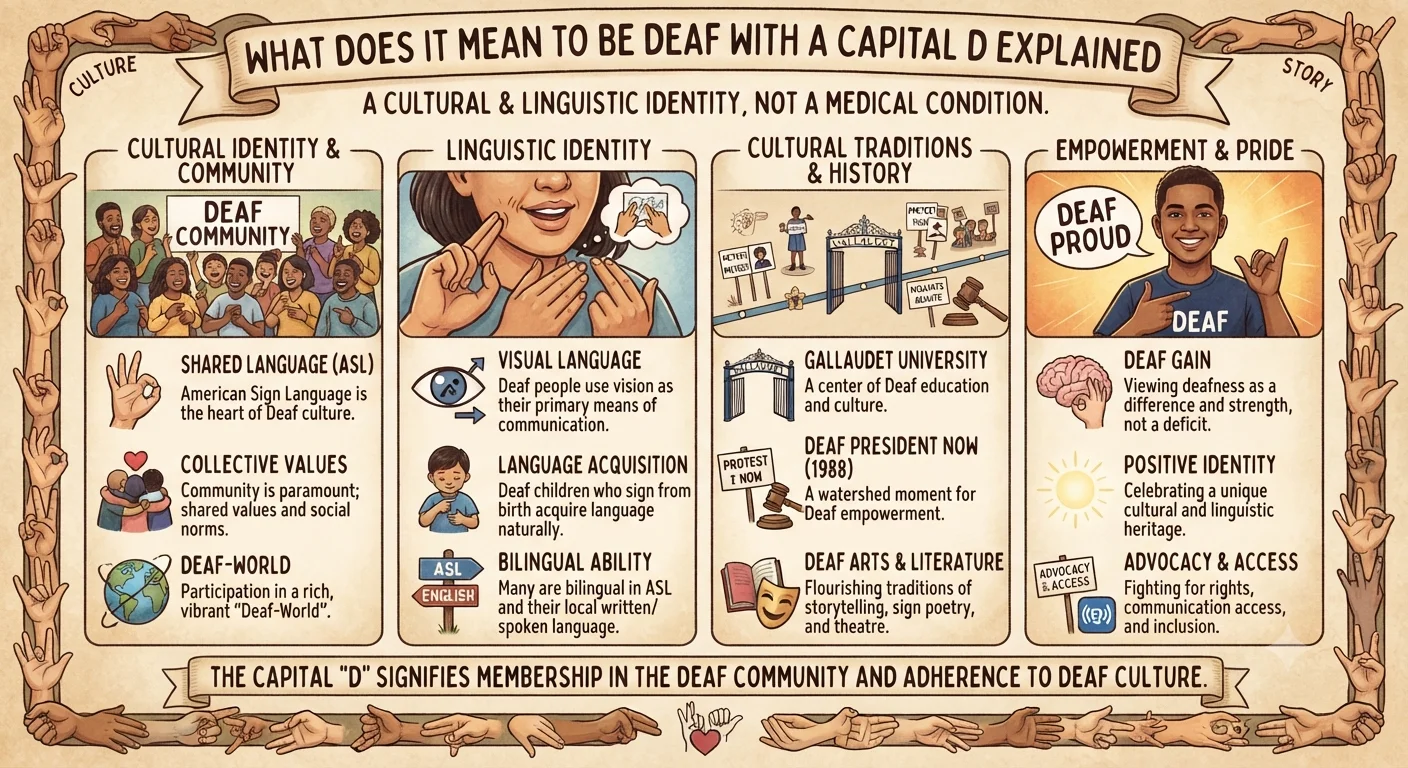
Deaf culture is the set of social beliefs behaviors traditions values and shared institutions that come from being part of a community that uses sign language as a primary means of communication. People who are part of deaf culture often refer to themselves as Deaf with a capital D to show that they see deafness as a cultural identity rather than a medical condition.
This distinction matters deeply. A lowercase deaf simply means a person who cannot hear. An uppercase Deaf person is someone who belongs to a community with its own language history humor art and way of seeing the world. This community has its own schools clubs social events arts organizations and long-standing traditions that hearing people rarely know about.
Where did deaf culture begin
The roots of deaf culture in America trace back to 1817 when the American School for the Deaf opened in Hartford Connecticut. Thomas Hopkins Gallaudet and Laurent Clerc founded this school and brought together deaf children from across the country for the first time. When these children gathered they shared different forms of sign language they had developed at home and together they created a unified language that would eventually become American Sign Language.
This gathering of deaf students was the birth of deaf culture in the United States. For the first time deaf people had a community. They had peers who understood them without interpretation or compromise. They had teachers who communicated in their language. The school became a place where deaf culture not only survived but thrived.
By the time Gallaudet University opened in Washington DC in 1864 as the first university for deaf students in the world deaf culture had a permanent home for higher education and intellectual life. The university remains one of the most important institutions in deaf culture today.
What are the core values of deaf culture
Deaf culture has several core values that shape how community members relate to each other and to the broader world.
Language is central to everything. American Sign Language is not a simplified version of English. It is a complete natural language with its own grammar sentence structure and vocabulary. Deaf culture places enormous value on ASL and views it as a beautiful and sophisticated form of human expression.
Community matters above individual achievement in deaf culture. Gatherings social clubs sports teams and theatre groups are not just hobbies. They are the glue that holds the community together across generations. Deaf clubs and residential schools historically served as the places where culture was passed from older deaf people to younger ones.
Storytelling and humor have a distinct place in deaf culture. Visual humor eye contact and facial expression are all part of how deaf people communicate laughter and warmth. Deaf jokes often involve wordplay in sign language that only those fluent in ASL will fully appreciate.
Why does deaf culture matter in 2026
In 2026 deaf culture matters for reasons that reach far beyond the deaf community itself. Deaf culture is a model for how any minority community can build a complete and fulfilling life on its own cultural terms rather than constantly trying to assimilate into the majority.
Recommended Articles
 DEAF CULTURE AND HISTORY
 DEAF CULTURE AND HISTORY
 DEAF CULTURE AND HISTORY
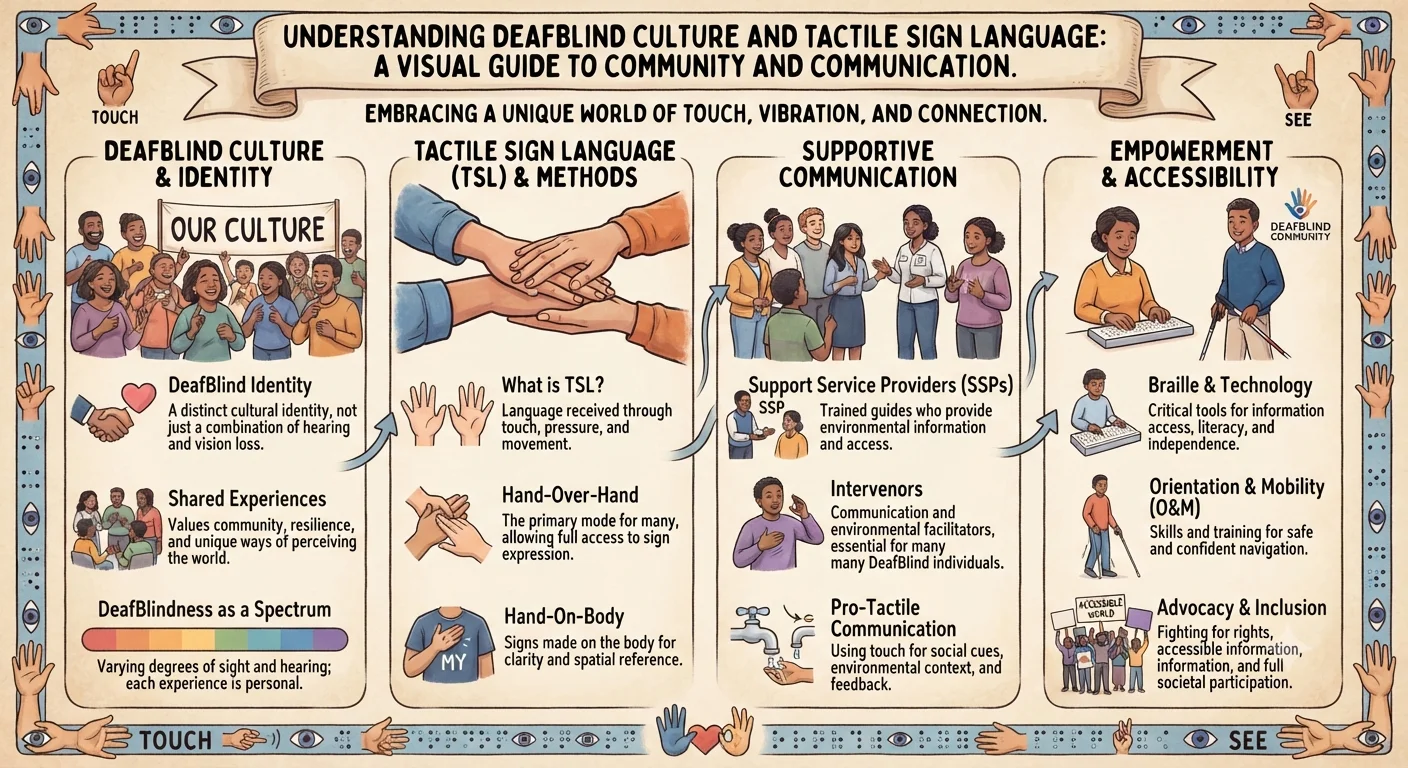 DEAF CULTURE AND HISTORY
The global deaf community is estimated at around 70 million people according to the World Federation of the Deaf. When you include people who are hard of hearing that number rises significantly. This is not a small community. It is one of the largest disability communities on earth and it has a creative artistic and intellectual tradition that most people know almost nothing about.
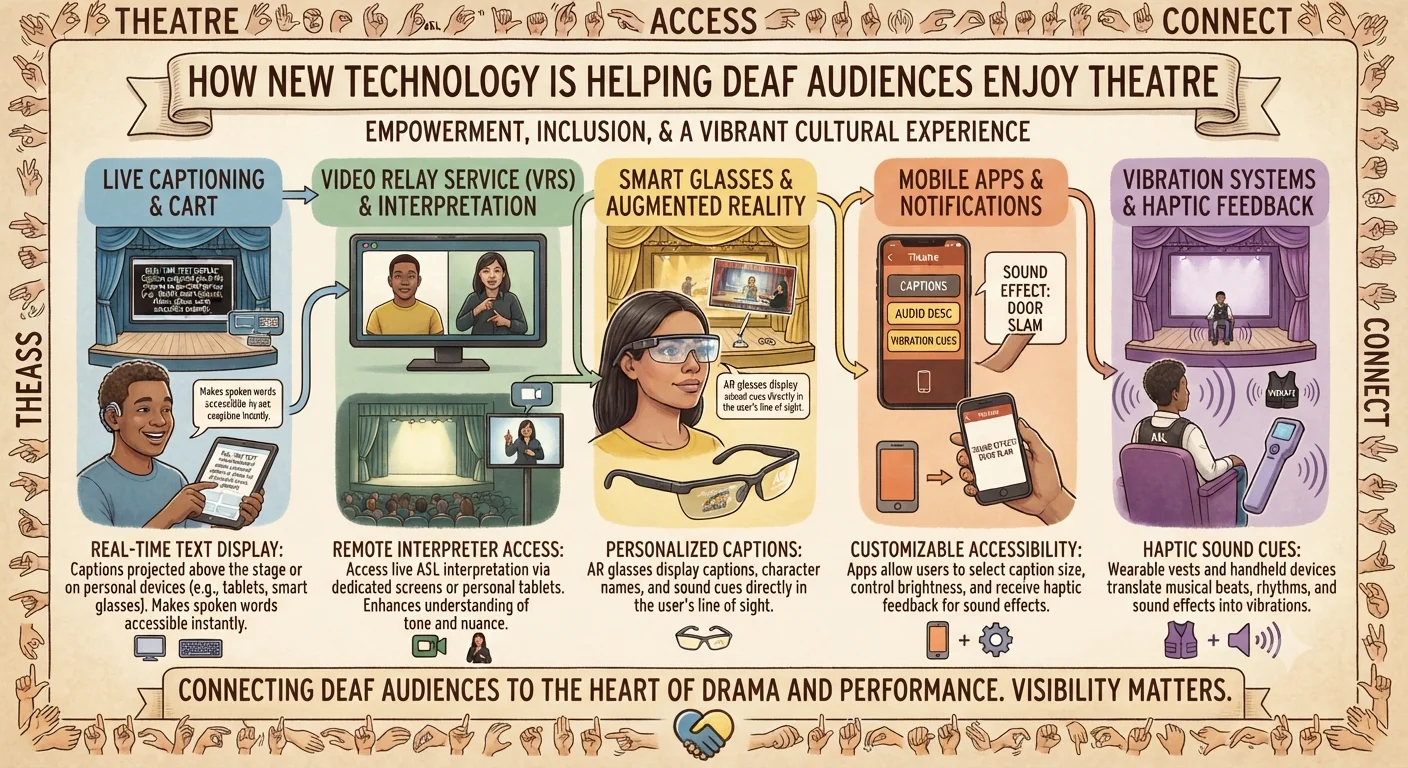
In theatre film education and technology deaf culture is pushing boundaries in ways that benefit everyone. Captioning which was developed to help deaf audiences now helps millions of people learn languages watch content in noisy places and access information they would otherwise miss. Visual storytelling techniques developed in deaf theatre have influenced how hearing directors and writers tell stories.
How can hearing people engage with deaf culture respectfully
Learning even basic ASL shows respect and opens doors. You do not need to become fluent to show that you value deaf culture. Attending deaf community events watching films by deaf directors and reading books written by deaf authors are all meaningful ways to engage.
Avoid speaking on behalf of deaf people or making assumptions about what deaf people want or need. The phrase nothing about us without us is very much alive in the deaf community. Deaf people have spent generations fighting for the right to speak for themselves in their own language on their own terms.
Deaf culture in theatre and performing arts
One of the most vibrant expressions of deaf culture is in the performing arts. Deaf theatre has a history that stretches back more than a century. The National Theatre of the Deaf founded in 1967 is one of the most celebrated theatre companies in American history. Deaf performers actors directors and playwrights have created a body of work that challenges assumptions about what theatre can be and who it is for.
Sign language itself is a performance art. The way a skilled ASL storyteller uses space rhythm timing and expression to tell a story is not unlike the way a great actor uses voice and body. Deaf culture has always understood this connection between language and art.
Conclusion
Deaf culture is one of the most complete and enduring minority cultures in human history. It has its own language its own arts its own institutions and its own proud identity. Understanding deaf culture is not only about understanding deaf people. It is about understanding one of the most creative and resilient human communities on earth. In 2026 that understanding has never been more accessible or more important.
FAQ
What is the difference between deaf and Deaf? Lowercase deaf describes a person with hearing loss as a medical fact. Uppercase Deaf refers to cultural identity and membership in a community that uses sign language and shares cultural values.
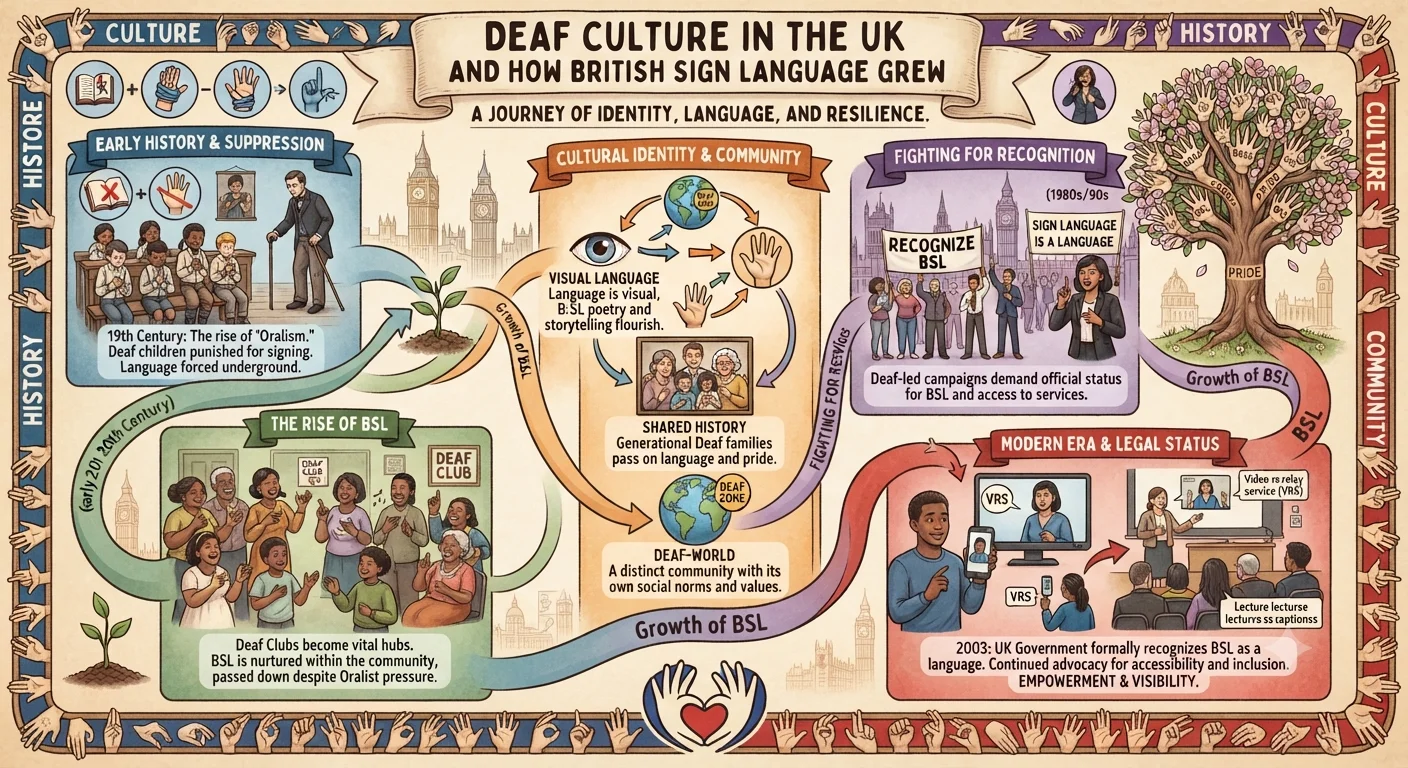
Is ASL the same as sign language used in other countries? No. Every country has its own sign language. ASL is used in the United States and parts of Canada. British Sign Language BSL is used in the UK. Each sign language has its own grammar and vocabulary.
Can hearing people be part of deaf culture? Yes. People who grew up in deaf families who learned ASL as a first language or who work closely with deaf communities can be welcomed members of deaf culture when they engage with respect and genuine commitment.