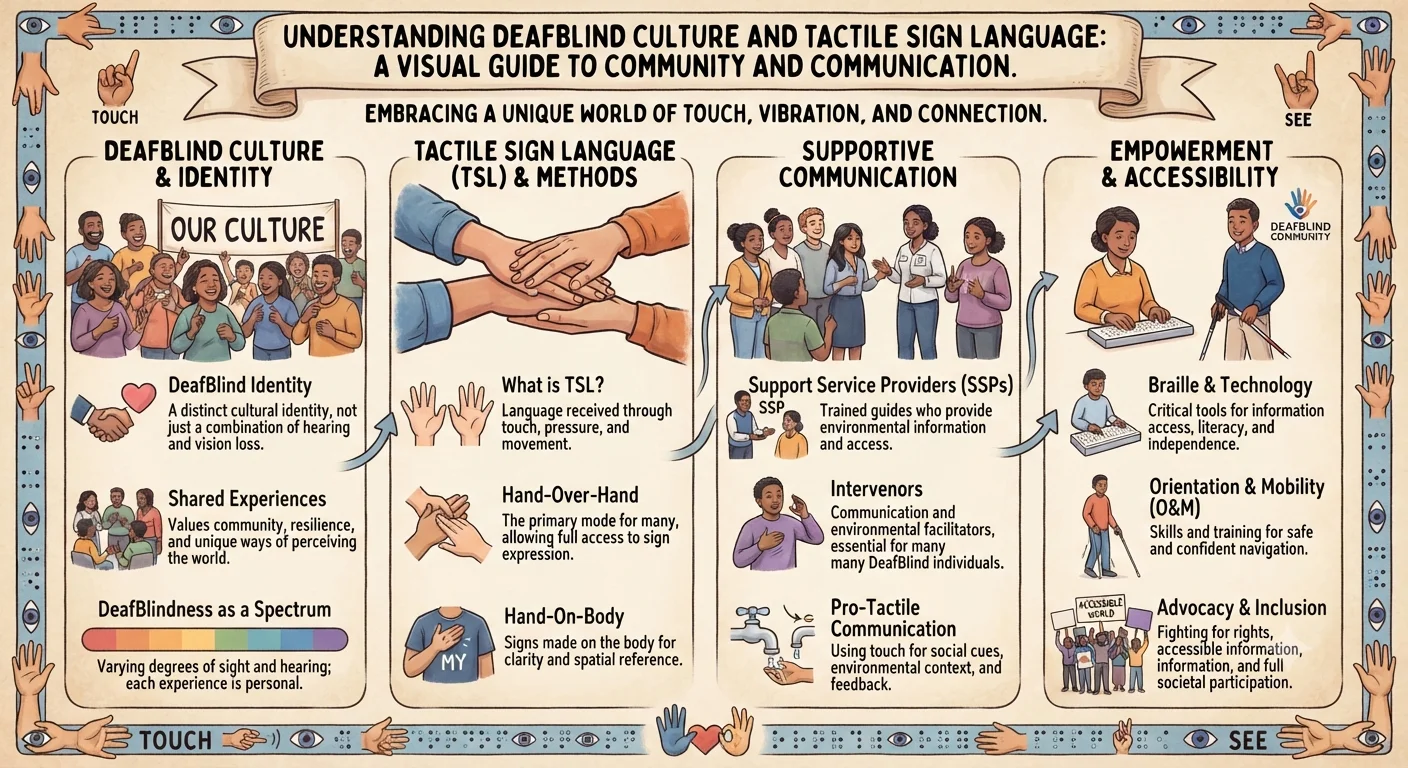
Explore DeafBlind culture and tactile sign language understanding how people who are both deaf and blind communicate connect and build community.
DeafBlind culture represents one of the most remarkable and least understood communities within the broader disability and deaf cultural worlds. People who are both deaf and blind have developed their own distinct communication methods community structures and cultural identity that draw on but also differ significantly from both deaf culture and blind culture creating a uniquely positioned community with its own rich traditions and ongoing advocacy needs.
Who Makes Up the DeafBlind Community
The DeafBlind community includes people with varying combinations and degrees of hearing and vision loss rather than being limited only to those with complete deafness and complete blindness. Many DeafBlind individuals have some residual vision hearing or both while others have profound losses in both senses. This diversity within the community means there is significant variation in the communication methods and accessibility needs represented across different DeafBlind individuals.
DeafBlindness can result from various causes including Usher syndrome which is a genetic condition that causes congenital deafness combined with progressive vision loss and represents one of the most common causes of combined deafblindness. Other causes include premature birth complications illness injury and the natural combination of age related hearing and vision loss that some individuals experience later in life.
What Tactile Sign Language Is
- Who Makes Up the DeafBlind Community
- What Tactile Sign Language Is
- Other Communication Methods Used by DeafBlind Individuals
- Support Service Providers and Intervenors
- DeafBlind Community and Cultural Identity
- Helen Keller and DeafBlind History
- Theatre and Arts for DeafBlind Communities
- Conclusion
- FAQ
- What is tactile sign language and how does it differ from standard ASL?
- What is Usher syndrome and how does it relate to DeafBlindness?
- What is the difference between a support service provider and an intervenor for DeafBlind individuals?
Tactile sign language is a communication method used by many DeafBlind individuals in which sign language is produced into the hands of the DeafBlind person who follows the signs through touch rather than sight. This adaptation of visual sign language into a tactile format allows DeafBlind individuals who previously used visual sign language to continue communicating in their primary language after vision loss occurs.
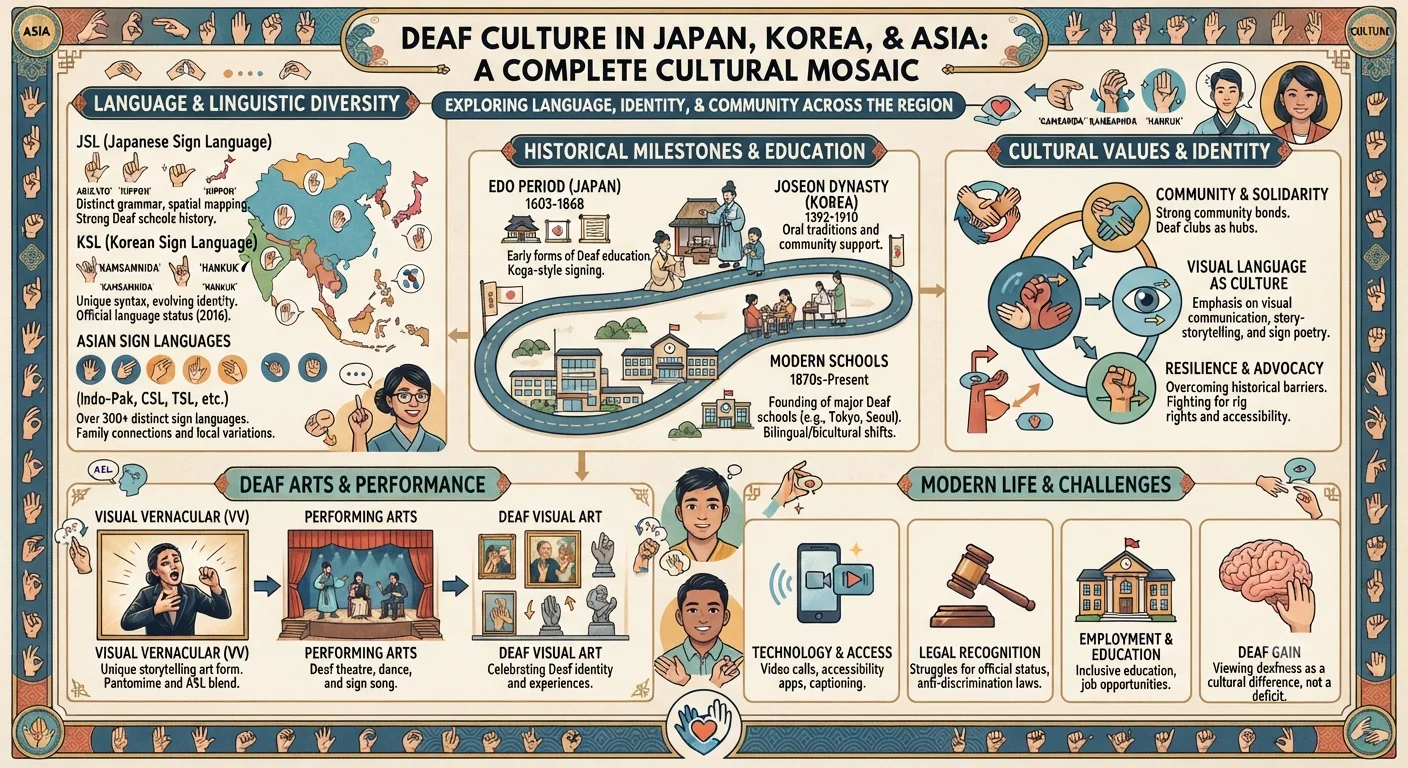
- Deaf Culture in Japan Korea and Asia Complete Overview
- Best Books About Deaf Culture Every Reader Should Know
- Cochlear Implant Debate in the Deaf Community Explained
In tactile ASL the DeafBlind person places one or both hands lightly over the hands of the signer following the handshapes movements and locations of signs through tactile sensation rather than visual observation. This method requires both the DeafBlind person and their communication partner to develop specific skills for producing and receiving signs in a tactile format that differs in important ways from standard visual signing.
Other Communication Methods Used by DeafBlind Individuals
Beyond tactile sign language DeafBlind individuals use a range of other communication methods depending on their specific combination of hearing and vision capacities communication history and personal preference. Print on palm communication involves a partner writing letters or words on the DeafBlind person's palm using a finger. Braille based communication provides access to written information through tactile reading. Close vision signing uses standard sign language but at very close range allowing individuals with limited but functional vision to access signs they cannot see at standard distances.
Some DeafBlind individuals who retain some functional hearing use amplification devices or hearing technology alongside their visual communication methods creating individualized communication approaches that combine multiple methods to maximize information access across their specific combination of sensory capacities.
Support Service Providers and Intervenors
Support service providers and intervenors play essential roles in DeafBlind individuals' access to information communication and environmental awareness that sighted hearing people take for granted as constant automatic background knowledge. A support service provider assists a DeafBlind adult with communication and environmental information in community settings while an intervenor typically works specifically with DeafBlind children in educational settings providing consistent access to language and environmental information throughout the school day.
Recommended Articles
 DEAF CULTURE AND HISTORY
 DEAF CULTURE AND HISTORY
 DEAF CULTURE AND HISTORY
 DEAF CULTURE AND HISTORY
The availability of qualified support service providers and intervenors is a critical access issue for DeafBlind individuals since without this human communication support DeafBlind people may be effectively isolated from information conversation and environmental awareness in ways that profoundly limit their independence quality of life and community participation.
DeafBlind Community and Cultural Identity
DeafBlind individuals have developed a distinct community and cultural identity that draws on both deaf cultural traditions and the specific shared experiences of combined deafblindness. DeafBlind community gatherings and events typically use specific protocols including touch based greeting conventions and communication arrangements that accommodate the full range of communication methods used by different DeafBlind individuals within the community.
Organizations specifically serving DeafBlind communities including the American Association of the DeafBlind provide advocacy community building and resource support specifically tailored to DeafBlind individuals' distinctive needs and perspectives rather than addressing them solely within either the broader deaf community or the broader blind community frameworks.
Helen Keller and DeafBlind History
Helen Keller remains the most internationally recognized DeafBlind person in history and her story has shaped public understanding of DeafBlindness in both positive and complicated ways. Keller who became DeafBlind in early childhood due to illness learned to communicate initially through the tactile finger spelling method taught by her teacher Anne Sullivan and eventually developed an extraordinary range of communication and academic accomplishments that brought worldwide attention to what DeafBlind individuals could achieve with appropriate support and education.
While Keller's story has sometimes been used in oversimplified inspirational narratives that may not fully reflect the complexity of DeafBlind experience and advocacy her actual advocacy work and intellectual contributions including her political writings and disability rights activism represent a more substantive legacy than the popular miracle worker narrative alone captures.
Theatre and Arts for DeafBlind Communities
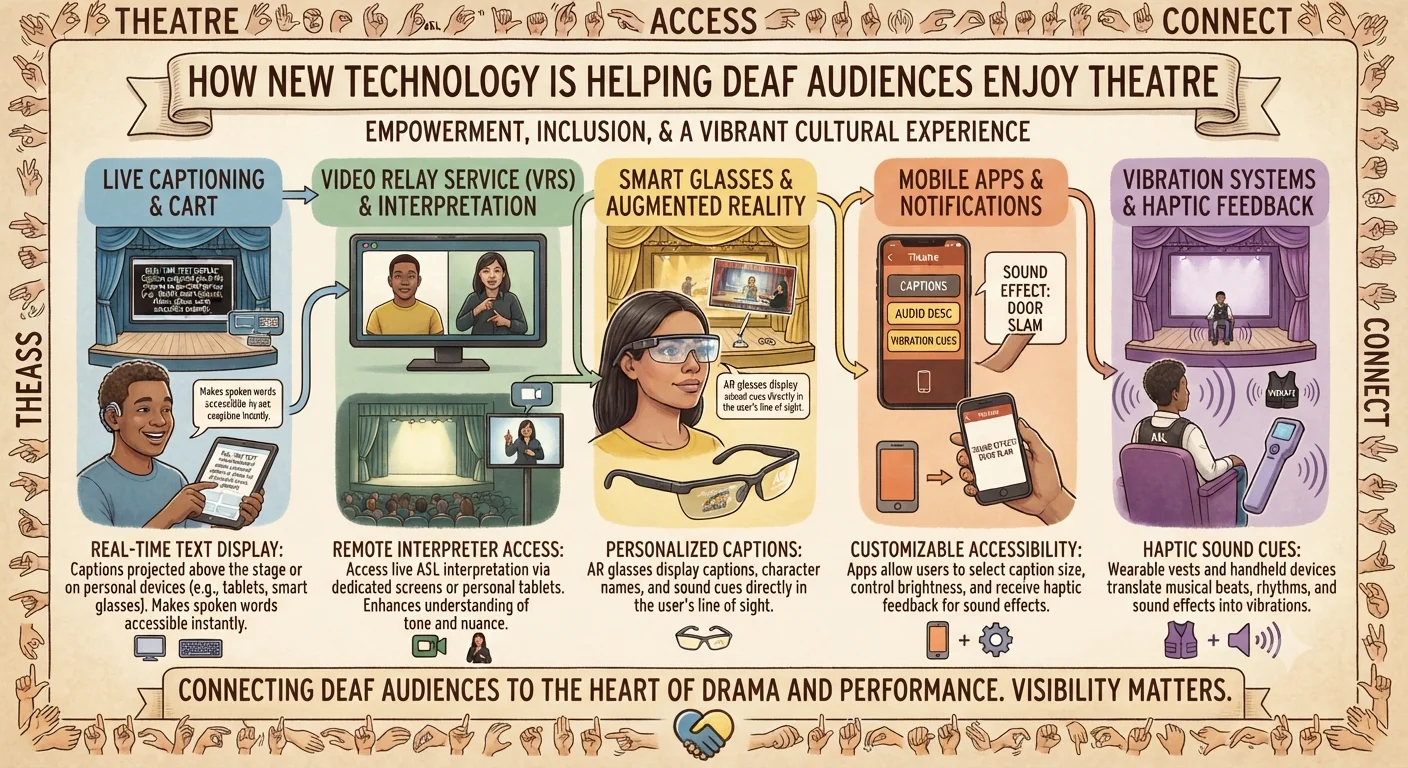
Theatre and arts access for DeafBlind community members requires specific adaptations beyond what serves deaf or blind audience members independently. Tactile theatre is an emerging performance form specifically designed to be experienced through touch with performers guiding audience members' hands to feel set elements costumes and performance objects while narration or tactile sign language provides language access simultaneously. These innovative performance approaches demonstrate the creative possibilities that emerge when theatre makers commit to genuinely including DeafBlind audiences rather than treating their access needs as beyond the scope of what theatre can accommodate.
Conclusion
DeafBlind culture and tactile sign language represent remarkable human adaptations to complex sensory circumstances creating communication methods community structures and cultural identity that deserve far greater public awareness and understanding than they typically receive even within broader conversations about deaf culture and disability inclusion. Understanding this distinctive community enriches broader understanding of human communication diversity and the extraordinary range of ways people build language community and cultural belonging across widely varying sensory and physical circumstances.
FAQ
What is tactile sign language and how does it differ from standard ASL?
Tactile sign language involves a DeafBlind person placing their hands over a signer's hands to follow signs through touch rather than sight allowing access to sign language communication without requiring functional vision to see signs at a distance.
What is Usher syndrome and how does it relate to DeafBlindness?
Usher syndrome is a genetic condition causing congenital deafness combined with progressive vision loss and represents one of the most common known causes of combined deafblindness affecting individuals who are typically born deaf and experience gradual vision loss over time.
What is the difference between a support service provider and an intervenor for DeafBlind individuals?
A support service provider assists DeafBlind adults with communication and environmental information in community settings while an intervenor works specifically with DeafBlind children in educational settings providing consistent language and environmental information access throughout the school day.