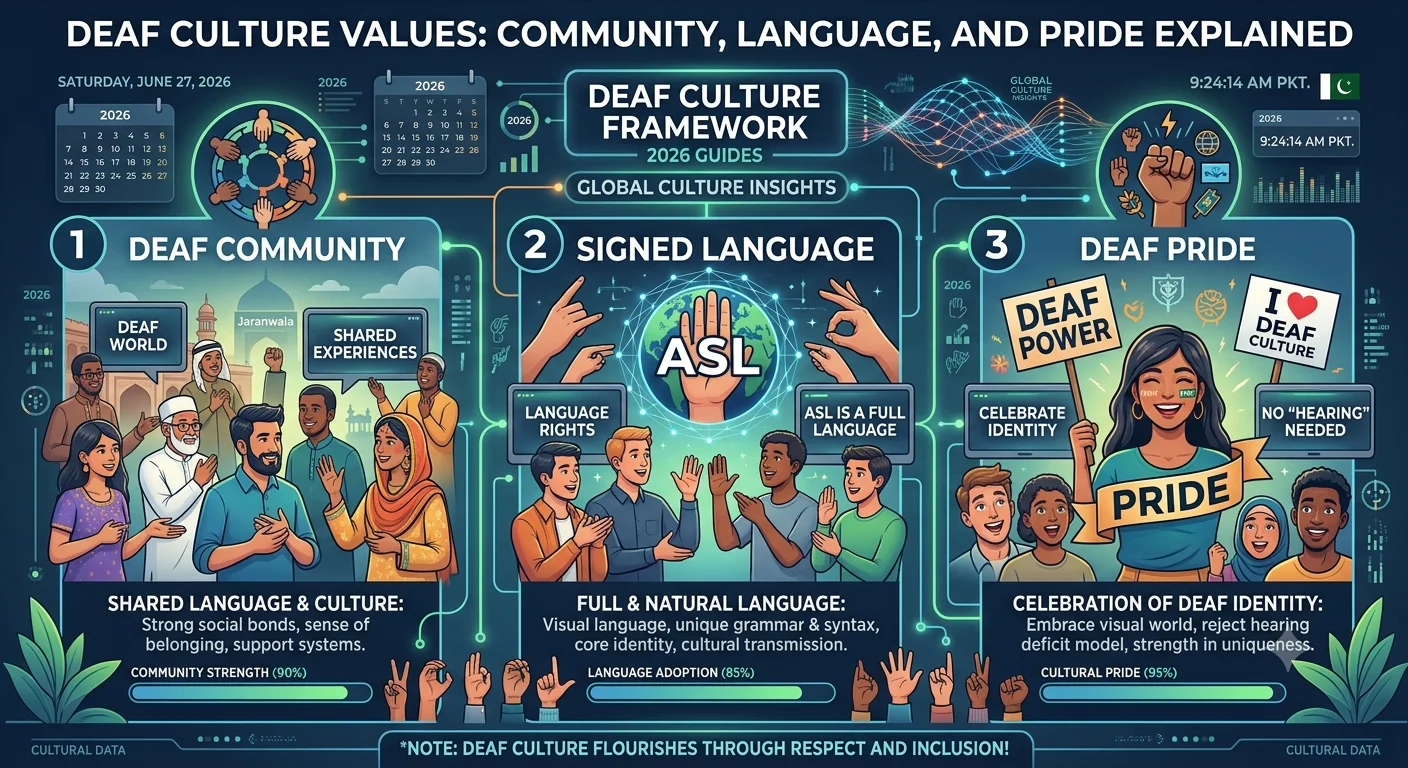
Deaf culture rests on a foundation of distinct values that shape how members of the deaf community see themselves and relate to one another. Understanding these values of community language and pride offers insight into why deaf culture has remained so resilient and meaningful across generations despite ongoing pressure from the hearing world to view deafness primarily through a medical lens.
Community as the foundation of deaf culture
Community sits at the very center of deaf culture values. For many deaf people especially those born into hearing families finding the deaf community for the first time represents a profound experience of belonging that may not have existed anywhere else in their lives. Deaf clubs schools and gathering spaces have historically served as essential sites where this community formed and continues to thrive.
This emphasis on community reflects the reality that deaf people are a linguistic minority dispersed throughout a largely hearing world. Unlike many other minority communities that may share neighborhoods or regions deaf people often grow up isolated within hearing families and only find their cultural community through schools deaf organizations or chance encounters later in life. This makes the deaf community itself an especially treasured and intentionally maintained value within the culture.
Language as identity not just communication
Within deaf culture language is understood as far more than a practical communication tool. ASL represents identity heritage and a connection to generations of deaf people who came before. Fluency in ASL is often seen as a marker of authentic belonging within deaf community spaces in ways that go beyond simple functional communication ability.
This is why many in the deaf community feel strongly protective of ASL and resistant to educational or medical approaches that minimize or discourage its use. The language is not viewed as interchangeable with English or as a lesser alternative to spoken communication. It is valued as a complete and beautiful language deserving the same respect and protection as any other minority language threatened by assimilation pressures from a dominant majority culture.
Deaf pride and resistance to the medical model
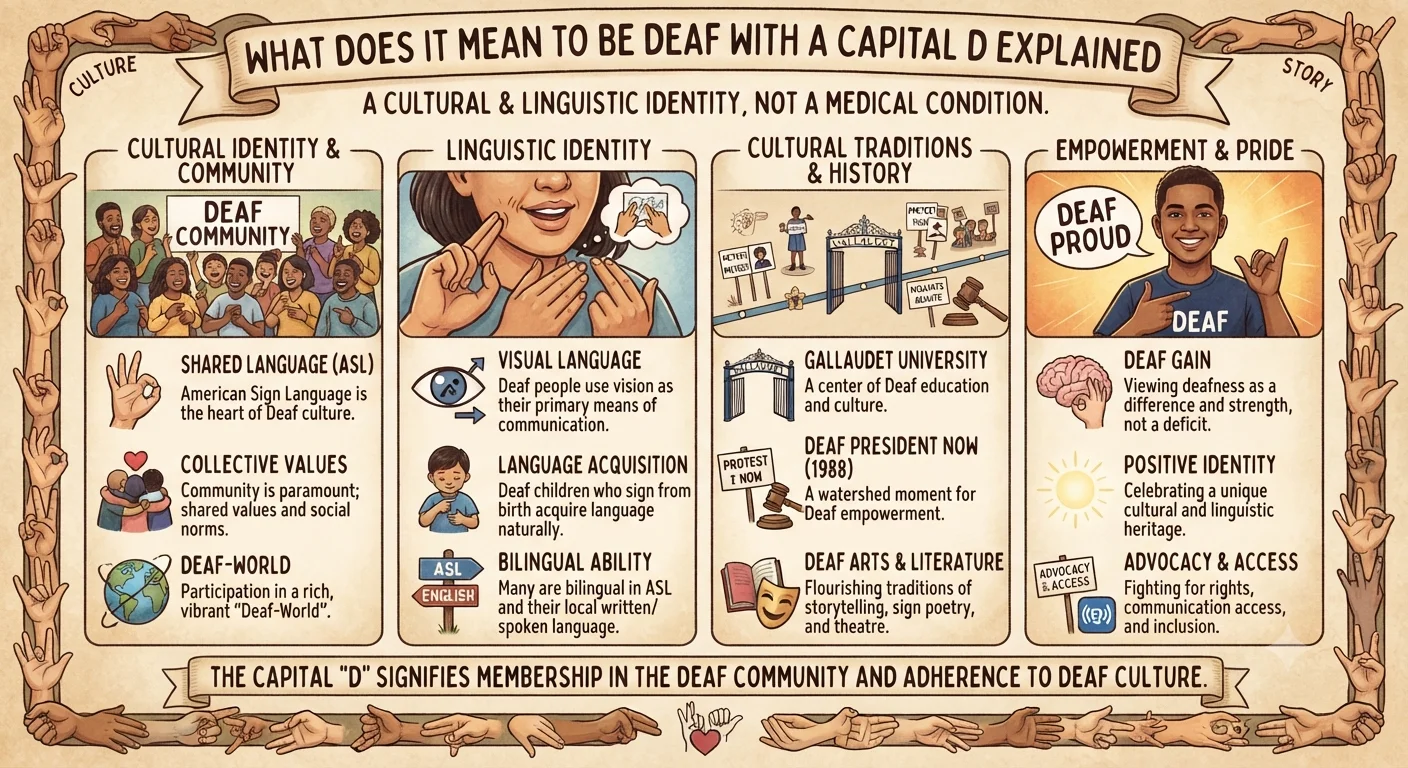
Deaf pride represents a deliberate cultural stance that frames deafness as a difference and identity to be celebrated rather than a deficit or disability to be fixed or cured. This stands in direct contrast to what is often called the medical model of deafness which frames deafness primarily as a hearing loss requiring intervention.
- Complete History of Gallaudet University from 1864 to Today
- What is Deaf Culture and Why Does It Matter in 2026
The cultural model of deafness which underlies deaf pride instead emphasizes that deaf people have built a complete and rich culture with its own language values and traditions that exists independently of any medical framing. This does not mean deaf culture rejects all medical intervention or technology. Rather it insists that deaf identity itself should not be treated as inherently something requiring correction.
Visual orientation as a cultural value
Deaf culture places significant value on visual communication and visual attention more broadly reflecting the community's primary mode of perceiving and engaging with the world. This visual orientation shows up in everything from how deaf people get each other's attention through visual cues like waving or tapping rather than calling out a name to how deaf social gatherings are typically arranged in circles so everyone can see each other clearly.
Recommended Articles
 DEAF CULTURE AND HISTORY
 DEAF CULTURE AND HISTORY
 DEAF CULTURE AND HISTORY
 DEAF CULTURE AND HISTORY
This value extends into deaf humor storytelling and artistic traditions which all draw heavily on visual and spatial creativity in ways that reflect the community's fundamentally visual way of experiencing and processing the world around them.
Directness as a communication value
Deaf culture often places higher value on direct clear communication compared to some hearing cultural norms that may favor indirect phrasing or excessive social hedging. This directness is sometimes misunderstood by hearing people unfamiliar with deaf cultural norms as rudeness when it actually reflects a cultural preference for clarity and efficiency in communication that many in the deaf community genuinely value and appreciate in their interactions with one another.
Collective history and shared struggle
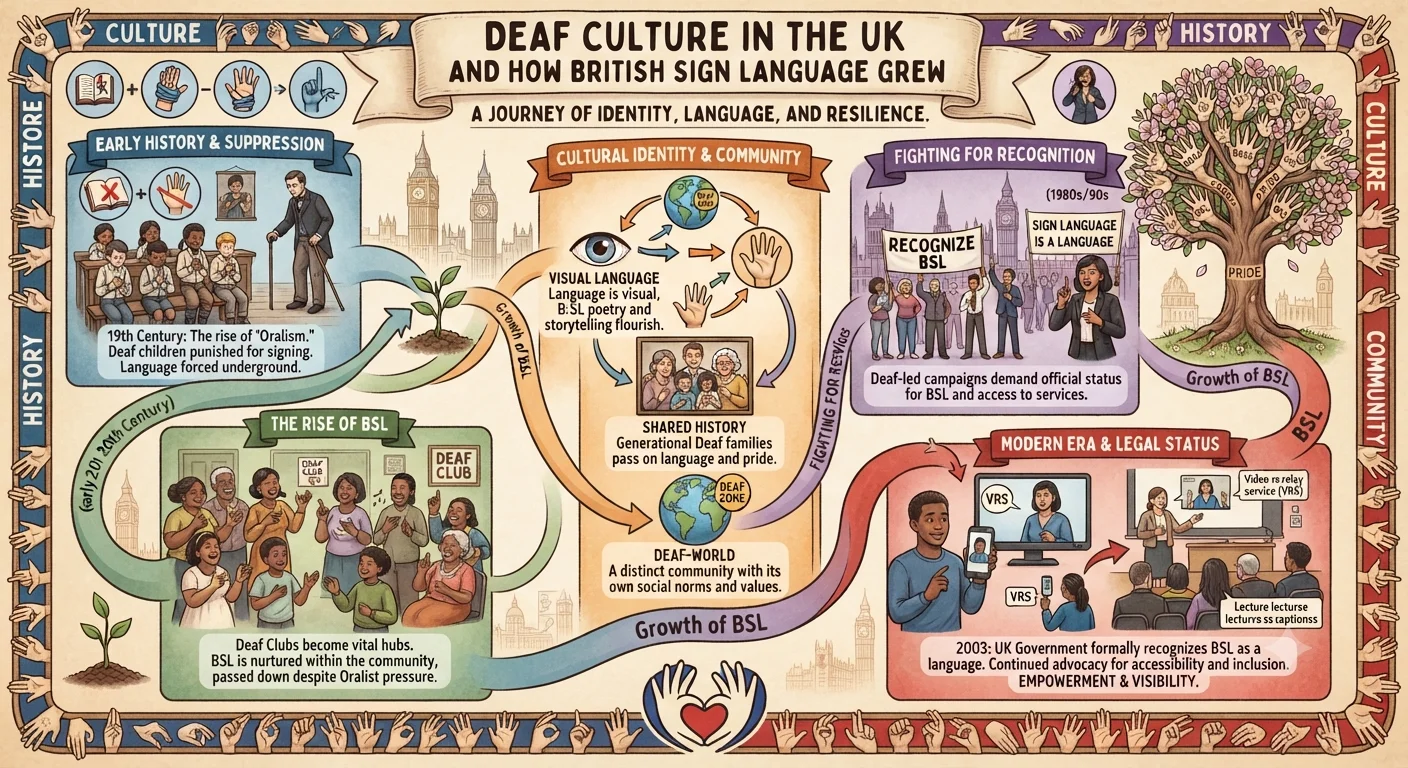
Deaf culture values also include a strong connection to collective history particularly the shared struggle against oralism educational suppression of sign language and ongoing battles for accessibility and recognition. Events like the Deaf President Now movement at Gallaudet University in 1988 are remembered and celebrated as important moments of collective resistance and achievement that strengthen cultural identity and pride across generations.
This connection to shared history helps younger generations of deaf people understand the struggles that shaped the rights and recognition they have today and reinforces the importance of continuing to advocate for deaf community needs and rights moving forward.
Why these values matter for outsiders to understand
Hearing people seeking to engage respectfully with deaf culture benefit significantly from understanding these core values rather than approaching deaf people solely through a lens of accommodation or assistance. Recognizing that community language and pride are deeply held cultural values rather than simply practical considerations helps hearing allies engage in ways that genuinely respect deaf cultural identity.
Conclusion
Community language and pride form the core values that define deaf culture and shape how deaf people understand themselves and their place in the world. These values have helped deaf culture remain remarkably resilient across generations despite significant historical pressure toward assimilation and medical framing. Understanding these values offers anyone genuine insight into one of the world's most distinctive and enduring minority cultures.
FAQ
What is the difference between the medical model and cultural model of deafness? The medical model frames deafness primarily as hearing loss requiring intervention while the cultural model views deafness as an identity and community to be valued and celebrated on its own terms.
Why is community so important within deaf culture? Many deaf people grow up isolated within hearing families so finding deaf community later in life through schools or organizations often represents their first genuine experience of cultural belonging which makes community an especially treasured value.
Is deaf pride opposed to medical treatments like cochlear implants? Deaf pride centers on valuing deaf identity and culture rather than opposing all medical intervention though many in the community do have strong views about how such technologies are introduced and discussed particularly regarding language access for young children.