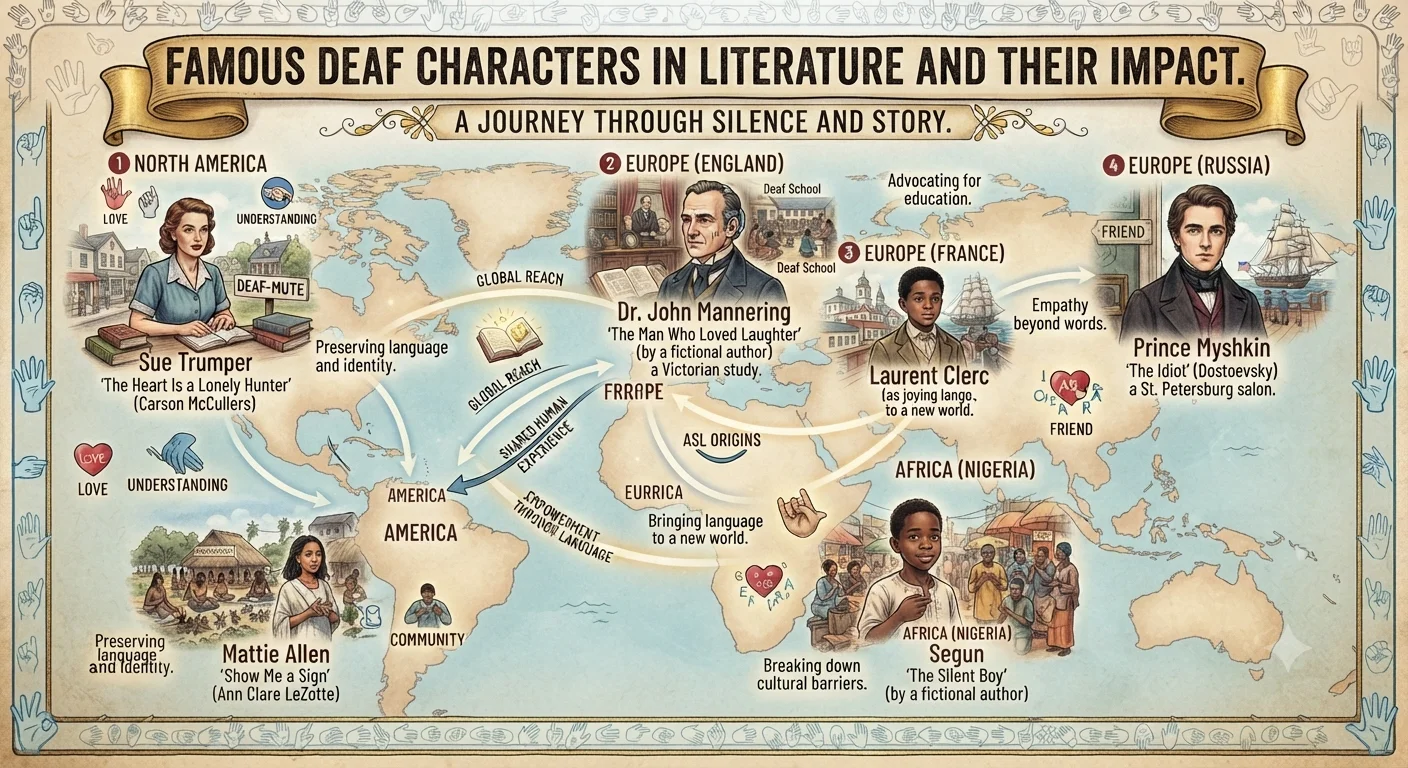
Explore famous deaf characters in literature and how their portrayal has shaped public understanding of deaf identity culture and experience across generations.
Literature has long included deaf characters whose portrayals have shaped public understanding of deafness and deaf identity in significant ways both positive and harmful. Examining famous deaf characters in literature across different eras reveals how cultural attitudes toward deafness have evolved and how representation in fiction continues to matter for real deaf communities.
Why Deaf Characters in Literature Matter
Literary representations of deaf characters matter because fiction is one of the primary ways broader hearing society forms its understanding and assumptions about deaf experience. When deaf characters in literature are portrayed with authenticity complexity and genuine cultural understanding they can build meaningful empathy and awareness among hearing readers who may have little direct experience with deaf community and culture.
Conversely when deaf characters are used primarily as objects of pity inspiration props for hearing character development or depicted through inaccurate stereotypes these representations can reinforce harmful misconceptions that affect how real deaf people are perceived and treated in their everyday lives regardless of the author's intentions.
Dummy in Carson McCullers The Heart Is a Lonely Hunter
- Why Deaf Characters in Literature Matter
- Dummy in Carson McCullers The Heart Is a Lonely Hunter
- Deaf Characters in Charles Dickens
- Lydia in See No Evil Hear No Evil and Pop Culture Deaf Characters
- Contemporary Literature and More Authentic Deaf Representation
- Deaf Authors Writing Their Own Stories
- What Makes a Well Written Deaf Literary Character
- Conclusion
- FAQ
- Why do critics sometimes find deaf characters in classic literature problematic?
- What makes a deaf literary character authentic and well written?
- Why is it significant when deaf authors write their own stories?
Carson McCullers novel The Heart Is a Lonely Hunter published in 1940 features John Singer a deaf mute character whose silence and apparent receptiveness causes other lonely characters to project their deepest hopes and feelings onto him. Singer becomes a kind of blank screen onto which hearing characters pour their innermost thoughts precisely because his deafness creates communication barriers that paradoxically make him seem like the ideal listener.
While the novel is celebrated for its literary achievement many disability scholars have critiqued Singer's character as an example of a deaf character who exists primarily to serve hearing characters' emotional needs rather than being portrayed as a fully realized individual with his own complete inner life desires and perspective driving the narrative.
Deaf Characters in Charles Dickens
Charles Dickens included deaf characters in several of his works often reflecting the Victorian era attitudes toward disability that mixed genuine sympathy with paternalistic assumptions about deaf people's needs and capacities. Sophy in Doctor Marigold is arguably one of his more sympathetically drawn deaf characters appearing in a Christmas story where her adoptive father learns to communicate with her and advocates for her education and wellbeing.
- Famous Deaf Painters and Visual Artists Throughout History
- Deaf Poets Society History and Impact on Deaf Arts Movement
- Marlee Matlin Biography Career and Oscar Winning Journey
These Victorian literary representations are important historical documents of how mainstream hearing society viewed deafness during the period when oralism was beginning to gain influence in deaf education reflecting the complex mix of sympathy and limiting assumptions that characterized hearing attitudes toward deafness in this era.
Lydia in See No Evil Hear No Evil and Pop Culture Deaf Characters
Popular culture and film adaptations of literary works have also featured memorable deaf characters whose portrayals have influenced public understanding in significant ways. These portrayals have ranged from genuinely humanizing representations that challenge stereotypes to more problematic depictions that rely on deafness as a comedic or dramatic device without authentic cultural grounding.
The gap between deaf characters written and performed by hearing creators without genuine deaf cultural input and those developed with authentic deaf community involvement tends to be readily apparent to deaf readers and audiences who can identify inaccuracies and missed opportunities for genuine cultural representation that hearing audiences may not notice.
Recommended Articles
 DEAF ARTISTS AND STORIES
 DEAF ARTISTS AND STORIES
 DEAF ARTISTS AND STORIES
 DEAF ARTISTS AND STORIES
Contemporary Literature and More Authentic Deaf Representation
Contemporary literature has produced an increasing number of deaf characters written with greater authenticity and cultural specificity reflecting both growing deaf community advocacy for accurate representation and the increasing visibility of deaf authors writing their own stories and characters from lived experience rather than outside observation.
Deaf authors writing deaf characters bring insider knowledge of ASL grammar deaf humor community dynamics and cultural values that hearing authors working without deep deaf community involvement often miss regardless of how much research they conduct before writing. This authenticity gap between insider and outsider created representations remains one of the central discussions in deaf literary representation today.
Deaf Authors Writing Their Own Stories
One of the most significant developments in deaf literary representation has been the growing number of deaf authors writing their own stories memoirs and fiction that center deaf experience from the inside rather than depicting it from an outsider hearing perspective. These works provide authentic representation that serves deaf readers seeking to see their own experiences reflected accurately while also offering hearing readers genuine insight into deaf cultural life that outside depictions cannot fully replicate.
Supporting and amplifying deaf authored literature is one of the most meaningful ways hearing readers and the publishing industry can contribute to improved deaf representation in literature rather than continuing to rely primarily on hearing authored depictions of deaf experience however sympathetically intentioned those depictions may be.
What Makes a Well Written Deaf Literary Character
The strongest deaf characters in literature share certain qualities that distinguish them from more problematic representations. They have full inner lives ambitions flaws and desires that extend beyond their deafness rather than being defined solely or primarily by their hearing status. They interact authentically with language and communication in ways that reflect genuine understanding of deaf cultural and linguistic experience rather than perpetuating inaccurate stereotypes about how deaf people communicate and navigate the world.
Well written deaf literary characters also exist within recognizable deaf community contexts with relationships to other deaf people and cultural institutions that reflect the social reality of deaf life rather than depicting deaf characters as isolated individuals defined primarily by their difference from hearing characters around them.
Conclusion
Famous deaf characters in literature from Victorian novels through contemporary fiction reflect evolving and still imperfect cultural understandings of deaf identity and experience. As more deaf authors bring their own authentic perspectives to literary representation and as publishers and readers increasingly recognize the value of insider created deaf narratives the quality and authenticity of deaf literary representation continues to improve in ways that benefit both deaf readers and the broader reading public's understanding of deaf community and culture.
FAQ
Why do critics sometimes find deaf characters in classic literature problematic?
Classic literary deaf characters are often critiqued for existing primarily to serve hearing characters emotional needs or for reflecting paternalistic attitudes toward deafness rather than being portrayed as fully realized individuals with their own complete inner lives and perspectives.
What makes a deaf literary character authentic and well written?
Authentic deaf literary characters have full inner lives beyond their deafness interact with language and communication in culturally accurate ways and exist within recognizable deaf community contexts rather than being depicted as isolated individuals defined solely by their difference from hearing characters.
Why is it significant when deaf authors write their own stories?
Deaf authored literature brings insider knowledge of ASL grammar deaf cultural values humor and community dynamics that hearing authors working without deep community involvement often miss creating more authentic representations that serve both deaf readers seeking accurate reflection of their experience and hearing readers seeking genuine cultural insight.