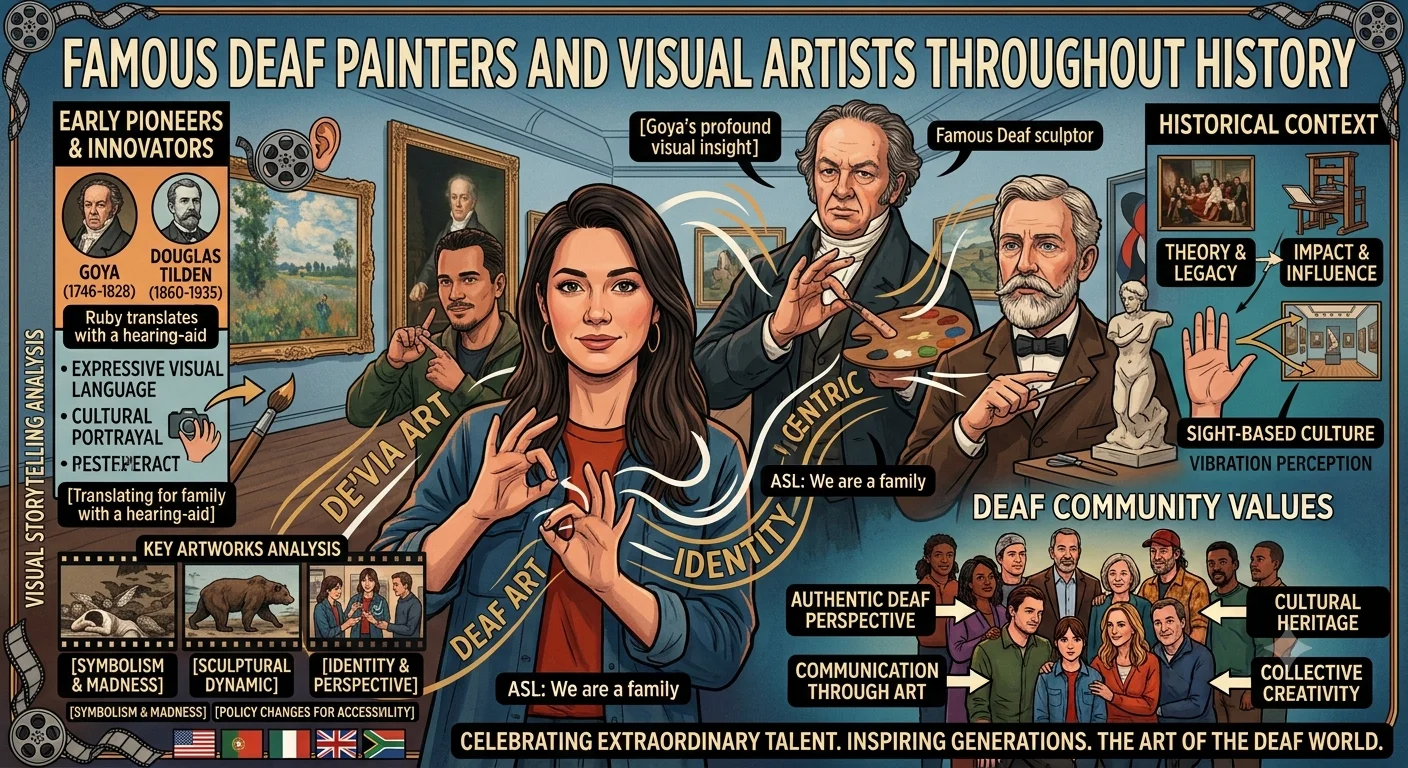
Deaf painters and visual artists have made significant contributions to art history often bringing a distinctive visual sensitivity shaped by their experience navigating a primarily visual relationship with the world. Exploring the work and lives of these artists reveals how deafness has influenced artistic vision across different eras and artistic movements.
Francisco Goya
Francisco Goya the renowned Spanish painter experienced significant hearing loss in his mid life due to illness eventually leaving him almost completely deaf for the remainder of his career. Many art historians note that Goya's work took a notably darker and more intensely psychological turn following his hearing loss with later works often described as more introspective and visually intense compared to his earlier court paintings.
Goya's later body of work including his famous Black Paintings created near the end of his life is often discussed in relation to his isolation from hearing loss combined with other personal hardships he experienced. His ability to continue producing some of art history's most powerful and influential work despite profound deafness demonstrates how artistic vision can deepen rather than diminish through significant life challenges.
Granville Redmond
Granville Redmond was a deaf American painter born in 1871 known particularly for his landscape paintings depicting California poppy fields and coastal scenes. Redmond attended the California School for the Deaf where he developed his early artistic training and talent before pursuing formal art education in San Francisco and Paris.
Beyond his painting career Redmond also worked as an actor in silent films during the early Hollywood era including a notable friendship and collaboration with Charlie Chaplin who reportedly learned some sign language specifically to communicate with Redmond. This connection between deaf visual artistry and silent film acting reflects an interesting historical intersection between deaf creative expression and an entertainment medium that did not rely on spoken dialogue.
Chuck Baird
Chuck Baird was a deaf American visual artist closely associated with the De'VIA movement which stands for Deaf View Image Art. This artistic movement specifically explores and celebrates deaf experience identity and culture through visual art created by and for the deaf community. Baird is considered one of the founding figures of this movement and his work often incorporated visual elements specifically referencing ASL handshapes and deaf cultural symbolism.
Baird's contributions helped establish De'VIA as a recognized artistic movement with its own distinct visual vocabulary and thematic concerns centered specifically on deaf identity and experience rather than simply depicting deaf subjects from an outside perspective.
The De'VIA movement and its significance
The broader De'VIA movement which emerged formally in the late 1980s represents an important development in deaf visual arts specifically because it centers deaf experience and perspective as the artistic subject itself rather than simply featuring deaf artists working within mainstream artistic traditions and subject matter unrelated to deaf identity specifically.
Artists working within this movement often incorporate visual elements drawn from ASL grammar and handshapes deaf cultural symbols and themes related to deaf identity oppression and pride directly into their visual artwork creating a distinctly deaf centered artistic tradition with its own recognizable visual language and thematic concerns.
Recommended Articles
 DEAF ARTISTS AND STORIES
 DEAF ARTISTS AND STORIES
 DEAF ARTISTS AND STORIES
 DEAF ARTISTS AND STORIES
How deafness has influenced visual artistic perception
Many deaf visual artists have spoken about how their experience of the world without auditory input may contrib ute to heightened visual sensitivity and attention to detail that informs their artistic work. While this connection should not be overstated or treated as a universal truth for all deaf artists many have described a particularly intense relationship with visual observation and detail that they connect to their deaf experience and primarily visual orientation toward understanding their environment.
Contemporary deaf visual artists
Beyond historical figures contemporary deaf visual artists continue to create significant work across painting sculpture and other visual art forms often continuing the De'VIA tradition of exploring deaf identity directly while others work within broader contemporary art movements unrelated to deaf themes specifically demonstrating the full range of artistic expression and subject matter deaf artists pursue today.
- Deaf Poets Society History and Impact on Deaf Arts Movement
- Marlee Matlin Biography Career and Oscar Winning Journey
- Top 10 Most Famous Deaf Actors in Hollywood History
University deaf studies programs and dedicated deaf arts organizations continue to support and showcase contemporary deaf visual artists providing exhibition opportunities and critical attention that help ensure deaf visual artistic contributions continue receiving appropriate recognition within the broader art world.
Why deaf visual artists deserve greater recognition
Despite significant individual achievements deaf visual artists throughout history have often received less mainstream recognition compared to their hearing contemporaries reflecting broader patterns of underrepresentation that deaf artists across multiple disciplines have historically faced within mainstream cultural institutions and recognition systems.
Continued scholarly attention exhibition opportunities and public education about deaf visual artists and movements like De'VIA help ensure these significant artistic contributions receive the recognition and appreciation they deserve within broader art history and contemporary artistic discourse.
Conclusion
Deaf painters and visual artists from Francisco Goya to contemporary De'VIA movement artists have made substantial and often underrecognized contributions to art history. Their work demonstrates how deaf experience and perspective can inform distinctive and powerful visual artistic vision deserving of greater recognition within mainstream art history and ongoing contemporary artistic discourse.
FAQ
Did Francisco Goya become deaf before or after his most famous works? Goya experienced significant hearing loss in his mid life with many art historians noting his later and arguably most psychologically intense works were created after this hearing loss occurred.
What is the De'VIA movement in deaf visual art? De'VIA stands for Deaf View Image Art and refers to an artistic movement that specifically explores and celebrates deaf experience identity and culture through visual art created by and for the deaf community.
Who is considered a founding figure of the De'VIA movement? Chuck Baird is widely recognized as one of the founding figures of the De'VIA movement known for incorporating ASL handshapes and deaf cultural symbolism directly into his visual artwork.