
Closed captions transformed theatre accessibility by giving deaf and hard of hearing audiences a reliable way to follow live performances in real time. What began as a niche accommodation has grown into a standard expectation across professional theatre and has changed how audiences of all kinds experience live performance.
What closed captioning means in a theatre context
In theatre closed captioning typically refers to displaying the spoken dialogue and sometimes important sound effects on a screen near the stage or through individual handheld devices so that deaf and hard of hearing audience members can read along with the performance as it happens live.
This is different from open captioning which displays text continuously and visibly to the entire audience and different from sign language interpretation where a live interpreter signs the performance from the side of the stage. Closed captioning gives audience members a choice of whether to use the captioning device or screen without imposing it on every audience member in the theatre.
The history of captioning in live theatre
Captioning technology in live theatre developed later than captioning for television and film. Television captioning became more widely available starting in the late 1970s and 1980s following advocacy from deaf community organizations. Live theatre presented unique technical challenges because dialogue is not pre-recorded and timing varies slightly with each live performance.
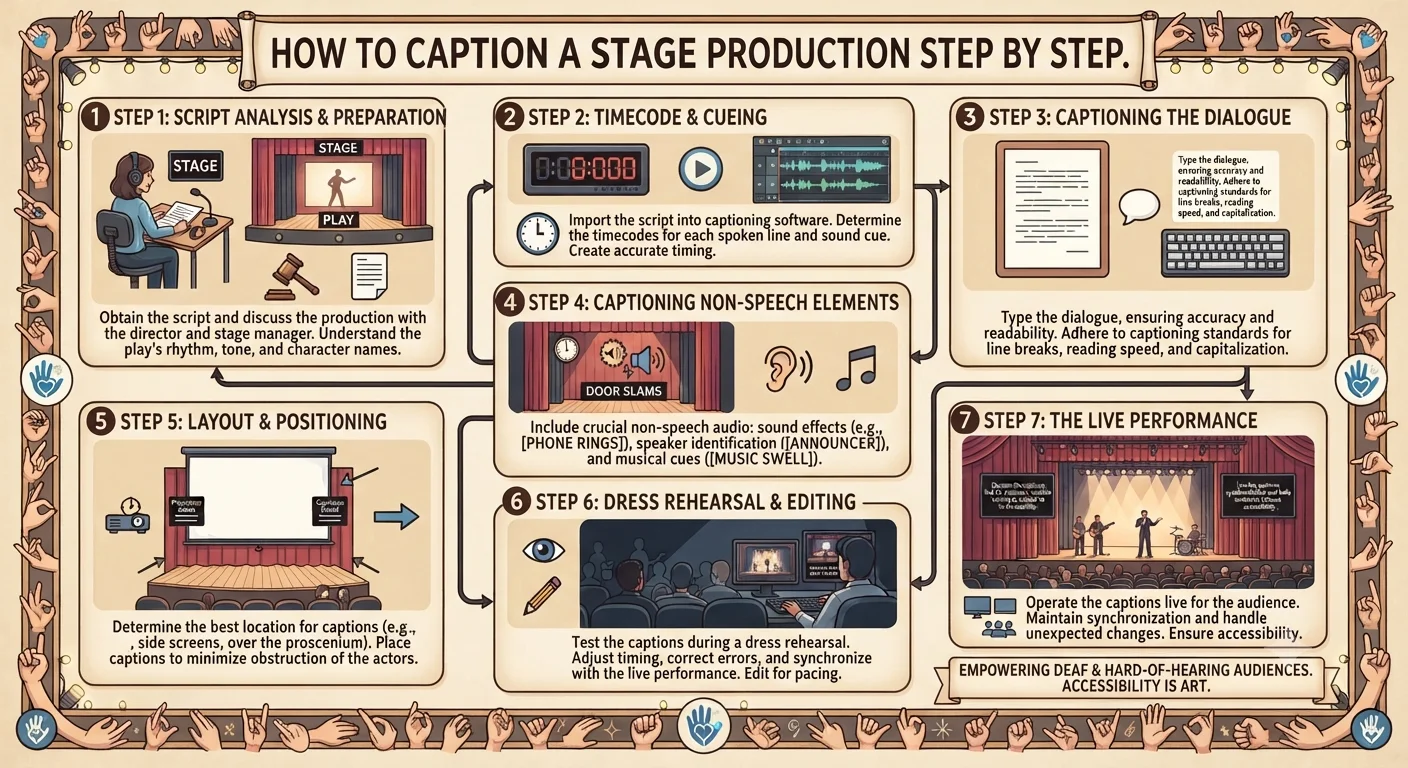
Early theatre captioning systems required a trained operator to manually trigger captions in sync with the live performance using a script with cue points marked throughout. This required significant coordination and added cost which limited how widely available captioned performances were in the early years.
How modern theatre captioning works
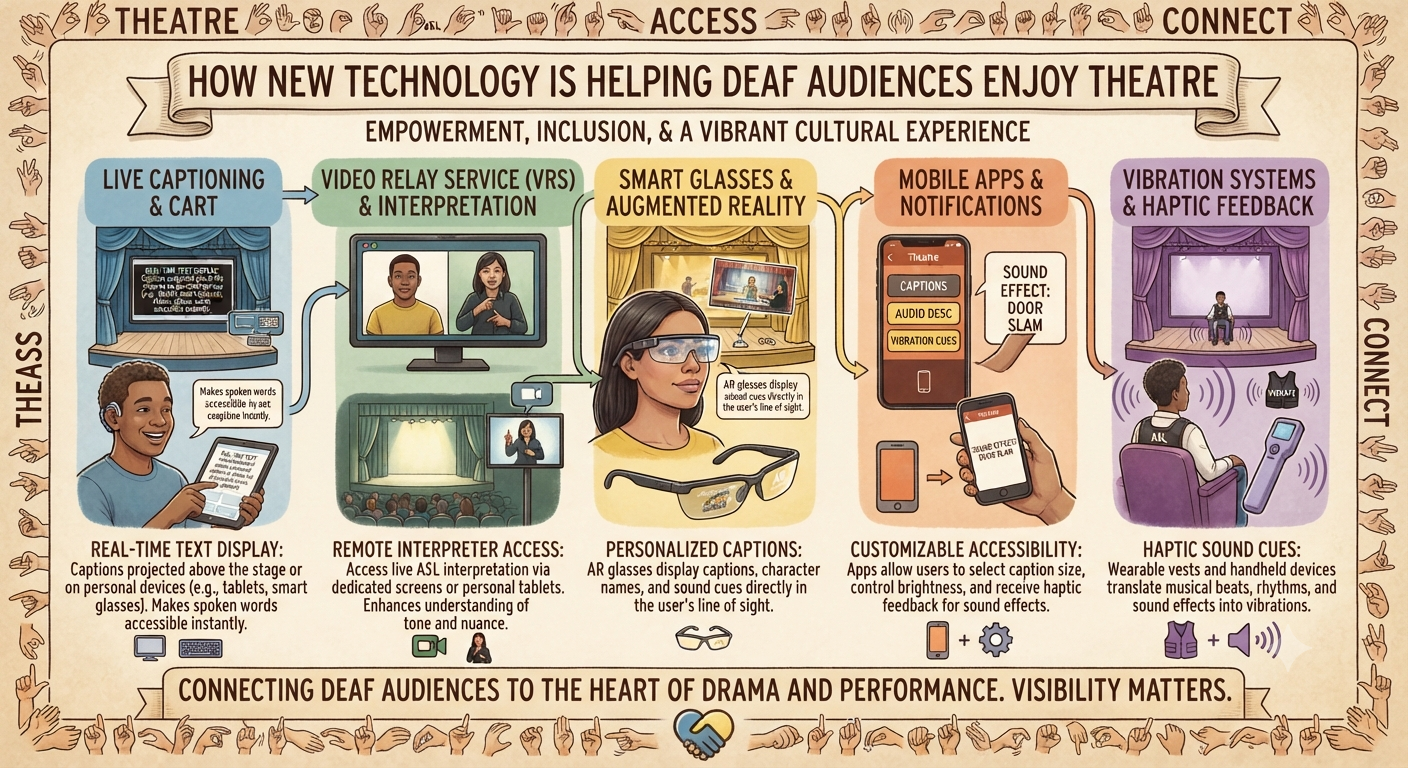
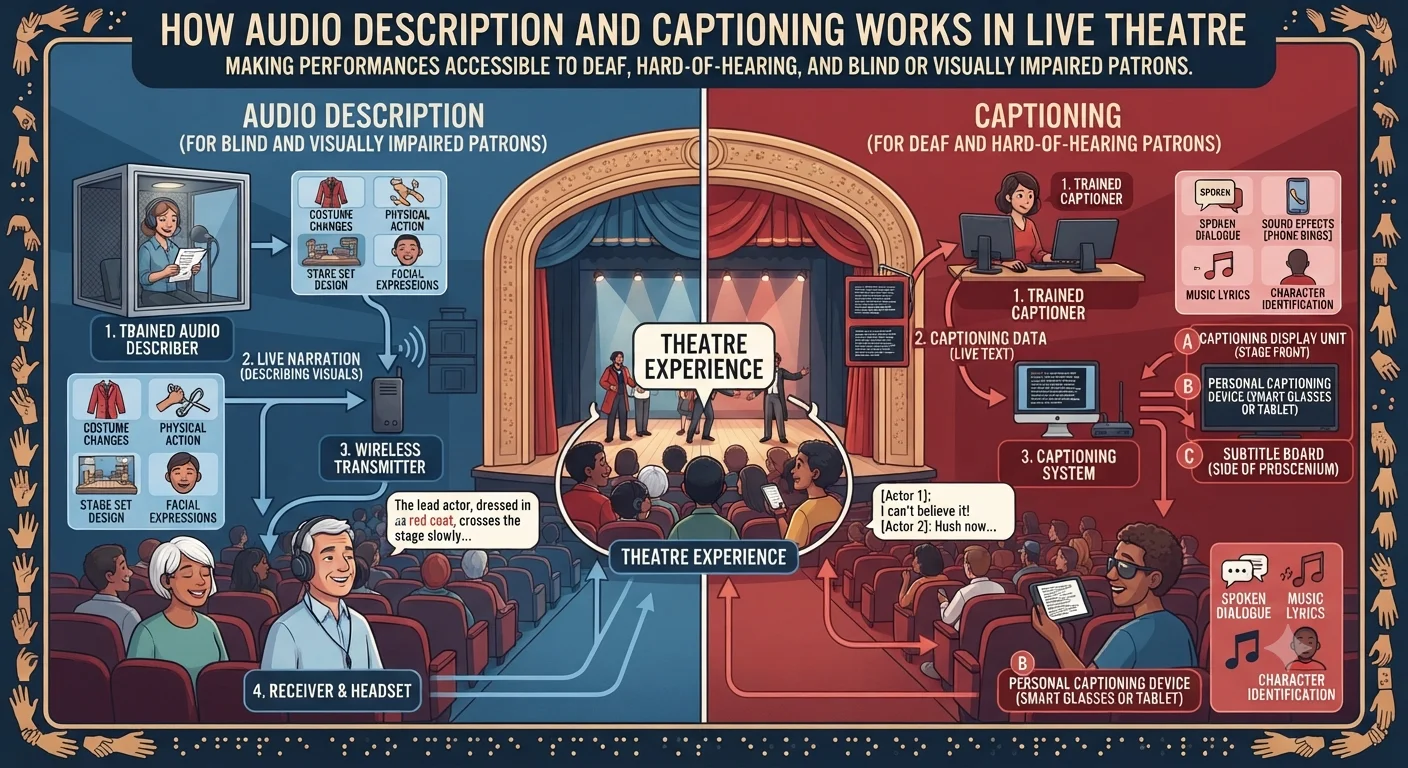
Modern captioning technology has become significantly more sophisticated. Many theatres now offer designated captioned performances where a caption screen is positioned near the stage displaying dialogue in real time synced carefully to the live performance by a trained operator following the script.
Some venues have moved toward personal captioning devices that individual audience members can use at their seats giving them a private screen with text rather than requiring everyone to look toward a shared screen positioned near the stage. This technology has made captioned performances more comfortable and less disruptive to other audience members.
The impact on deaf and hard of hearing theatre audiences
Before reliable captioning many deaf and hard of hearing audience members had extremely limited access to live theatre. Unless a performance offered live ASL interpretation deaf audience members often could not follow the dialogue and plot of a production at all which effectively excluded them from one of the oldest art forms in human history.
Captioned performances opened the door for deaf and hard of hearing theatre lovers to attend shows on a far more regular basis. This access has allowed deaf audiences to engage with mainstream theatre productions that might never have offered ASL interpretation but were able to add captioning more easily and affordably.
Recommended Articles
 INCLUSIVE STORYTELLING
 INCLUSIVE STORYTELLING
 INCLUSIVE STORYTELLING
 INCLUSIVE STORYTELLING
Captioning versus ASL interpretation
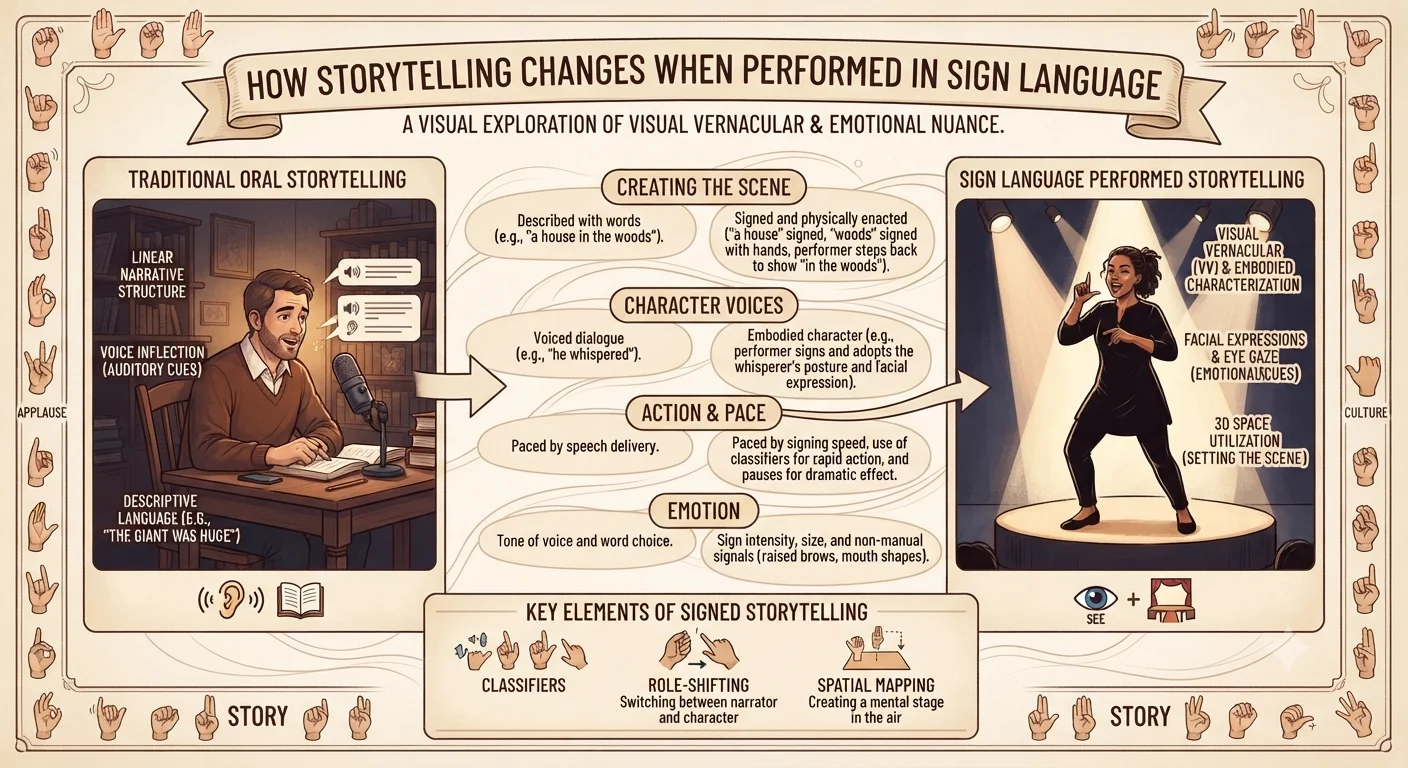
Captioning and ASL interpretation serve overlapping but distinct purposes and many deaf and hard of hearing patrons have strong preferences between the two depending on their primary language and reading comfort. For deaf individuals whose first language is ASL rather than English watching an ASL interpreter often provides a richer and more natural theatrical experience than reading captions.
For hard of hearing individuals who are more comfortable with written English or for deaf individuals who did not grow up with strong ASL fluency captioning may be the preferred and more accessible option. The best theatre accessibility programs offer both options on different scheduled performances to serve the full range of their deaf and hard of hearing audience members.
How captioning benefits audiences beyond the deaf community
Captioned performances have also proven valuable for audience members who are not deaf or hard of hearing including people learning English as a second language people with certain learning differences and older audience members experiencing age related hearing changes. This broader benefit has helped build wider institutional support for captioning programs at theatres that might not have prioritized the investment otherwise.
The future of theatre captioning technology
Advances in technology continue to improve theatre captioning. Some venues have experimented with augmented reality glasses that display captions directly in an audience member's field of vision allowing them to watch the stage and read captions simultaneously without looking back and forth between the stage and a separate screen. This kind of innovation points toward a future where captioning becomes even less intrusive and more widely available across theatre venues of every size.
Conclusion
Closed captioning has fundamentally changed what theatre accessibility means for deaf and hard of hearing audiences. What started as a technically challenging accommodation has grown into an expected feature at many professional theatres giving millions of people meaningful access to live performance that was largely unavailable to them in the past. As technology continues to advance theatre accessibility will likely keep expanding in ways that benefit deaf hard of hearing and hearing audiences alike.
FAQ
What is the difference between open and closed captioning in theatre? Open captioning displays continuously to the full audience while closed captioning is typically available through a separate screen or device that audience members can choose to use.
Do all theatres offer captioned performances? No captioned performances are typically offered on specific scheduled dates rather than every performance due to staffing and technical requirements. Checking with the venue in advance is recommended.
Is captioning the same as ASL interpretation at a theatre performance? No captioning displays written text while ASL interpretation involves a live interpreter signing the dialogue. Many deaf patrons have a strong preference for one option over the other.