Learn how audio description and captioning works in live theatre and how these accessibility tools help deaf blind and hard of hearing audiences enjoy performances
Audio description and captioning are two distinct accessibility tools that help different audience members fully experience live theatre performances. Understanding how each tool works what they provide and who benefits from them helps explain why both have become increasingly important components of truly inclusive theatre programming.
What Audio Description Is and Who It Serves
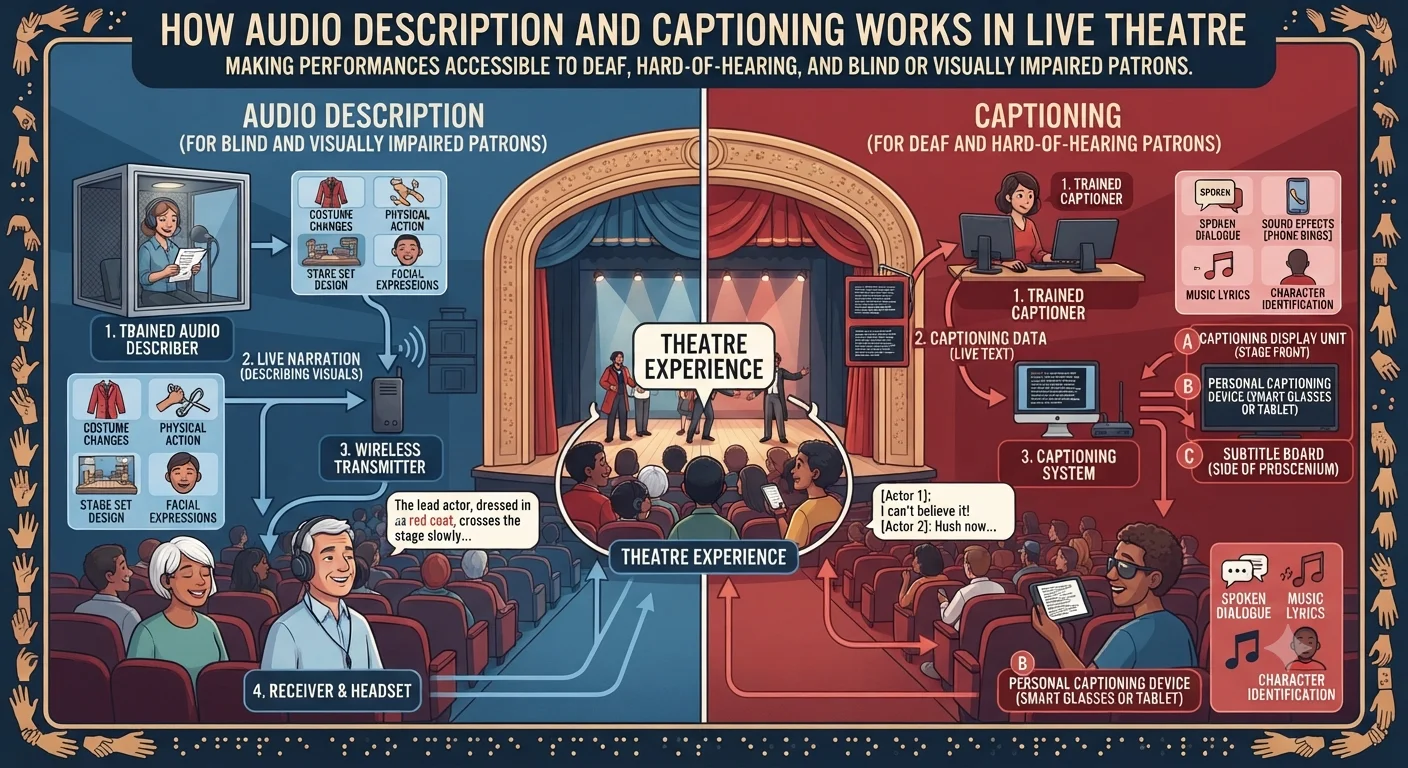
Audio description is an accessibility service that provides spoken narration of visual elements happening on stage that are not conveyed through dialogue or sound alone. This service is primarily designed for blind and visually impaired audience members who cannot see the visual action costumes set design and physical performance elements that sighted audience members experience directly.
During an audio described performance a trained audio describer narrates key visual information through a wireless earpiece during natural pauses in the dialogue and action helping blind audience members understand what is happening on stage beyond what the spoken dialogue alone conveys. This narration might include descriptions of set changes character movements costume details and significant visual actions essential to following the story.
What Captioning Is and Who It Serves
- What Audio Description Is and Who It Serves
- What Captioning Is and Who It Serves
- Different Types of Captioning Used in Theatre
- How Live Theatre Captioning Operators Work
- Audio Description Preparation and Delivery
- The Training Required for Effective Audio Description
- How These Services Are Scheduled and Promoted
- The Future of Theatre Accessibility Technology
- Conclusion
- FAQ
- What is the difference between audio description and captioning in theatre?
- How does a live theatre captioning operator keep captions synchronized with a live performance?
- Do all theatres offer audio description and captioning at every performance?
Captioning in live theatre displays the spoken dialogue and sometimes important sound effects and music cues as text that audience members can read in real time as the performance unfolds. This service is primarily designed for deaf and hard of hearing audience members who cannot fully access the spoken audio of a live performance.
Unlike closed captioning in film or television which is pre-written and pre-timed to recorded content live theatre captioning requires a trained operator to trigger caption displays in sync with the live performance as it happens which introduces unique technical challenges since live performance timing varies slightly from night to night.
Different Types of Captioning Used in Theatre
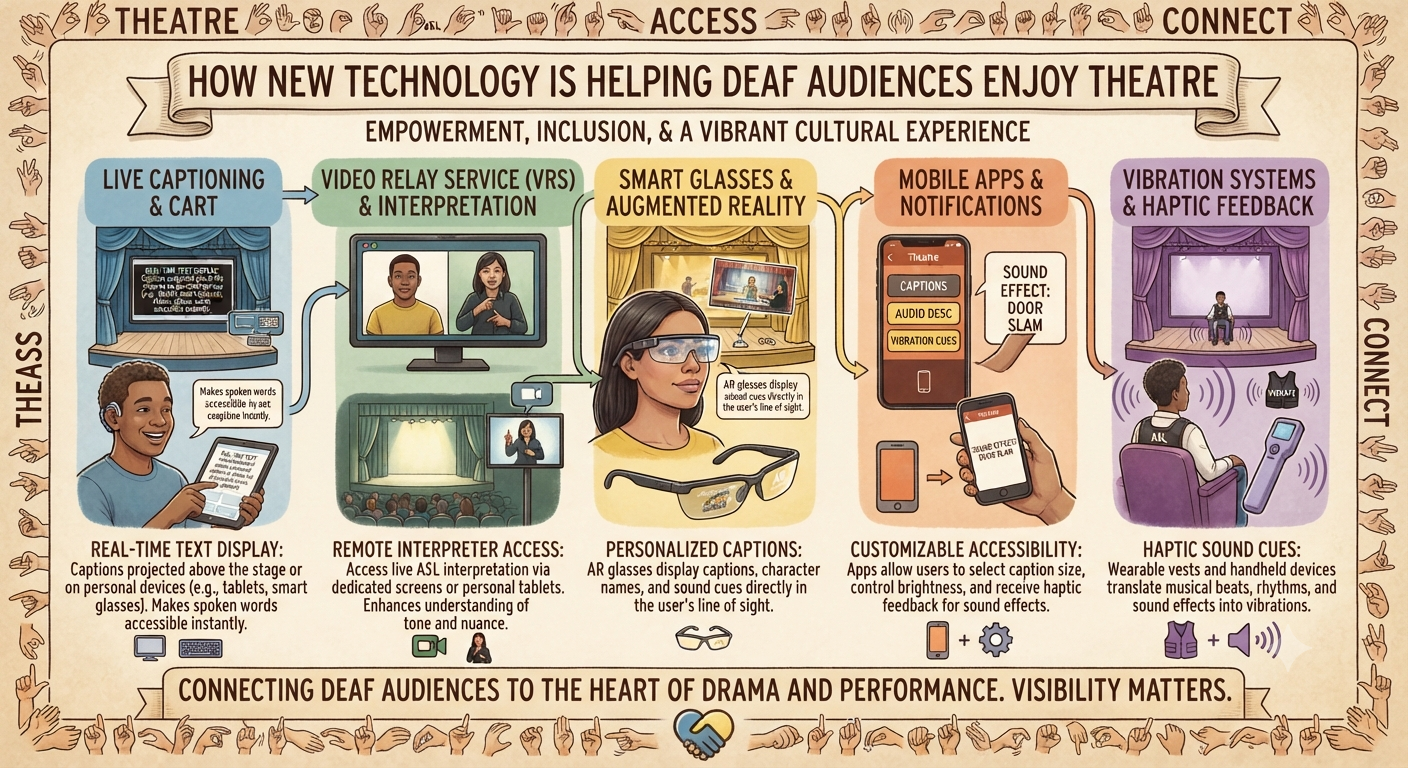
Several different captioning approaches are used in live theatre settings each with particular advantages and limitations depending on the specific venue and production context. Open captioning displays text continuously on a screen visible to the entire audience while closed captioning typically involves individual handheld devices or screens that only audience members who choose to use the service can see.
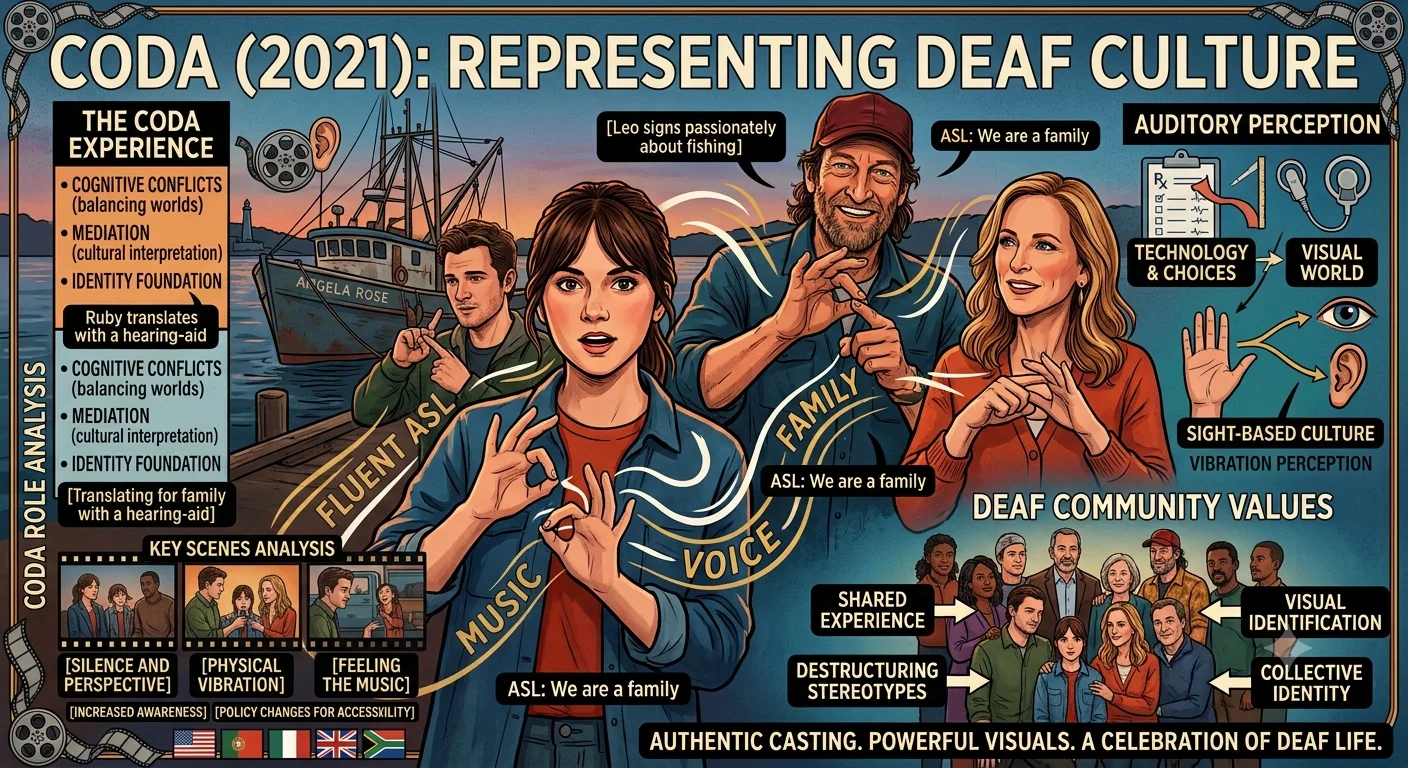
- CODA Movie 2021 How It Represented Deaf Culture Accurately
- How Closed Captions Changed Theatre Accessibility Forever
- Deaf Representation in Mainstream Movies and TV Shows
Some venues have experimented with seat back captioning where small screens built into the back of seats in front of captioning users display text at reading distance without requiring the user to look away from the stage toward a separate screen positioned elsewhere in the theatre. This approach can provide a more integrated captioning experience that minimizes the visual distraction of looking away from the stage to access caption text.
How Live Theatre Captioning Operators Work
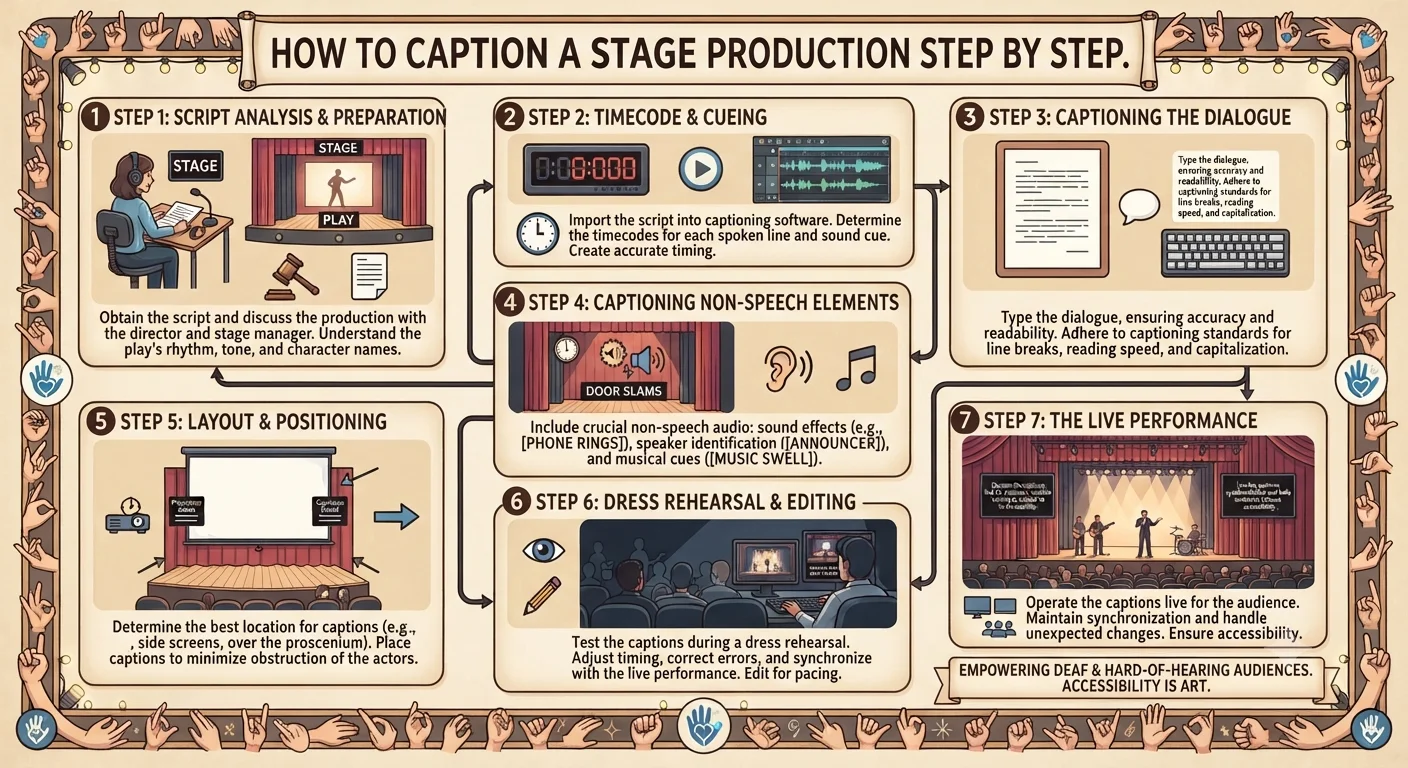
A live theatre captioning operator typically works from a marked script with cue points indicating when each line of dialogue should appear on the caption display. The operator follows along during the performance triggering each caption at the appropriate moment to keep displayed text synchronized with the live action happening on stage.
This requires significant training and preparation including thorough familiarity with the complete script and timing of each production before the first captioned performance. The operator must also be able to adapt quickly when performances deviate slightly from the rehearsed script or timing as inevitably happens with live theatre from time to time.
Recommended Articles
 INCLUSIVE STORYTELLING
 INCLUSIVE STORYTELLING
 INCLUSIVE STORYTELLING
 INCLUSIVE STORYTELLING
Audio Description Preparation and Delivery
Creating effective audio description for a live theatre production requires significant preparation work before the first described performance. Audio describers typically attend multiple rehearsals to develop detailed description scripts that capture the visual information deaf blind audience members most need while fitting naturally within the timing constraints of existing dialogue and action.
The best audio description uses precise vivid and objective language to convey visual information clearly without unnecessary interpretation or subjective editorializing that might impose the describer's personal perspective on what audience members are receiving through the description service.
The Training Required for Effective Audio Description
Professional audio describers undergo specific training to develop the skills needed for effective live theatre description including precise language selection, timing skills for fitting descriptions within available pauses and the ability to quickly adapt prepared descriptions when live performances deviate from rehearsed patterns.
Organizations offering audio description training have developed increasingly sophisticated curricula reflecting growing recognition that quality audio description requires genuine professional expertise rather than simply a willingness to narrate visual content without specialized preparation and skill development.
How These Services Are Scheduled and Promoted
Most theatres offering audio description and captioning services schedule specific performances with these services available rather than providing them at every performance due to the specialized staffing and equipment costs involved. Effective promotion of these scheduled accessible performances to relevant audience communities is essential since even well executed accessible performances fail to serve their intended audience if those audience members do not know the performances exist and how to access them.
The Future of Theatre Accessibility Technology
Emerging technologies continue to develop new possibilities for theatre accessibility including augmented reality glasses that could display captions or visual information directly in an audience member's field of vision and increasingly sophisticated real time captioning technology that may eventually reduce dependence on manually operated caption systems for certain types of productions.
Conclusion
Audio description and captioning serve distinct but equally important accessibility functions in live theatre helping blind visually impaired deaf and hard of hearing audience members access the full experience of live performance. As technology continues advancing and awareness of accessibility needs grows these services are increasingly becoming standard expectations at professional theatres committed to genuine inclusion.
FAQ
What is the difference between audio description and captioning in theatre?
Audio description provides spoken narration of visual elements for blind and visually impaired audience members while captioning displays spoken dialogue as text for deaf and hard of hearing audience members who cannot fully access audio.
How does a live theatre captioning operator keep captions synchronized with a live performance?
Operators work from marked scripts with cue points and manually trigger each caption display at the appropriate moment during the live performance requiring significant preparation and the ability to adapt when performances deviate slightly from rehearsed timing.
Do all theatres offer audio description and captioning at every performance?
Most theatres schedule specific designated accessible performances rather than providing these services at every performance due to specialized staffing and equipment costs so checking with venues in advance about scheduled accessible performance dates is recommended.