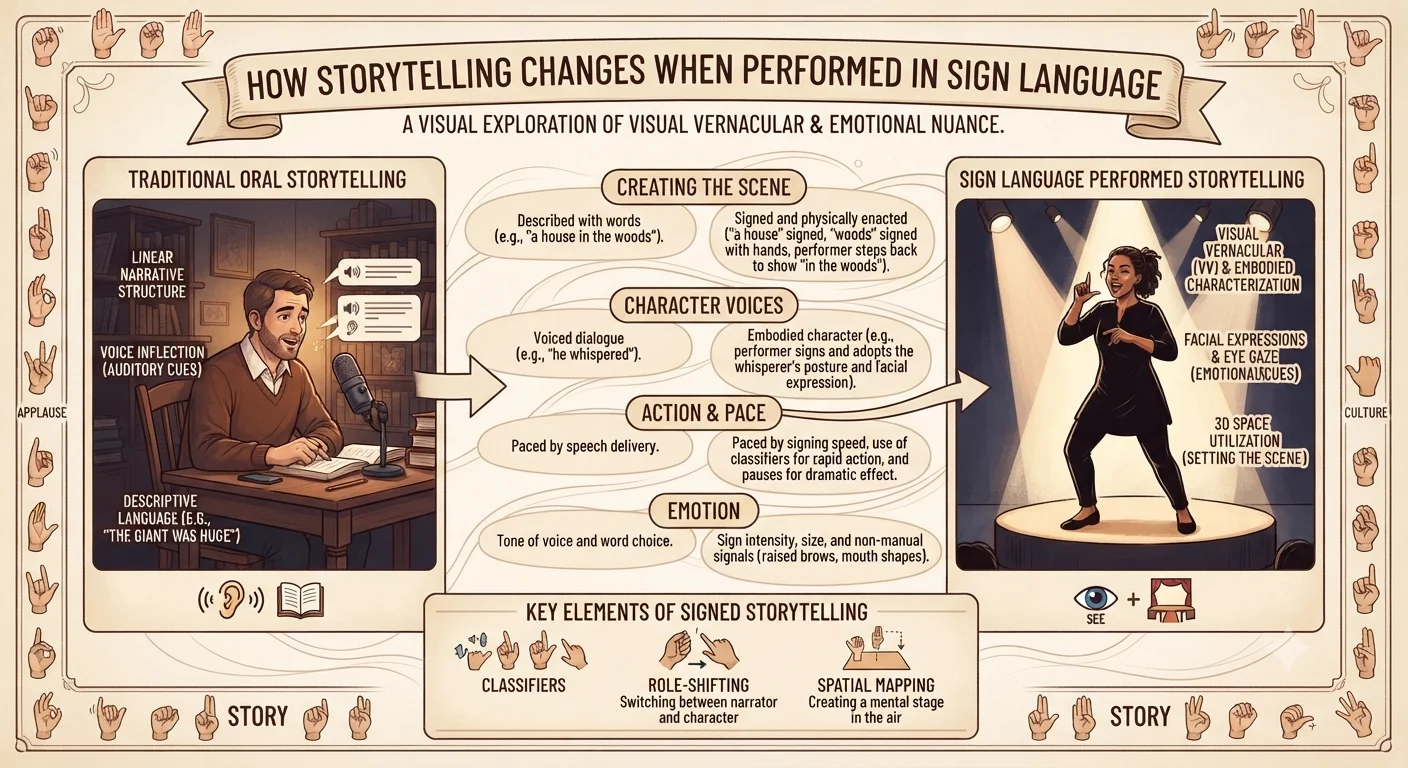
Discover how storytelling fundamentally changes when performed in sign language exploring visual narrative techniques spatial grammar and ASL performance traditions
Storytelling in sign language is not simply a translation of spoken or written narrative into a different communication channel. It is a fundamentally different artistic and linguistic experience that draws on the unique visual spatial properties of sign language to create narrative effects and emotional resonances that spoken storytelling cannot replicate. Understanding how storytelling changes when performed in sign language reveals something profound about both the nature of ASL and the possibilities of human narrative expression.
Visual Grammar as Storytelling Tool
When a skilled ASL storyteller performs a narrative they use the grammatical features of sign language itself as powerful storytelling tools in ways that spoken language narrators cannot access. The signing space in front of the storyteller's body becomes a living canvas where characters locations and relationships are established and manipulated throughout the story creating a three dimensional narrative landscape that exists in physical space rather than only in the listener's imagination.
A storyteller can establish a character at a specific location in signing space and then return to that exact location throughout the narrative to reference that character without repeating their name or description. Relationships between characters can be shown spatially by how their assigned locations relate to each other creating a visible map of the story's interpersonal dynamics that hearing audiences listening to a spoken narrative must construct entirely internally from verbal description alone.
Perspective Shifting and Character Embodiment
- Visual Grammar as Storytelling Tool
- Perspective Shifting and Character Embodiment
- Simultaneity as a Unique Narrative Capacity
- Facial Expression as Narrative Voice
- Visual Vernacular as an Extended Storytelling Tradition
- How Sign Language Storytelling Handles Time and Space
- Why Understanding This Matters for Theatre and Film
- Conclusion
- FAQ
- What is perspective shifting in ASL storytelling?
- What is visual vernacular in deaf storytelling?
- How does ASL storytelling handle the passage of time differently from spoken narrative?
One of the most distinctive features of ASL storytelling is the technique of perspective shifting where the storyteller physically embodies different characters shifting their body orientation eye gaze and facial expression to inhabit each character's viewpoint as they tell the story. This technique allows a single storyteller to perform multiple characters with remarkable clarity giving each a distinct physical and expressive presence that differs from how spoken language narrators typically switch between character voices.
- How Audio Description and Captioning Works in Live Theatre
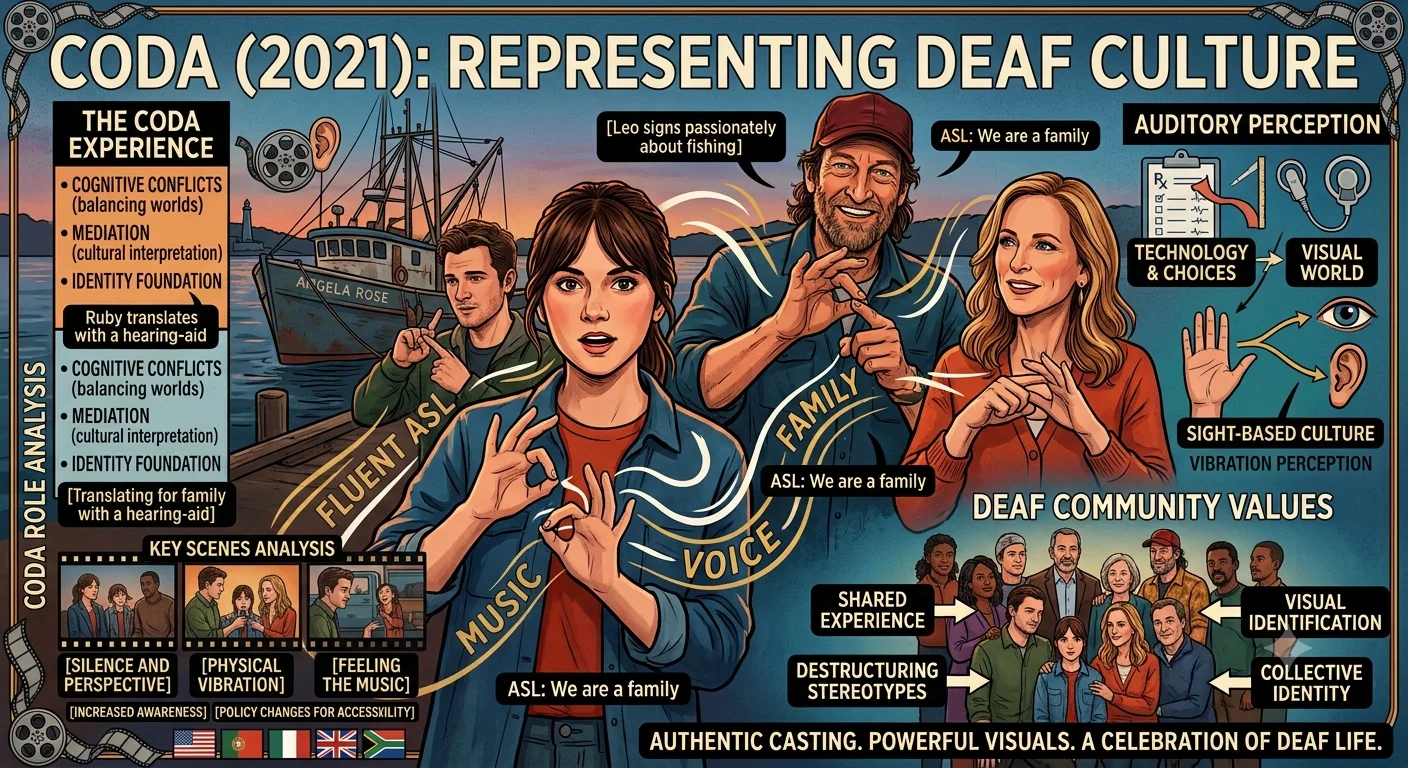
- CODA Movie 2021 How It Represented Deaf Culture Accurately
- How Closed Captions Changed Theatre Accessibility Forever
This embodiment creates an intimacy between storyteller and character that spoken first person narration approaches but rarely fully achieves since the storyteller is not merely describing what a character thinks or feels but physically inhabiting their perspective in ways the audience can see directly rather than only imagine from verbal description.
Simultaneity as a Unique Narrative Capacity
Because sign language is produced visually it can convey certain types of information simultaneously rather than sequentially which creates narrative possibilities unavailable in spoken storytelling where information must be delivered in a linear time based sequence. A skilled ASL storyteller can show two things happening at once or convey a character's action and emotional reaction simultaneously in ways that spoken language must break into sequential description.
This capacity for simultaneity gives ASL storytelling a particularly cinematic quality that many observers have noted comparing it to the way film editing allows visual media to juxtapose images and perspectives in ways that linear spoken narrative cannot easily replicate. ASL storytellers are in some sense their own film editors able to cut between perspectives layer information and create visual juxtapositions using their own body and signing space as the medium.
Facial Expression as Narrative Voice
In spoken storytelling vocal tone pitch and pacing carry enormous amounts of narrative information including character emotion narrative tension and the storyteller's own relationship to the material being told. In ASL storytelling facial expression performs many of these same narrative functions conveying emotional intensity foreshadowing irony and the storyteller's attitude toward events and characters through a visual channel that operates simultaneously alongside the manual signs themselves.
Recommended Articles
 INCLUSIVE STORYTELLING
 INCLUSIVE STORYTELLING
 INCLUSIVE STORYTELLING
 INCLUSIVE STORYTELLING
This means an ASL storyteller's face is always actively narrating even while their hands are producing the primary linguistic content of the story. A skilled performer coordinates these two channels of simultaneous expression to create layered narrative meaning that a novice signer or outside observer focused only on the hand movements will miss entirely without understanding the grammatical and expressive significance of everything happening facially throughout the performance.
Visual Vernacular as an Extended Storytelling Tradition
Beyond standard ASL narrative techniques visual vernacular is a specific performance tradition within deaf culture that pushes visual storytelling to particularly cinematic and expressive extremes. Visual vernacular storytellers use their bodies as cameras adopting different angles perspectives and focal lengths to create stories that function almost like physical film productions with the storyteller's body serving as every technical element of the filmmaking process simultaneously.
This tradition demonstrates how deaf storytelling has developed sophisticated visual artistic techniques over generations that go well beyond the minimum required for clear communication creating a genuine artistic tradition of visual narrative excellence that stands as one of deaf culture's most distinctive and impressive creative achievements.
How Sign Language Storytelling Handles Time and Space
ASL storytelling handles temporal and spatial relationships in ways that differ significantly from spoken narrative conventions. Time can be represented spatially with past events signed in one spatial direction and future events in another creating a physical timeline that the storyteller moves through during the narrative rather than relying purely on verbal tense markers to convey temporal relationships between events.
Physical space within the story can also be represented directly in signing space allowing storytellers to physically move within the story's geography as they narrate creating an embodied sense of spatial relationship between story elements that spoken description must convey through more purely verbal means.
Why Understanding This Matters for Theatre and Film
Understanding how storytelling changes in sign language matters for theatre directors writers and filmmakers because the techniques ASL storytellers have developed offer genuine insights into visual narrative that can inform hearing dominated storytelling traditions. The emphasis on physical embodiment spatial grammar and simultaneous layered expression found in ASL performance traditions has already influenced how some hearing theatre directors and choreographers think about physical storytelling and the use of stage space in ways that extend beyond deaf theatre contexts specifically.
Conclusion
Storytelling in sign language is a fundamentally different and extraordinarily rich artistic experience that uses the unique visual spatial properties of ASL to create narrative possibilities unavailable to spoken storytelling. From perspective shifting and character embodiment to simultaneous information layering and the expressive power of facial narrative ASL storytelling represents one of the most sophisticated and distinctive narrative art forms in human cultural history deserving of far greater recognition and study than it typically receives outside deaf cultural communities.
FAQ
What is perspective shifting in ASL storytelling?
Perspective shifting is a technique where the storyteller physically embodies different characters by shifting body orientation eye gaze and facial expression to inhabit each character's viewpoint giving each a distinct visible presence rather than only describing them verbally.
What is visual vernacular in deaf storytelling?
Visual vernacular is a specific deaf performance tradition that uses the storyteller's body as a kind of physical camera adopting different angles perspectives and focal lengths to create cinematic stories where the performer serves as every technical element of the filmmaking process simultaneously.
How does ASL storytelling handle the passage of time differently from spoken narrative?
Time can be represented spatially in ASL storytelling with past events signed in one spatial direction and future events in another creating a physical timeline the storyteller moves through rather than relying purely on verbal tense markers to convey temporal relationships between events.