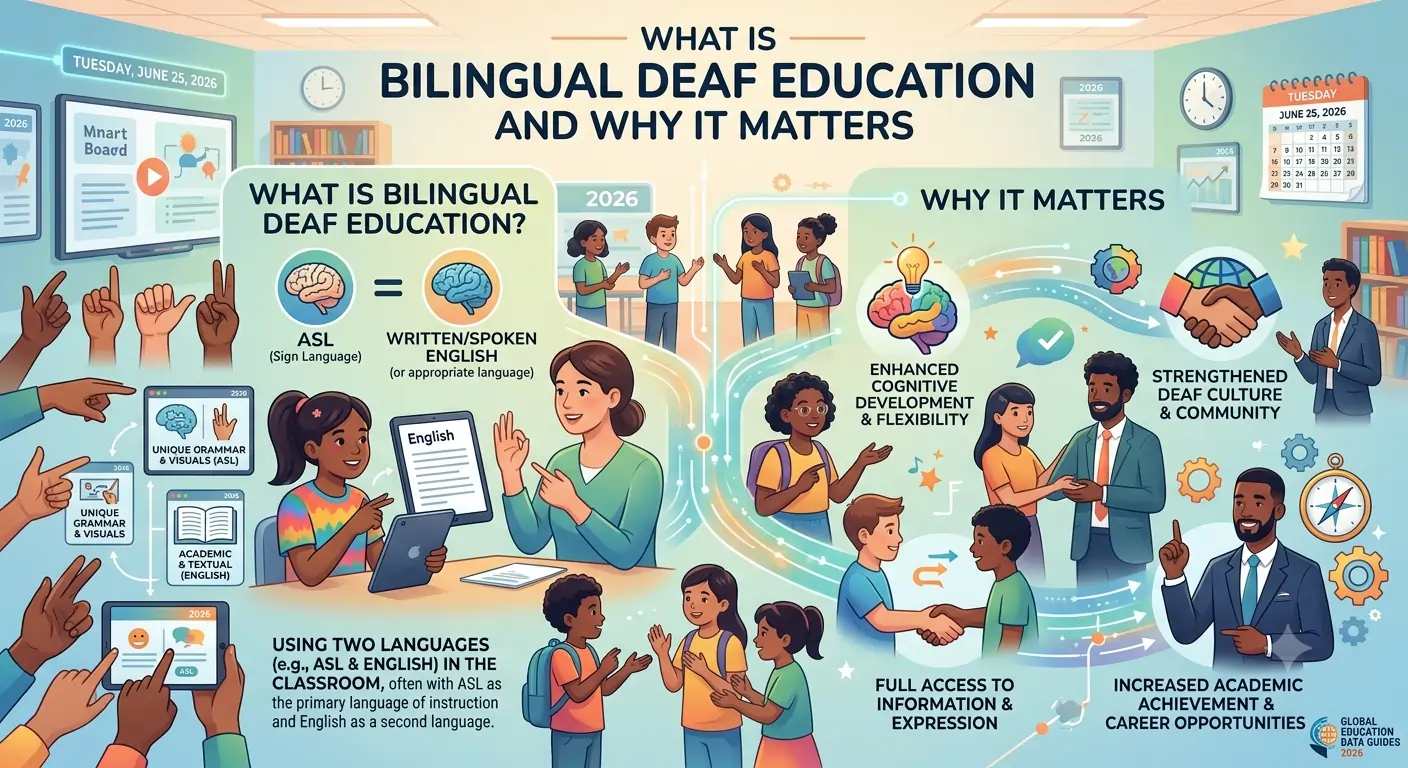
Bilingual deaf education is an approach to teaching deaf and hard of hearing students that values both American Sign Language and English as full and equal languages within the classroom. This educational philosophy has reshaped how many schools approach deaf education in recent decades and represents a significant shift from earlier methods that often suppressed sign language entirely.
What bilingual deaf education actually means
Bilingual deaf education refers to instructional approaches that intentionally develop fluency in both ASL and written or spoken English rather than prioritizing one language over the other or treating sign language as a temporary tool to be phased out as students develop spoken language skills.
In a bilingual deaf education model ASL typically serves as the primary language of instruction allowing deaf students to access academic content fully and immediately in a language they can perceive completely. English literacy is then taught as a second language using strategies similar to how any second language is taught building on the strong first language foundation ASL provides.
The history behind bilingual deaf education
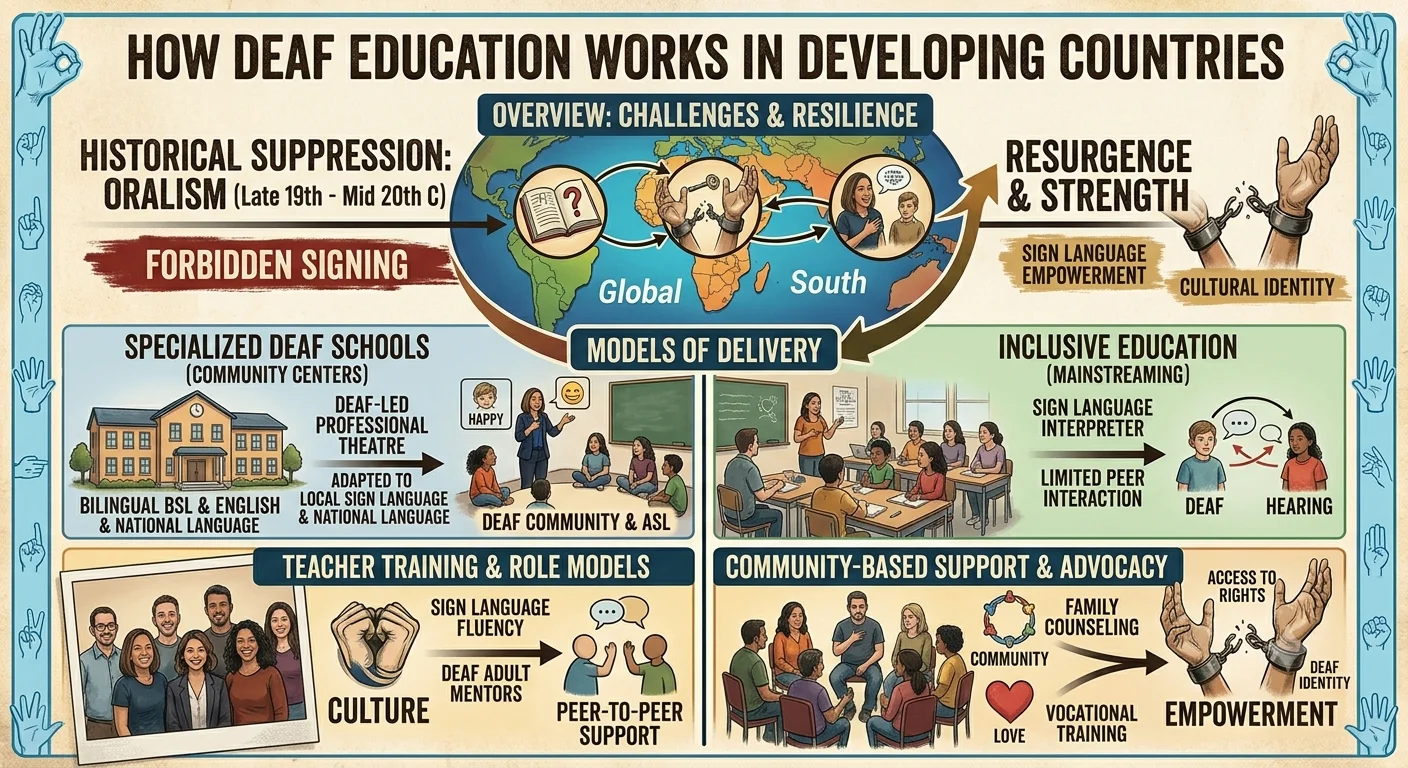
For much of the 19th and 20th centuries deaf education in many parts of the world was dominated by an approach called oralism which discouraged or outright banned the use of sign language in classrooms. Educators following this philosophy believed deaf children needed to learn to speak and lip read in order to function in a hearing dominated society and viewed sign language as an obstacle to this goal.
This approach caused significant harm to generations of deaf students many of whom struggled academically because they could not fully access spoken language instruction while also being denied the sign language that could have given them complete access to learning. Research beginning in the latter half of the 20th century increasingly demonstrated that suppressing sign language did not improve spoken language outcomes and often left deaf children without strong fluency in any language at a critical developmental stage.
Why early language access matters so much
Child development research has consistently shown that language acquisition during early childhood years is critical for overall cognitive and academic development. Deaf children born to hearing families often face significant delays in language exposure if their families do not have early access to sign language resources and support.
Bilingual deaf education addresses this challenge by ensuring deaf children have access to a complete language they can perceive immediately and fully through vision rather than waiting for spoken language skills to develop which may be delayed or incomplete depending on the degree of hearing loss and access to assistive technology.
How ASL supports English literacy development
A common misconception is that learning ASL might interfere with English language development. Research has actually shown the opposite pattern in many cases. Deaf children who develop strong ASL fluency early often demonstrate stronger English literacy outcomes later because they have a complete first language foundation that supports broader cognitive and linguistic development necessary for learning any second language including written English.
This mirrors patterns seen in hearing bilingual education research more broadly where strong first language development typically supports rather than hinders second language acquisition contrary to outdated assumptions that once drove monolingual focused educational policies.
What bilingual deaf education looks like in practice
In a bilingual deaf education classroom teachers typically deliver instruction directly in ASL allowing students to engage with academic content in real time without needing to process information through lip reading or limited residual hearing. English literacy instruction occurs through dedicated lessons that treat English as a second language building reading and writing skills systematically.
Recommended Articles
 DEAF EDUCATION AND SCHOOLS
 DEAF EDUCATION AND SCHOOLS
 DEAF EDUCATION AND SCHOOLS
 DEAF EDUCATION AND SCHOOLS
Schools following this model often employ deaf teachers and staff in significant numbers ensuring students have regular exposure to fluent native ASL models throughout their school day rather than relying primarily on hearing teachers who learned ASL later in life with varying levels of fluency.
Bilingual deaf education versus other educational approaches
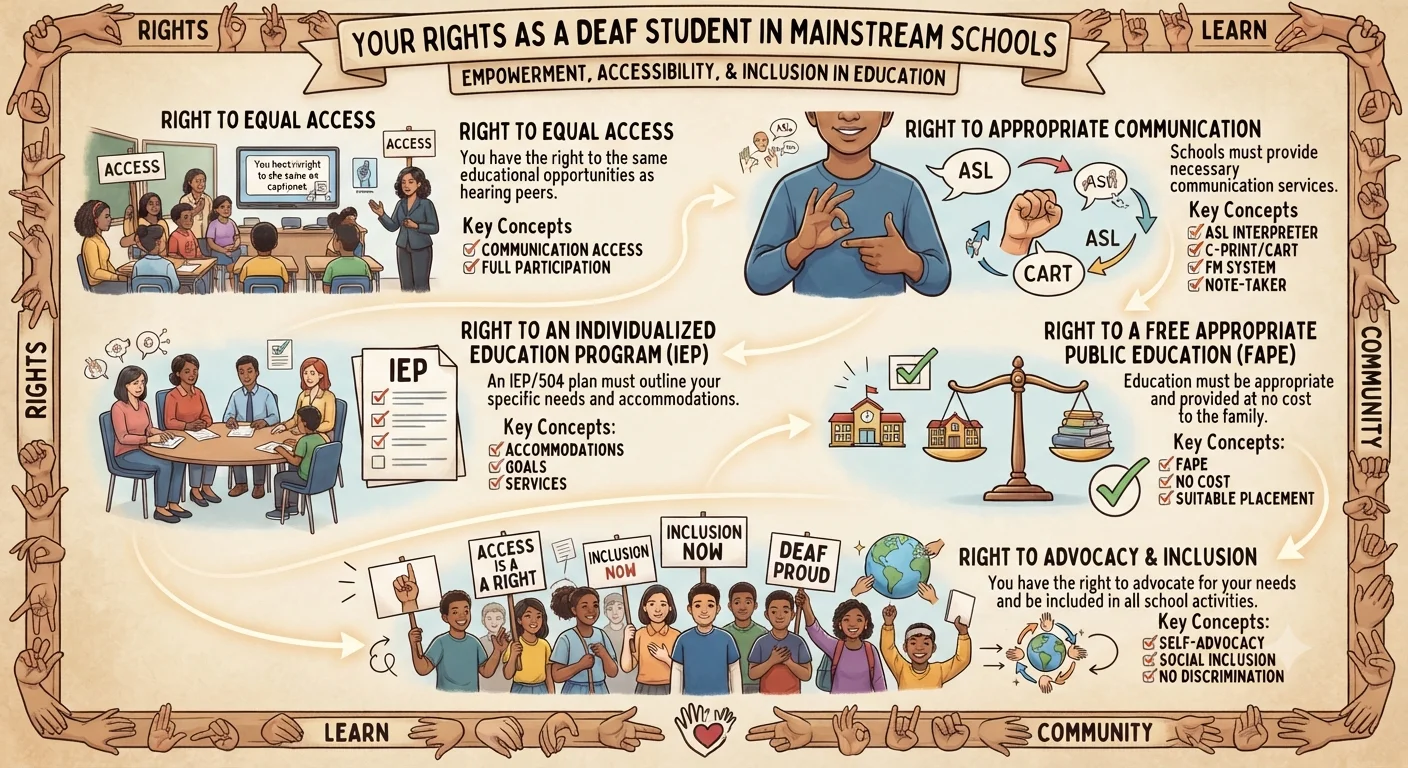
Bilingual deaf education exists alongside other educational philosophies including auditory verbal approaches that focus on maximizing spoken language development often in conjunction with hearing technology like cochlear implants and mainstream educational placements where deaf students attend general education classrooms with varying levels of support services.
Families today often have more educational options available than in previous generations and the right choice depends on individual circumstances including the degree of hearing loss family communication preferences and access to quality programs following each particular educational philosophy in their area.
The role of schools for the deaf in bilingual education
Many dedicated schools for the deaf have become important centers for bilingual deaf education specifically because they can provide the concentrated ASL fluent teaching staff and immersive language environment that this approach requires. Mainstream schools attempting to offer bilingual deaf education often face greater challenges finding sufficient ASL fluent staff and creating a genuinely immersive bilingual environment for a smaller number of deaf students integrated within a much larger hearing student population.
Long term outcomes associated with bilingual deaf education
Research following bilingual deaf education programs has generally shown positive outcomes including stronger overall academic achievement better English literacy outcomes in many cases and stronger social emotional development associated with full language access and connection to deaf community and culture from an early age.
Advocates argue that bilingual deaf education respects deaf children's right to full language access from the earliest possible age rather than gambling a child's critical language development years on uncertain spoken language outcomes that may or may not materialize fully depending on individual factors outside anyone's control.
Conclusion
Bilingual deaf education represents a significant and research supported shift in how deaf children can be taught effectively respecting both ASL and English as complete and valuable languages worth developing fully rather than treating sign language as a lesser option to be minimized. As understanding of language development and deaf education continues to grow this approach continues to gain support among educators researchers and deaf community advocates alike.
FAQ
Does learning ASL slow down a deaf child's English development? Research generally shows the opposite pattern. Strong early ASL fluency often supports stronger English literacy outcomes later by providing a complete first language foundation for cognitive and linguistic development.
What is the difference between bilingual deaf education and oralism? Bilingual deaf education values ASL and English as equally important languages while oralism historically discouraged or banned sign language in favor of exclusively spoken language instruction.
Are schools for the deaf the only place bilingual deaf education happens? While dedicated schools for the deaf often provide the strongest bilingual deaf education environment some mainstream schools also offer bilingual programs though they may face greater challenges providing sufficient ASL fluent staff and immersion.