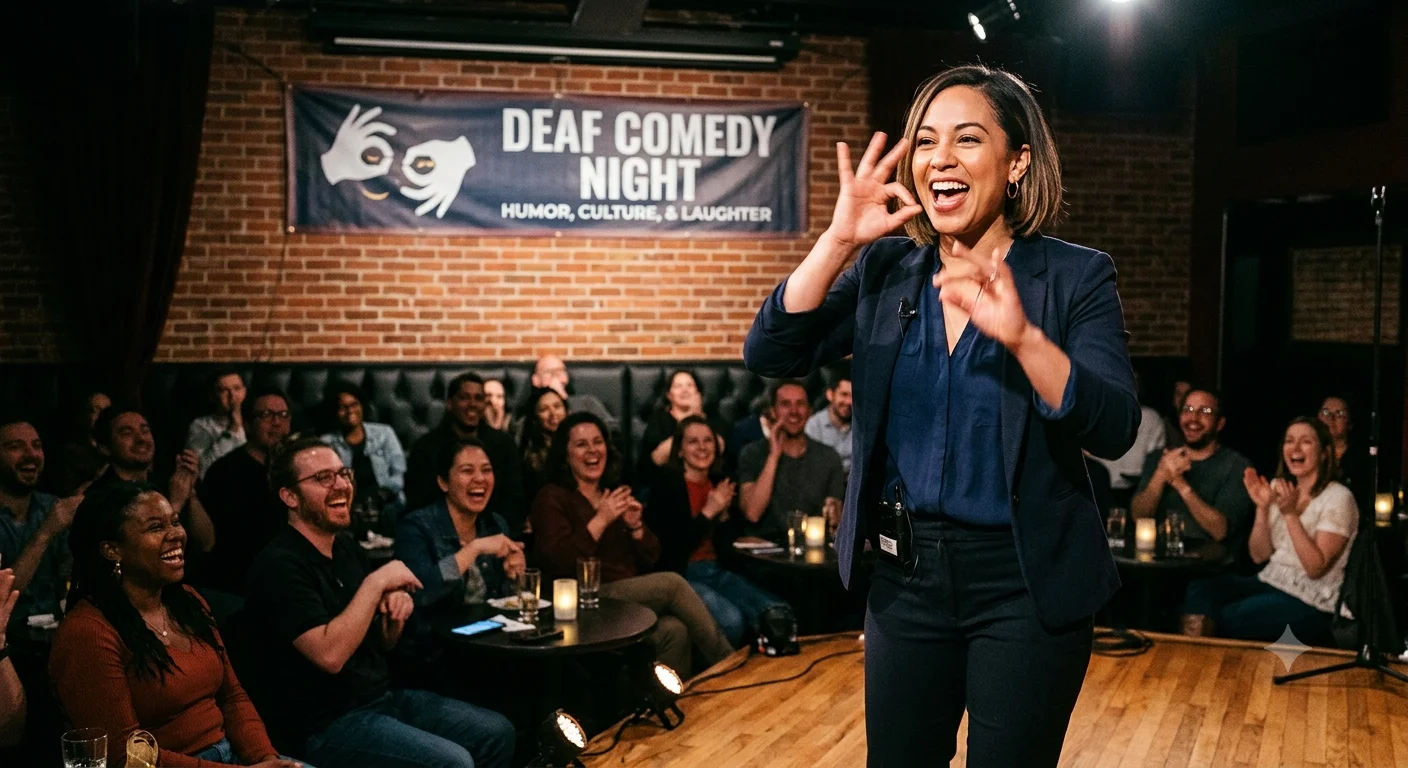
Deaf comedy and humor represent a distinctive comedic tradition shaped by visual storytelling, shared cultural experience and the unique linguistic properties of ASL. Understanding this comedic tradition offers insight into both deaf culture broadly and the specific artistic skills that make deaf comedy such a distinctive and beloved art form within the community.
What makes deaf comedy distinctive
Deaf comedy relies heavily on visual storytelling techniques facial expression and physical performance in ways that differ significantly from spoken comedy traditions that depend primarily on verbal wordplay timing and vocal delivery. Skilled deaf comedians use the full visual and spatial properties of ASL to create comedic effects including exaggerated facial expressions precise comedic timing in physical movement and visual wordplay that exploits the specific properties of sign language itself.
This visual comedic tradition means deaf comedy often translates differently or loses certain comedic elements entirely when interpreted into spoken English since much of the humor depends specifically on visual and linguistic properties unique to ASL that do not have direct equivalents in spoken language comedic traditions.
ASL specific wordplay and visual puns
- What makes deaf comedy distinctive
- ASL specific wordplay and visual puns
- Shared cultural experience as comedic material
- The role of exaggerated facial expression in deaf comedy
- Notable figures in deaf comedy
- Deaf comedy as community bonding
- How deaf comedy challenges hearing assumptions
- Why deaf comedy deserves wider recognition
- Conclusion
One distinctive element of deaf comedy involves wordplay that exploits specific properties of ASL signs themselves such as visual puns based on similar handshapes or signs that can be reinterpreted or modified slightly to create unexpected comedic meaning. This type of humor requires genuine ASL fluency to fully appreciate since it depends on linguistic properties specific to the visual nature of the language itself.
Skilled deaf comedians often demonstrate remarkable creativity in finding these visual wordplay opportunities within ASL creating comedic moments that showcase both genuine comedic talent and deep linguistic mastery of their primary language in ways that delight audiences who share this linguistic fluency and cultural context.
Shared cultural experience as comedic material
Much deaf comedy draws on shared cultural experiences within the deaf community including humorous observations about navigating a primarily hearing world frustrations and amusing situations that arise from communication barriers and affectionate humor about deaf community dynamics and relationships that resonate strongly with audiences who share these common experiences.
This shared experience based humor serves an important community bonding function allowing deaf audiences to laugh together about common experiences in ways that affirm shared identity and create a sense of community connection through collective recognition and laughter.
The role of exaggerated facial expression in deaf comedy
Facial expression plays an especially prominent role in deaf comedy compared to many spoken comedy traditions since facial expression already carries significant grammatical and emotional weight within ASL more broadly. Skilled deaf comedians often push facial expression to deliberately exaggerated comedic extremes building on this already expressive linguistic foundation to create distinctly visual comedic effects.
This comedic use of facial expression demonstrates how deaf comedians draw directly on existing linguistic features of ASL and amplify them deliberately for comedic effect rather than introducing entirely separate performance techniques unrelated to the everyday grammatical and expressive properties of the language itself.
Notable figures in deaf comedy
Deaf comedians like CJ Jones and John Maucere have built recognized careers specifically within deaf comedy bringing this distinctive comedic tradition to wider audiences through stand up performances and other comedic content. These performers have helped showcase deaf comedy as a legitimate and skilled comedic art form deserving of recognition alongside other established comedic traditions.
Recommended Articles
 DEAF CULTURE AND HISTORY
 DEAF CULTURE AND HISTORY
 DEAF CULTURE AND HISTORY
 DEAF CULTURE AND HISTORY
Their work often serves an important bridging function introducing hearing audiences unfamiliar with deaf comedy to this distinctive tradition while also serving deaf audiences who deeply appreciate the cultural specificity and linguistic skill these performers bring to their comedic work.
Deaf comedy as community bonding
Beyond formal stand up or performance contexts everyday deaf comedy and humor play an important bonding role within deaf community social gatherings. Storytelling with comedic elements is a common feature of deaf social gatherings where skilled storytellers entertain friends and community members with humorous anecdotes and observations delivered with characteristic deaf comedic timing and visual storytelling skill.
- Deaf Culture Values Community Language and Pride Explained
- Complete History of Gallaudet University from 1864 to Today
- What is Deaf Culture and Why Does It Matter in 2026
This everyday comedic tradition reflects how humor functions as connective community tissue within deaf culture broadly rather than existing only within formal performance contexts separate from daily community life and social interaction.
How deaf comedy challenges hearing assumptions
Deaf comedy often playfully challenges hearing assumptions and misunderstandings about deaf experience creating humor that simultaneously entertains while also offering gentle education about deaf culture and experience for audience members less familiar with these dynamics. This combination of entertainment and gentle cultural education reflects a broader pattern within deaf comedy of using humor as both pure entertainment and a vehicle for building greater cross cultural understanding.
Why deaf comedy deserves wider recognition
Despite its sophistication and cultural significance deaf comedy often receives less mainstream recognition compared to spoken comedy traditions partly because much of its specific linguistic wordplay and cultural context can be difficult to fully translate or appreciate without genuine ASL fluency and cultural familiarity. Greater exposure to and appreciation for deaf comedy among broader audiences would help ensure this distinctive and skilled comedic tradition receives recognition proportional to its genuine artistic merit and cultural significance.
Conclusion
Deaf comedy represents a distinctive and sophisticated comedic tradition built on visual storytelling, ASL specific wordplay and shared cultural experience that deserves greater recognition within broader comedic and cultural discourse. Understanding this unique comedic art form offers valuable insight into both deaf culture broadly and the remarkable creative possibilities that exist specifically within visual sign language based comedic expression.
FAQ
Why does deaf comedy sometimes lose its humor when interpreted into spoken English? Much deaf comedy relies on visual wordplay and linguistic properties specific to ASL itself which do not have direct equivalents in spoken English making certain comedic elements difficult or impossible to fully translate.
What role does facial expression play in deaf comedy specifically? Facial expression already carries significant grammatical and emotional meaning within ASL and deaf comedians often deliberately exaggerate this existing expressive foundation to create distinctly visual comedic effects.
Who are some notable deaf comedians who have brought this tradition to wider audiences? CJ Jones and John Maucere are notable deaf comedians who have built recognized careers showcasing deaf comedy through stand up performances and other comedic content for both deaf and hearing audiences.