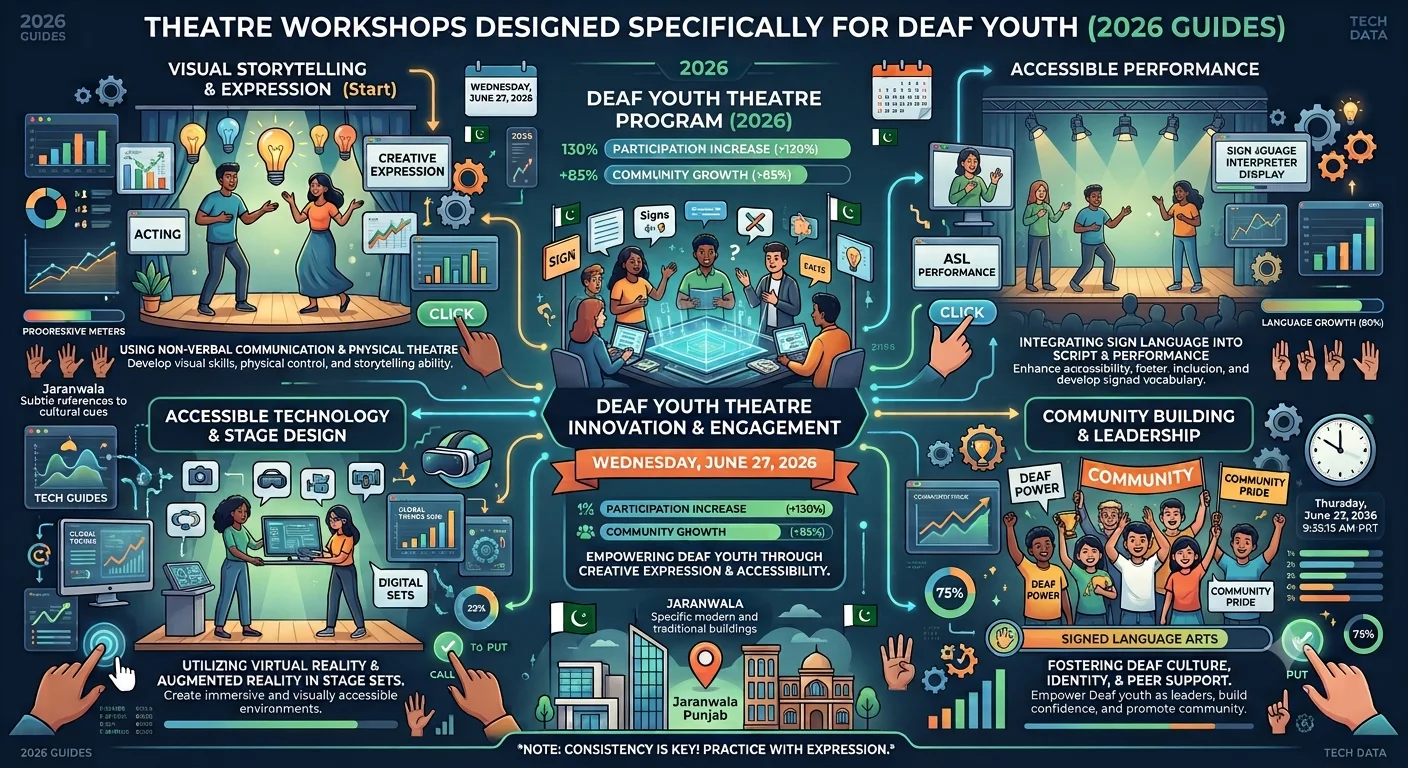
Theatre workshops designed specifically for deaf youth provide far more than basic performing arts education. These programs build confidence communication skills and crucial connections to deaf culture and community that can have lasting impact well beyond the stage itself. Understanding how these workshops work and why they matter offers valuable insight for educators parents and deaf youth themselves.
Why theatre matters specifically for deaf youth development
Theatre offers deaf youth a unique opportunity to develop and showcase visual storytelling skills that align naturally with the visual communication strengths many deaf individuals already possess. Unlike some traditional educational settings that may inadvertently emphasize spoken communication skills theatre allows deaf youth to excel using strengths in visual expression body language and spatial awareness that are core to how they already communicate every day.
For many deaf youth especially those who attend mainstream schools with limited deaf peer interaction theatre workshops specifically designed for deaf participants provide rare and valuable opportunities to connect with deaf peers and develop confidence using ASL in a creative and expressive context outside typical academic or social settings.
How deaf youth theatre workshops are typically structured
Theatre workshops for deaf youth often begin with foundational exercises in body awareness facial expression and basic ASL storytelling techniques before progressing toward more structured scene work and eventually full production experiences. Instructors frequently incorporate visual vernacular techniques and other visually rich storytelling methods that draw on the natural strengths of ASL as a performance medium.
Many programs are led by deaf theatre professionals or experienced deaf educators who can model both strong artistic technique and authentic deaf cultural perspective throughout the workshop experience. This deaf led instruction model provides participants with valuable mentorship from adults who share their language and cultural background in ways that purely hearing led programs often cannot replicate as effectively.
Building confidence through performance
For many deaf youth particularly those who have experienced isolation or communication barriers in mainstream educational settings theatre workshops provide a powerful and structured opportunity to build genuine confidence. Successfully performing in front of an audience using ASL as the primary expressive language can be profoundly affirming for young people who may not always have opportunities to see their natural communication style celebrated and showcased so directly.
- What Is Bilingual Deaf Education and Why It Matters
- Best Schools for the Deaf in the United States Ranked
This confidence building extends beyond the theatre context itself. Many educators and parents report that deaf youth who participate in theatre workshops show increased confidence in other areas of their lives including academic settings and social interactions with both deaf and hearing peers.
Developing ASL fluency and expressive range
Theatre workshops provide deaf youth valuable opportunities to develop more sophisticated and expressive ASL skills beyond everyday conversational use. Learning to convey complex emotions tell compelling stories and embody different characters through ASL pushes participants to develop a more nuanced and expressive command of their language that benefits their broader communication abilities.
This expanded expressive range can be particularly valuable for deaf youth who may primarily use ASL in relatively narrow conversational contexts at home or school and who benefit from the expanded creative and expressive vocabulary that theatrical training specifically develops.
Recommended Articles
 DEAF EDUCATION AND SCHOOLS
 DEAF EDUCATION AND SCHOOLS
 DEAF EDUCATION AND SCHOOLS
 DEAF EDUCATION AND SCHOOLS
Connecting youth to broader deaf culture and history
Many theatre workshops for deaf youth intentionally incorporate education about deaf theatre history introducing young participants to figures like Phyllis Frelich and organizations like the National Theatre of the Deaf and Deaf West Theatre. This historical context helps young participants understand they are part of a rich ongoing artistic tradition rather than experiencing theatre in a cultural vacuum.
This connection to deaf cultural history and community can be especially meaningful for deaf youth from hearing families who may have limited prior exposure to broader deaf community history and achievements before participating in these specifically designed programs.
Where deaf youth theatre workshops typically take place
Schools for the deaf frequently offer strong theatre programs as part of their broader extracurricular offerings given their concentration of deaf students and often deaf faculty with relevant expertise. Community organizations and dedicated deaf theatre companies also frequently offer workshops and summer programs specifically designed for deaf youth outside the traditional school calendar.
Some mainstream schools with significant deaf student populations have also begun offering specialized theatre programming though these opportunities remain less consistently available compared to programs at schools for the deaf or through dedicated deaf community organizations.
The long term impact on participants
Many successful deaf theatre professionals point to early youth theatre workshop experiences as foundational to their eventual career paths and ongoing connection to deaf arts and culture. These early experiences can plant important seeds that participants carry forward whether or not they pursue theatre as a career specifically.
Even for deaf youth who do not pursue theatre professionally the confidence communication skills and cultural connection built through these workshop experiences often provide lasting benefits that extend well into their adult lives and broader sense of identity and community belonging.
Conclusion
Theatre workshops designed specifically for deaf youth provide invaluable opportunities for confidence building skill development and cultural connection that extend far beyond basic performing arts education. By drawing on the natural visual communication strengths deaf youth already possess these programs create powerful spaces for genuine growth and lasting connection to deaf community and culture.
FAQ
Do theatre workshops for deaf youth require prior ASL fluency? Most programs welcome participants across a range of ASL fluency levels though some foundational signing ability is typically helpful for full participation in workshop activities and instruction.
Are deaf youth theatre workshops only available at schools for the deaf? While schools for the deaf often have strong existing theatre programs community organizations and dedicated deaf theatre companies also frequently offer workshops and summer programs open to deaf youth from various educational backgrounds.
What skills do deaf youth typically develop through theatre workshops beyond performance ability? Beyond performance skills participants often develop increased confidence more expressive ASL communication abilities and stronger connection to deaf culture and community history through their workshop experience.